How Startups Can Build High-Quality Backlinks Without Wasting Time
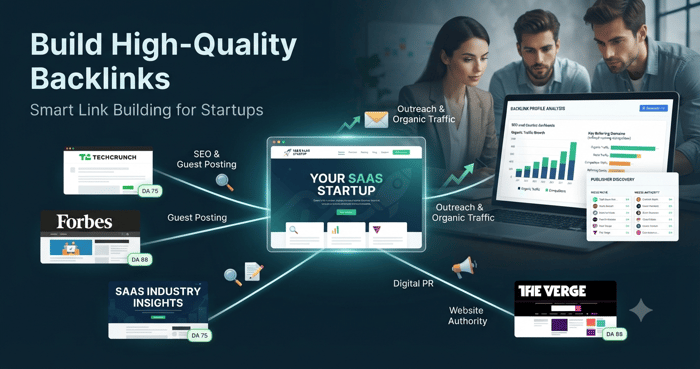
For startups and small businesses, building website authority can be challenging. You may have a great product, useful content, and a strong website, but competitors with established backlink profiles can still dominate search results.
The solution isn't to build hundreds of backlinks. A better approach is to focus on relevant, trustworthy, and sustainable link-building opportunities.
Start With Relevance
One of the most important factors when building backlinks is relevance. A link from a website that covers topics related to your business can make much more sense than a link from an unrelated website simply because it has a high Domain Rating.
For example, a SaaS company can look for technology, software, startup, business, and marketing publications. An education company can focus on education blogs, student resources, universities, and learning platforms.
The closer the connection between the publisher, article, and website being promoted, the more useful the placement can be.
Analyze Competitors
Competitor backlink analysis is one of the easiest ways to discover potential opportunities.
Tools such as Ahrefs and Semrush can show where competing websites are earning links. You can then review those referring domains and determine whether they are suitable for your own outreach campaign.
Don't copy every backlink. Instead, identify patterns. If several competitors receive links from relevant industry publications, those publishers may be worth researching.
Guest Posting Still Has a Place
Guest posting can be effective when the content is genuinely useful and the publisher is relevant.
Instead of writing generic articles simply to insert a backlink, create content that provides value to the publisher's readers. Tutorials, industry insights, original research, case studies, and practical guides can make stronger guest contributions.
Before accepting a website, evaluate its traffic, content quality, topical relevance, authority, and overall reputation. Avoid PBNs, link farms, and websites that publish large volumes of unrelated paid content.
Don't Ignore Digital PR
Digital PR is another powerful way to earn attention and potentially attract backlinks.
Startups often have interesting stories that can be turned into media opportunities. Examples include original research, product launches, industry surveys, expert commentary, unique datasets, and emerging trends.
Instead of pitching a generic company advertisement, provide journalists with something useful for their audience.
Use a Structured Outreach Process
Manual outreach can become time-consuming when you're searching for hundreds of publishers.
A structured process can help:
Define your target niche and countries.
Find relevant publishers.
Check authority and organic traffic.
Review existing content.
Identify the appropriate contact.
Personalize the outreach message.
Track responses and placements.
Monitor published backlinks.
Services such as Guest Post Discovery can help businesses and agencies identify publishing opportunities based on niche, website metrics, traffic, and campaign requirements. This can reduce the time spent manually searching for and evaluating websites.
Quality Over Quantity
One common mistake is measuring link-building success only by the number of backlinks acquired.
Ten relevant links from genuine industry websites may be more useful than hundreds of low-quality links from unrelated domains.
Think about the entire value of a placement:
Relevant publisher + useful content + appropriate context + genuine audience = stronger opportunity.
Monitor Your Backlink Profile
Link building doesn't end after publication. Regularly review your backlink profile using tools such as Ahrefs, Semrush, or Google Search Console.
Monitor new referring domains, lost links, anchor text distribution, and the quality of referring websites. This helps you understand which strategies are actually working.
Final Thoughts
Successful link building is a long-term process. Startups don't need to chase every possible backlink. Instead, build relationships with relevant publishers, create content worth referencing, explore digital PR opportunities, and maintain a consistent outreach process.
The goal isn't simply to increase the number of backlinks. It's to build authority, visibility, referral traffic, and credibility around your brand.
With the right strategy and consistent execution, even a new website can gradually develop a strong and sustainable backlink profile.

When it comes to building high-quality backlinks, I’ve found that a structured approach really helps maximize effectiveness. Here’s how I tackle it based on my experience:
Target Niche and Countries: It’s critical to have a clear understanding of your target audience. For instance, when we launched our blog focused on SEO optimization, we narrowed down our target to tech blogs and marketing sites in English-speaking countries initially, then expanded to non-English audiences based on engagement metrics.
Finding Relevant Publishers: I recommend using tools to identify sites within your niche. Even a simple Google search with targeted keywords can reveal potential publishers. Make a list of sites that align well with your content themes.
Checking Authority and Organic Traffic: This stage is crucial. Use metrics like Domain Authority (DA) or Trust Flow to filter out low-quality sites. Aiming for websites with a DA of 30+ has consistently improved our backlink quality. For organic traffic, tools that provide estimated visitor counts can give you insight into a site's reach.
Review Existing Content: Before reaching out, I spend time understanding their past content. Look for gaps where your content can add value. Is there a topic they cover that you could enhance? This will make your outreach much more compelling.
Identify Appropriate Contacts: Size matters here. For larger publications, I usually reach out to editors or specific contributors who have written about topics similar to mine. For smaller blogs, I often go for the site owner. Personalizing your outreach goes a long way – mention specific articles of theirs that resonated with you.
Follow-Up: If you don’t hear back, it’s okay to politely follow up after a week or so. Just keep it friendly and to the point.
In my experience, I've managed to secure backlinks from sites with good authority within a few months by sticking to this process. Tracking your outreach efforts can be really useful to see what works and refine your strategy over time. Good luck with your backlink strategy!