How Technology Is Changing the Home Renovation Process
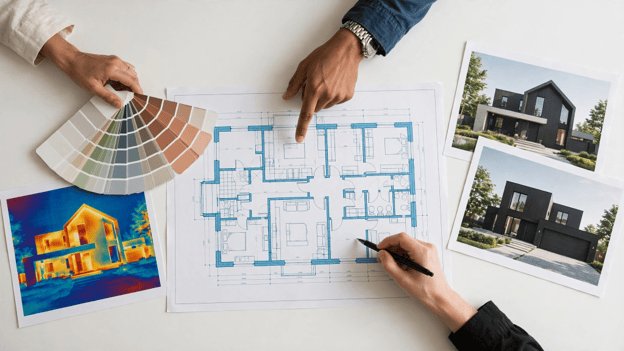
For decades, residential remodeling and home painting projects were defined by traditional, manual processes: paper paint swatches taped to drywall, hand-drawn architectural blueprints, physical measuring tapes, and guesswork regarding how a finished space would look. Today, digital transformation, artificial intelligence, laser scanning, and mobile construction technology are reshaping how homeowners plan, visualize, and execute property renovations.
Bottom Line Up Front: Technology has fundamentally modernized the home renovation lifecycle. From 3D LiDAR spatial mapping and AI-powered color rendering apps to drone-assisted thermal moisture diagnostics and real-time client collaboration portals, modern construction technology eliminates design uncertainty, prevents costly change orders, and elevates craftsmanship standards across residential and commercial remodeling.
1. 3D Spatial Scanning and Precision Digital Measurements
Accurate site measurement is the foundation of any successful renovation. Traditional manual measuring tapes often introduce subtle errors that cause misaligned cabinetry, incorrect tile orders, and delayed project timelines.
According to research from the National Association of Home Builders (NAHB) Remodeling Technologies Group, adopting digital laser scanning and 3D spatial modeling tools reduces on-site material waste by up to 18% and virtually eliminates dimensional measurement errors during structural framing and custom cabinetry installations.
Contractors now utilize handheld LiDAR sensors and mobile photogrammetry to generate millimetre-accurate 3D point-cloud models of entire rooms in minutes. These digital models import directly into computer-aided design (CAD) software, allowing structural engineers, carpenters, and finish trades to collaborate on exact digital dimensions before swinging a single hammer.
2. Augmented Reality and AI Color Visualization in Painting
Choosing paint colors, wall textures, and exterior stucco finishes has historically been one of the most stressful decisions for homeowners. A one-inch color chip rarely conveys how shifting sunlight, room angles, and artificial lighting interact with pigments across a full wall.
Under standards developed by the Painting and Decorating Contractors of America (PCA) Industry Standards, visual consistency requires assessing light reflectance values (LRV) and surface texture compatibility before primer and paint application.
Modern augmented reality (AR) visualization apps and AI rendering platforms allow homeowners and designers to view photorealistic digital previews of their living rooms, kitchens, and exterior facades. By pointing a smartphone camera at an existing room, algorithms dynamically map wall surfaces, adjust for ambient room lighting, and render authentic paint colors, custom stucco finishes, and trim accents in real time.
As documented by the American Society of Interior Designers (ASID) Technology Trends, interactive visualization accelerates client decision-making and ensures complete satisfaction with final color palettes.
As Salomon Urizar-Jimenez, owner of Astro Roofing, a roofing company specialized in roof repair and roof installation in Oakland, CA, explains, technology enhances client trust and precision:
"Ten years ago, homeowners had to rely on ladder climbs and basic estimates to understand roof damage. Today, high-resolution drone imagery, digital roof modeling, and thermal leak detection take the guesswork out of roofing. Technology allows us to show property owners exact aerial photos of failing shingles, pinpoint hidden underlayment moisture before it compromises ceilings, and maintain complete transparency throughout the repair and installation process."
3. Drone Inspections and Infrared Thermal Moisture Diagnostics
Beyond surface finishes, technological innovation plays a vital role in diagnosing structural integrity before renovation begins:
● Aerial Drone Site Surveys: High-resolution 4K camera drones capture detailed aerial photography of multi-story rooflines, parapet flashings, and chimney caps without requiring dangerous ladder climbs, identifying cracked tiles or failing stucco along high roof parapets.
● Infrared Thermography: Thermal imaging cameras detect subtle temperature differentials inside exterior walls and ceilings, pinpointing active plumbing leaks, missing insulation pockets, and hidden moisture penetration behind stucco before new paint or drywall is applied.
● Air Quality and Dust Containment Monitoring: Smart indoor air sensors monitor airborne particulate levels (PM2.5) during active demolition, alerting crews when negative air machines and HEPA scrubbers need filter adjustments to protect household air quality.
4. Cloud-Based Project Management and Transparent Communication
Modern general contracting platforms bridge the communication gap between property owners and field crews. Dedicated client portals provide real-time photo logs of daily progress, digital schedule tracking, electronic permit documentation, and instant change-order approvals accessible from any mobile device, keeping renovation projects on time and on budget.
5. Frequently Asked Questions (Technology in Home Remodeling)
How accurate are digital paint visualizer apps?
Modern AI paint visualizers account for wall shadows, window placement, and ambient color temperature, offering approximately 90% visual accuracy compared to physical paint application. Testing a small physical sample patch on the wall remains recommended to confirm exact undertones.
What are the primary benefits of thermal imaging before a kitchen or bathroom remodel?
Thermal imaging reveals hidden plumbing leaks, cold draft corridors, and electrical hot spots behind walls, allowing contractors to repair underlying mechanical issues before installing expensive new cabinets and tile.
Summary Checklist: Leveraging Technology in Your Next Remodel
● Request 3D Renderings: Ask your general contractor for 3D digital floor plans and exterior finish mockups before finalizing material orders.
● Insist on Thermal Diagnostic Checks: Verify that exterior walls and ceilings are inspected with moisture meters and thermal cameras to identify hidden leaks.
● Utilize Digital Daily Logs: Use cloud-based contractor communication portals to review daily photo updates and monitor milestone progress.

