How To Avoid Common Pitfalls When Sourcing Thermal POS Printer
Introduction
Sourcing a thermal POS printer is an important decision for retailers, distributors, wholesalers, restaurant owners, and businesses looking to build reliable point-of-sale systems. While the market offers many options, not every printer delivers the same level of quality, durability, or long-term performance. Selecting the wrong product can lead to frequent maintenance, compatibility issues, higher operating costs, and dissatisfied customers.
A successful purchasing decision requires more than simply comparing prices. Businesses should evaluate product quality, manufacturer experience, technical specifications, after-sales support, and compatibility with existing systems. Taking the time to research suppliers can help prevent costly mistakes while ensuring the equipment performs reliably in demanding commercial environments.
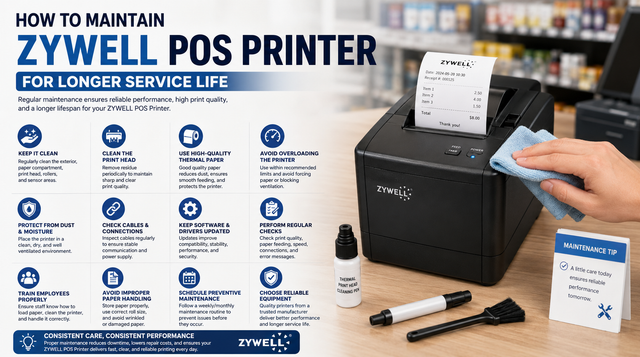
Businesses looking for dependable receipt printing solutions often choose the ZYWELL POS Printer because it is designed for retail, hospitality, healthcare, and other commercial applications. Understanding the most common sourcing mistakes can help buyers make informed decisions and achieve better long-term value.
Avoid Choosing Based Only on Price
One of the biggest mistakes businesses make is selecting the cheapest available printer without evaluating its overall quality.
A low purchase price may appear attractive initially, but inexpensive printers often result in:
• Frequent repairs
• Shorter product lifespan
• Poor print quality
• Higher maintenance costs
• Reduced employee productivity
Instead of focusing only on price, businesses should consider the total cost of ownership over several years.
Research the Manufacturer's Reputation
The manufacturer plays a major role in product quality and long-term reliability. Companies with years of experience in thermal printing usually have stronger quality control systems and more advanced production processes.
Before making a purchase, evaluate:
• Years of manufacturing experience
• Customer reviews
• Industry reputation
• Product certifications
• Technical support capabilities
Working with an experienced manufacturer reduces purchasing risks and provides greater confidence in product performance.
Verify Product Specifications
Many buyers overlook technical specifications and discover compatibility issues after installation.
Before ordering, confirm important specifications such as:
• Printing technology
• Print speed
• Print resolution
• Supported paper width
• Connectivity options
• Operating system compatibility
• Power requirements
Understanding these details ensures the printer matches your business requirements.
Confirm Software Compatibility
A thermal POS printer should integrate smoothly with your existing POS software and hardware.
Compatibility should be verified with:
• Windows systems
• Linux systems
• Android POS devices
• Cash drawers
• Barcode scanners
• Payment terminals
Purchasing incompatible equipment may require costly system modifications later.
Evaluate Printing Performance
Fast printing speed alone does not guarantee a quality POS printer.
Businesses should also evaluate:
Print Quality
Receipts should remain sharp, clear, and easy to read.
Printing Stability
Reliable printers maintain consistent performance throughout long business hours.
Continuous Operation
Commercial businesses require equipment capable of handling heavy daily workloads without overheating or frequent interruptions.
Reliable performance improves customer satisfaction while reducing operational delays.
Do Not Ignore Build Quality
Commercial equipment should withstand constant daily use.
Signs of strong build quality include:
• Durable housing
• Stable paper feeding
• Reliable internal components
• Professional assembly
• Smooth operation
Well-built printers generally require less maintenance and offer longer service life.
Consider Future Business Growth
Some businesses purchase printers that only meet their current requirements without considering future expansion.
As businesses grow, transaction volumes often increase.
Choosing a scalable thermal POS printer allows businesses to continue using the same reliable equipment as operations expand.
Future-ready equipment reduces replacement costs while simplifying long-term planning.
Check Available Connectivity Options
Different businesses use different POS configurations.
Modern thermal printers should offer flexible connectivity such as:
• USB
• Ethernet
• Bluetooth
• Serial interface
Multiple connection options improve compatibility across different industries and simplify installation.
Review Warranty and Technical Support
Reliable after-sales service is an important part of any purchasing decision.
Before selecting a supplier, ask about:
• Warranty coverage
• Technical support
• Driver availability
• Firmware updates
• Product documentation
• Spare parts availability
Professional support helps resolve issues quickly while reducing business downtime.
Avoid Low-Quality Thermal Paper
Even a high-quality printer may perform poorly when low-grade thermal paper is used.
Poor paper quality can cause:
• Faded printing
• Paper dust accumulation
• Print head contamination
• Shorter printer lifespan
Businesses should always use thermal paper that meets the manufacturer's recommendations.
Inspect Sample Products Before Large Orders
Distributors and wholesalers should request product samples whenever possible.
Testing allows buyers to evaluate:
• Printing speed
• Print quality
• Build quality
• Ease of installation
• Software compatibility
• Overall user experience
A sample evaluation reduces purchasing risks before placing large commercial orders.
Understand Your Industry Requirements
Different industries have different printing needs.
For example:
Retail Stores
Require high-speed receipt printing during busy shopping hours.
Restaurants
Need reliable printers capable of handling continuous customer orders.
Hotels
Require accurate billing and guest transaction receipts.
Pharmacies
Depend on clear printing for medicine purchases and customer records.
Service Businesses
Need compact and dependable receipt printers that integrate with modern POS systems.
Selecting equipment based on actual business requirements improves operational efficiency.
Build Relationships with Trusted Suppliers
Long-term supplier relationships often provide greater business value than constantly changing vendors.
Reliable suppliers can offer:
• Consistent product quality
• Stable pricing
• Better communication
• Faster delivery
• Technical assistance
• Ongoing product availability
Strong business partnerships help distributors and retailers serve customers more effectively.
Common Mistakes to Avoid
Before finalizing any purchase, avoid these frequent sourcing errors:
• Choosing the lowest price without comparing quality
• Ignoring manufacturer reputation
• Overlooking compatibility
• Skipping product testing
• Ignoring warranty conditions
• Purchasing without checking specifications
• Using poor-quality thermal paper
• Neglecting technical support availability
Avoiding these mistakes can significantly improve purchasing success.
Final Thoughts
Sourcing the right thermal POS printer requires careful planning and detailed product evaluation. Businesses that prioritize quality, compatibility, manufacturer experience, and long-term reliability are far more likely to achieve lasting operational benefits. Rather than making purchasing decisions based solely on price, buyers should focus on equipment that delivers dependable commercial performance and strong after-sales support.
Whether purchasing for retail stores, restaurants, hotels, pharmacies, or distribution businesses, selecting a trusted thermal POS printer helps reduce maintenance costs, improve efficiency, and support smooth daily operations. By avoiding common sourcing pitfalls and choosing reliable commercial equipment, businesses can build stronger point-of-sale systems that continue delivering value for many years.
