How to Choose the Right Careem Clone App Development Company for Your Startup
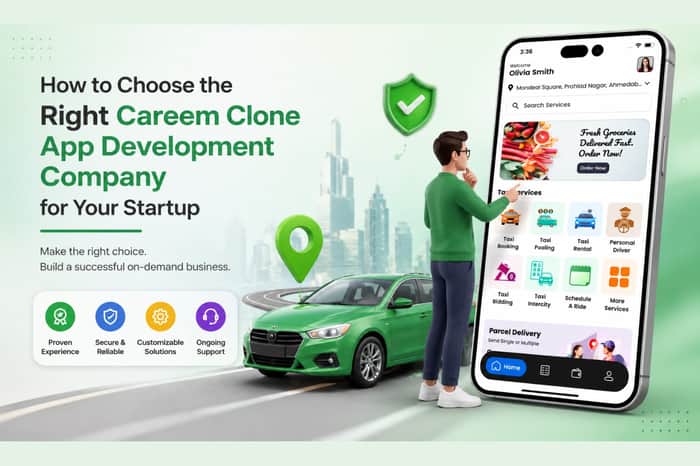
Launching a ride-hailing or multi-service startup is no longer limited to building a basic taxi booking app. Entrepreneurs today are looking for platforms that can combine transportation, food delivery, grocery shopping, courier services, and other everyday needs under one digital ecosystem.
This is where choosing the right Careem Clone App Development company becomes important. A ready-made or customizable solution can reduce development time and help startups enter the market faster, but the technology partner you choose can have a major impact on scalability, customization, security, and long-term growth.
If you are considering building a platform inspired by the Careem business model, here are the key factors to evaluate before selecting your development partner.
What Is a Careem Clone?
A Careem Clone is a ready-made, customizable app solution inspired by the core functionality of Careem. It enables businesses and startups to launch their own ride-hailing, delivery, and on-demand services platform without developing an application from scratch.
Modern solutions can go beyond transportation. Startups can customize the platform to create a Multi Service App that offers multiple on-demand services from a single application.
For example, an entrepreneur could launch a platform combining:
- Taxi and ride booking
- Food delivery
- Grocery delivery
- Courier and parcel delivery
- Pharmacy delivery
- Home services
- Rental services
- Business or corporate transportation
The goal isn't to copy another company's brand or intellectual property. Instead, the concept provides a starting point for building a customized platform based on a proven multi-service marketplace model.
Why Startups Consider a Careem-Style Business Model
One of the biggest advantages of a multi-service platform is the ability to serve different customer needs through one ecosystem.
Instead of operating separate applications for every service, entrepreneurs can create a central platform where users can access multiple offerings. This can increase customer engagement while giving businesses additional opportunities to generate revenue.
For startups, this approach can also make it easier to experiment with different services. A company could initially launch with ride-hailing and later introduce food delivery, courier services, or other offerings based on local demand.
However, having multiple services doesn't automatically guarantee success. The platform needs a strong technical foundation, intuitive user experience, reliable operations, and a sustainable business model.
1. Look for Customization, Not Just a Ready-Made Product
A ready-made solution can provide a useful starting point, but every startup has different requirements.
Before choosing a Careem App Clone, check whether the development company allows customization of the application, admin panel, service-provider features, payment systems, pricing models, and workflows.
You should be able to modify the platform according to your target market rather than being forced into a fixed business model.
Ask potential development companies:
- Can features be customized?
- Can new services be added later?
- Can the UI and branding be changed?
- Can business rules be modified?
- Can third-party APIs be integrated?
The more flexible the platform is, the easier it will be to adapt as your startup grows.
2. Evaluate the Technology and Scalability
Your initial customer base may be small, but a successful startup needs infrastructure capable of handling growth.
Ask the development company about its technology stack, database architecture, hosting options, APIs, security practices, and scalability strategy.
For example, a growing ride-hailing platform may eventually need to process thousands of location updates, ride requests, payments, notifications, and driver interactions simultaneously.
A good On Demand Multi Service App Development solution should therefore be designed with future expansion in mind.
Scalability should not be something you worry about only after your application becomes successful. It should be considered during the initial architecture and development process.
3. Check the Core Features
Before signing an agreement, carefully review what is included in the solution.
A comprehensive platform may include separate interfaces for customers, drivers or service providers, and administrators.
Important features can include:
- Real-time GPS tracking
- Ride scheduling
- Fare calculation
- Driver availability management
- Multiple payment options
- Ratings and reviews
- Push notifications
- Promo codes and discounts
- Booking history
- Earnings management
- Analytics and reports
- Customer support
- Admin controls
If you're planning an All In One Careem Clone App, also check whether additional service modules can be integrated without rebuilding the entire platform from scratch.
4. Consider the User Experience
Feature-rich doesn't necessarily mean user-friendly.
Customers should be able to open the application, select a service, provide the required information, make a booking, and track the order without confusion.
Drivers and service providers also need simple interfaces for accepting requests, navigating to destinations, managing earnings, and communicating with customers.
During your evaluation, test the demo applications yourself. Look at navigation, loading speed, booking flows, payment processes, and overall usability.
A smooth user experience can have a direct impact on customer retention.
5. Review Security and Payment Capabilities
A platform that handles payments, customer accounts, addresses, and location information needs appropriate security measures.
Ask the development company how it protects user information and transactions. You should also verify whether the platform supports secure payment gateway integrations suitable for your target market.
Depending on your business location, you may need support for cards, digital wallets, local payment methods, or cash payments.
Security should be treated as a core product requirement rather than an optional feature.
6. Understand the Pricing Structure
Price is obviously important for a startup, but the cheapest option isn't always the most economical.
Compare what you actually receive for the quoted price. One provider may offer a lower initial price but charge separately for customization, source-code access, deployment, integrations, maintenance, or additional service modules.
Create a clear comparison covering:
Development cost + customization + deployment + integrations + maintenance + future upgrades.
This gives you a more realistic picture of your total investment.
7. Check Post-Launch Support
Launching the application is only the beginning.
Your startup may encounter bugs, payment issues, server problems, third-party API changes, or feature requests after launch. Therefore, technical support can be just as important as the initial development.
Ask whether the company provides:
- Bug fixes
- Technical assistance
- Server or deployment support
- Application updates
- Third-party API support
- Feature enhancements
- Maintenance packages
A development partner that continues supporting the product can become a valuable long-term technology partner.
8. Examine Previous Experience
Before making a decision, research the company's previous work.
Look for experience with marketplace platforms, taxi applications, delivery systems, and multi-service applications. Product demos, case studies, client feedback, and live applications can help you understand the company's capabilities.
Don't evaluate a company only on its website claims. Ask practical questions about previous implementations and how the company handles customization and technical challenges.
9. Think Beyond the Initial Launch
Your first version should solve a specific market problem, but your technology should leave room for expansion.
For example, you might start with ride-hailing in one city and eventually expand into food delivery, courier services, or other categories.
This is one of the key reasons entrepreneurs consider a Careem Clone App Development approach. Instead of building every feature from scratch, they can start with an established foundation and customize it around their own business strategy.
The important thing is to avoid unnecessary complexity at launch. Start with services that have clear demand, validate the business model, and expand based on real customer behavior.
Final Thoughts
Choosing a Careem-style app development company is ultimately a technology and business decision. The right partner should offer more than a collection of pre-built features. You need a solution that can be customized, scaled, secured, and adapted as your startup evolves.
Whether your goal is to launch a ride-hailing marketplace or a broader Multi Service App, evaluate the development company based on technology, customization, user experience, security, pricing, scalability, and long-term support.
A well-planned Careem App Clone can give entrepreneurs a faster starting point, but your startup's success will depend on how effectively you adapt the platform to your market, customers, and business model.
