How to Choose the Right Manufacturing Partner in Southeast Asia
Southeast Asia has become an important manufacturing destination for companies looking to diversify production, reach new suppliers, and build more flexible supply chains. Vietnam, Indonesia, Thailand, Malaysia, and other countries in the region offer access to factories producing everything from furniture and textiles to electronics and industrial components. However, finding a factory is only the beginning, because a successful B2B Manufacturing Partnership depends on much more than receiving an attractive quotation or finding a supplier capable of producing a sample. Businesses also need to evaluate manufacturing capabilities, quality systems, communication, reliability, and the supplier’s ability to support long-term growth.
Start With the Product Requirements
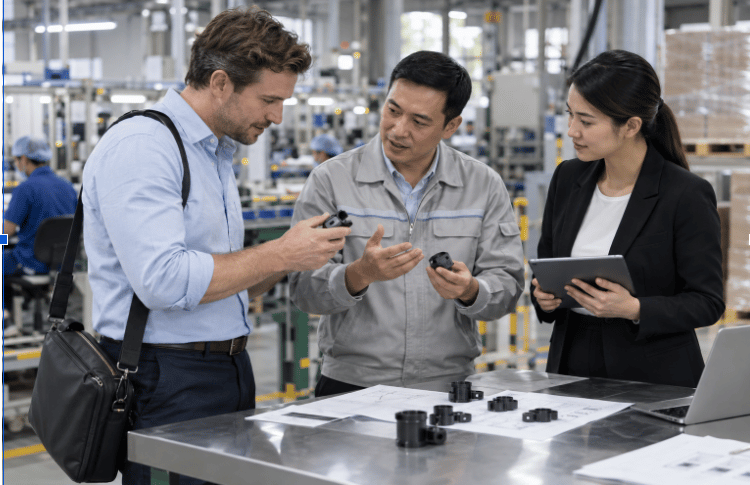
Before contacting manufacturers, a company should have a clear understanding of what it wants to produce. Factories can provide useful technical advice, but they need accurate information before they can estimate costs or determine whether a project fits their capabilities.
Product specifications may include dimensions, materials, colors, tolerances, packaging requirements, expected order volumes, testing standards, and target delivery dates. For more complex products, technical drawings, reference samples, or CAD files may also be necessary.
Clear specifications make it easier to compare potential manufacturers. If several suppliers receive different or incomplete information, their quotations may look similar while actually covering very different materials, production methods, or quality standards.
A detailed request for quotation therefore provides a much stronger starting point than simply asking a supplier for its lowest price.
Look Beyond the Factory's Product Catalog
A supplier may advertise products similar to the one a buyer wants to manufacture, but this does not automatically mean that the factory is suitable for the project.
Manufacturing experience should be examined in greater detail. A factory that regularly produces large quantities of simple consumer goods may struggle with a product requiring tight tolerances, specialized materials, or frequent customization.
Buyers should consider the factory's machinery, workforce, production capacity, technical expertise, and experience with similar projects. It is also useful to understand which processes are completed internally and which are outsourced.
Outsourcing is not necessarily a problem. Many factories rely on specialized subcontractors for processes such as surface treatment, printing, packaging, or component manufacturing. The important question is whether those subcontractors are properly managed and whether quality remains consistent throughout the production chain.
Verify the Supplier Before Placing a Large Order
Online communication makes international sourcing easier, but it can also make a supplier appear more capable than it actually is.
Before committing significant funds, buyers should verify basic information about the company. This may include its legal registration, business history, factory location, certifications, production facilities, export experience, and existing quality procedures.
A factory audit can provide a clearer picture of how the business operates. An audit may examine production areas, machinery, storage conditions, quality-control processes, employee organization, documentation, and manufacturing capacity.
The objective is not simply to determine whether the factory exists. It is to understand whether the supplier can realistically fulfill the buyer's requirements.
This becomes particularly important when production involves high-value products, large orders, regulated industries, or complex components.
Evaluate Communication From the Beginning
Communication is one of the most underestimated parts of international manufacturing.
A factory can have excellent machinery and competitive prices but still become difficult to work with if information moves slowly or important details are misunderstood.
During the early stages of a project, pay attention to how the supplier responds to technical questions. Does the team provide clear answers? Do they confirm specifications? Do they identify potential production problems? Are changes documented properly?
Good suppliers do more than simply agree with every request. Experienced manufacturers may point out that a certain material is unsuitable, a tolerance is unrealistic, or a design could increase production costs unnecessarily.
That type of technical feedback can be valuable because it shows that the manufacturer is actively reviewing the project rather than simply trying to secure an order.
Request Samples Before Mass Production
Samples are one of the most important steps in evaluating a potential manufacturing partner.
A sample allows the buyer to examine workmanship, materials, dimensions, colors, packaging, and other characteristics before committing to a larger production run.
However, a successful sample should not automatically be treated as proof that mass production will have identical quality.
Samples are often produced with additional attention. Once manufacturing moves to hundreds or thousands of units, different workers, machines, material batches, or subcontractors may become involved.
For this reason, approved samples should become part of the production specification. They can serve as reference standards when inspecting future production.
Any changes made after sample approval should also be documented clearly to prevent different interpretations between the buyer and manufacturer.
Understand the Factory's Quality-Control System
Quality control should not begin when finished products are already packed for export.
Reliable manufacturers usually monitor quality at several stages of production. Incoming materials may be inspected before they enter the production line. Components can be checked during manufacturing, and finished products may undergo final testing before packaging.
Buyers should understand who performs these checks and how the results are recorded.
Depending on the product, quality inspections may examine appearance, dimensions, functionality, workmanship, packaging, labeling, quantity, or compliance with technical specifications.
Third-party inspections can also provide an additional level of control, particularly when a buyer cannot maintain its own staff near the factory.
A pre-shipment inspection is especially useful because problems can be identified before the goods leave the manufacturing country. Correcting defective products while they are still at the factory is usually much easier than discovering the problem after the shipment arrives.
Compare Total Cost, Not Just Unit Price
Choosing the cheapest supplier can sometimes make manufacturing considerably more expensive.
A lower unit price may come with higher defect rates, longer production times, weaker packaging, unexpected tooling expenses, or additional logistics costs.
Buyers should therefore evaluate the total cost of working with a manufacturer.
Payment terms, tooling costs, minimum order quantities, packaging, domestic transportation, export documentation, inspections, shipping, and potential rework can all influence the final cost.
For example, one supplier may quote a slightly higher production price while offering more reliable quality control and better packaging. If that reduces damaged shipments and rejected products, the overall cost may actually be lower.
Price remains important, but it should be considered alongside reliability and manufacturing performance.
Consider Location and Supply-Chain Infrastructure
Southeast Asia is not a single manufacturing market. Each country — and often each region within a country — has its own industrial strengths.
Vietnam has developed strong manufacturing clusters in sectors such as furniture, footwear, garments, electronics, and supporting industries. Indonesia has extensive manufacturing activity related to furniture, textiles, footwear, consumer products, automotive components, and natural-resource-based industries. Thailand and Malaysia also have established industrial ecosystems supporting electronics, automotive manufacturing, machinery, and other sectors.
Location can affect access to raw materials, subcontractors, ports, skilled workers, and transportation networks.
A factory located close to its main suppliers may have shorter material lead times, while proximity to a major port can simplify export logistics. These details become increasingly important as production volumes grow.
Think About Long-Term Scalability
A manufacturer that works well for the first small order may not necessarily be suitable once demand increases.
Companies planning to grow should discuss production capacity early in the relationship. Ask how many units the factory can produce each month, how quickly capacity can be increased, and what happens during peak manufacturing seasons.
It is also worth understanding whether the supplier can support new product variations or additional product lines.
Scalability is particularly important for businesses that expect rapid changes in demand. A manufacturer should be able to increase output without allowing quality standards or delivery performance to deteriorate.
Build a Relationship Based on Clear Expectations
Strong manufacturing relationships are usually built gradually.
The first production order gives both sides an opportunity to understand how the other operates. Buyers learn about the factory's communication style, production process, and reliability, while manufacturers become familiar with the buyer's quality expectations and approval procedures.
Clear documentation is essential throughout this process. Product specifications, sample approvals, packaging instructions, inspection criteria, timelines, and design changes should all be recorded.
Regular communication also helps prevent small misunderstandings from developing into expensive production problems.
Over time, a reliable manufacturer can become more than a company that simply follows purchase orders. Suppliers often contribute manufacturing knowledge, recommend more efficient materials or processes, and help buyers improve products for future production runs.
Choosing a Partner, Not Simply a Supplier
Finding manufacturers in Southeast Asia is easier than it was a decade ago, but identifying the right partner still requires careful evaluation. Buyers need to examine technical capabilities, verify suppliers, test samples, understand quality systems, calculate total costs, and consider whether a factory can support future growth.
The goal is not necessarily to find the factory offering the lowest quotation. It is to find a manufacturer capable of delivering consistent products, communicating clearly, solving production problems, and developing alongside the buyer's business.
When these factors are considered from the beginning, companies can build manufacturing relationships that are more predictable, scalable, and resilient over the long term.

