How to Create Local Business Ads Without a Camera Shoot with Seedance 2.0 on Pollo AI
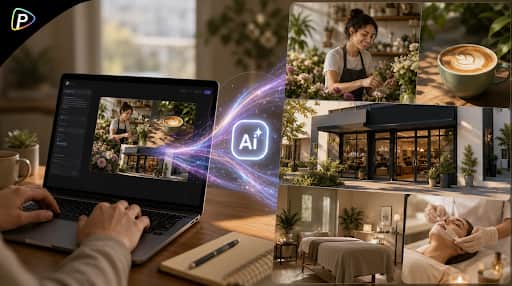
Local businesses rarely have the time or budget to shoot a new video every time they launch a promotion. A restaurant may already have food photos. A salon has pictures of its space. A local store has product shots. What is often missing is usable video.
That is where Seedance 2.0 on Pollo AI can be useful. Instead of filming from scratch, a business can use existing images and other references to build a short video around them.
Why Try Seedance 2.0 on Pollo AI?
Seedance 2.0 is particularly useful when the video needs to stay close to existing visual material. Pollo AI supports its image-to-video and text-to-video workflows, while Seedance 2.0 on Pollo AI can work with text, images, videos, and audio as references. It also supports detailed prompts, camera movement, and video extension.
The Pollo AI workflow is useful when a business wants to test different creative approaches without rebuilding the process elsewhere. For example, the same product image can be used in an image-to-video generation, then compared with a different prompt or creative direction.
That said, it is not a replacement for a real shoot in every case. AI-generated footage can still get logos, text, faces, product details, or parts of a location wrong. For local advertising, those errors matter.
How to Create a Local Business Ad with Seedance 2.0 on Pollo AI
1. Open Seedance 2.0 on Pollo AI
Open the Seedance 2.0 page on Pollo AI and choose the image-to-video workflow if the business already has a suitable photo. Text-to-video is another option when there is no usable source image.
For most local ads, starting with a real image makes more sense. It gives the model something concrete to follow instead of asking it to invent the business.
2. Upload a Clear Reference Image
The reference should show the subject clearly. A restaurant might upload a well-lit interior shot, while a retailer could start with a clean product photo.
One common mistake is using a photo that is already too complicated. Crowded backgrounds, tiny products, heavy filters, or partially hidden objects give the model more room to make things up.
If multiple references are needed, each should have a clear purpose. Seedance 2.0 can use different types of references, but adding more files does not automatically mean better results.
3. Give the Scene a Specific Direction
The prompt should explain what the camera and subject are supposed to do.
For example:
Start outside the café and slowly move toward the entrance. Transition inside and reveal the counter with a freshly prepared coffee. Keep the café layout and product appearance consistent. Use natural morning light.
This works better than simply asking for a “professional café advertisement.” The latter leaves too many decisions to the model.
It is also worth keeping the first generation simple. Trying to fit five shots, several people, multiple products, and complicated camera movements into one short clip is an easy way to get inconsistent results.
4. Review the Generated Video Carefully
This is where local businesses need to be realistic about AI video.
Check the storefront, signs, logos, packaging, furniture, people, and product appearance frame by frame. A video can look convincing overall while quietly changing the business name on a sign or turning a recognizable product into something else.
Seedance 2.0 is designed to improve consistency across generated scenes, but consistency is not the same as accuracy.
If an important detail keeps changing, a better reference image or a simpler scene will usually help more than adding another paragraph of instructions.
5. Extend or Create Another Version
Once a usable clip exists, the business can build from it instead of starting over. Seedance 2.0 supports video extension, which can be useful when a short location or product sequence needs to continue.
For example, the same café footage could become a general brand video, a weekend promotion, or a seasonal ad by changing the creative direction.
Where This Workflow Actually Makes Sense
This approach is best suited to small, frequent advertising jobs, not high-stakes commercial shoots.
A gym might need a quick video for a new membership offer. A restaurant may want several social posts around a seasonal menu. A property agency could turn existing listing images into short promotional clips. In these cases, organizing a full shoot for every variation can be excessive.
The trade-off is control. A real camera gives the business much more predictable results, especially when people, branded products, or precise locations are involved. Seedance 2.0 is more useful when the goal is to create something quickly from existing assets and the business is willing to review the result before publishing.
That is the practical case for Seedance 2.0 on Pollo AI: not “AI replaces the camera,” but rather that an existing photo library can become a starting point for short-form advertising without requiring a new shoot every time.


-
1The part about reusing an existing asset library is probably the most interesting use case here. For local businesses, the bottleneck may not actually be video production itself, but producing enough creative variations to keep testing different offers and angles. If one good product or location image can become several usable ad variations, the economics change quite a bit. I also like the emphasis on reviewing the output rather than assuming consistency means accuracy. For a local business, a slightly wrong background is one thing; a changed logo, product or storefront is a completely different problem. The “augment the existing shoot rather than replace it” framing feels much more practical than treating AI video as a camera replacement.14 hours ago Reply
