How to Find High-Quality Guest Post Opportunities for Your Startup
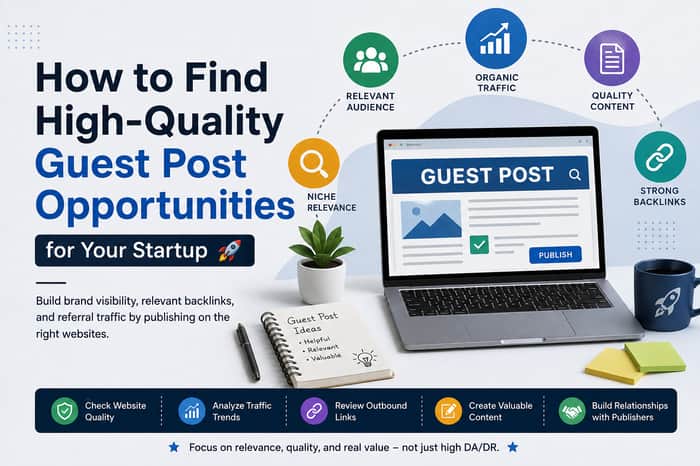
For startups, guest posting can be a useful way to build brand visibility, referral traffic, and relevant backlinks. But finding the right websites is often more difficult than writing the article itself.
There are thousands of websites accepting guest posts, but not all of them are worth your time or money. Some have poor-quality content, little real traffic, or hundreds of unrelated outbound links.
So, how do you find good guest post opportunities?
- Start With Relevance
The first thing to check is whether the website is relevant to your business.
For example, if you're running a SaaS startup, look for websites covering:
SaaS
Technology
Startups
Business
Productivity
Entrepreneurship
Digital marketing
A relevant website can bring more value than a high-DR website with no connection to your industry.
- Check Real Organic Traffic
Don't select websites based only on Domain Rating (DR) or Domain Authority (DA).
A website may have DR 70 but very little organic traffic. This can happen because of an unnatural backlink profile or a decline in search visibility.
Before paying for a placement, check the website's organic traffic using tools such as Ahrefs or Semrush.
Look at the traffic trend as well. Consistent traffic is generally a better sign than a website that suddenly gained thousands of visits.
- Review the Website's Content
Spend a few minutes reading recent articles.
Ask yourself:
Is the content original?
Are articles well written?
Does the website publish regularly?
Are topics relevant to its audience?
Are there too many promotional articles?
If almost every article looks like a paid guest post, that's a warning sign.
- Check Outbound Links
Another important factor is the website's outbound link profile.
If a website links to thousands of unrelated businesses, casinos, crypto sites, adult websites, or other questionable industries, I'd be cautious.
A healthy website usually has a more natural linking pattern.
- Look for Genuine Editorial Opportunities
The best guest posts should provide something useful to the website's readers.
Instead of writing an article just to insert a backlink, create something that actually solves a problem.
For example, a SaaS company could contribute:
“How Startups Can Reduce Customer Support Costs Using Automation”
rather than publishing an overly promotional article about its own product.
- Build Relationships With Publishers
Guest posting becomes easier when you build relationships with website owners and editors.
Instead of sending the same message to hundreds of publishers, personalize your outreach. Mention a recent article they published and explain why your proposed topic would be useful to their audience.
This can lead to better opportunities and long-term partnerships.
Final Thoughts
Guest posting shouldn't be about collecting hundreds of backlinks.
A better strategy is to focus on relevant websites, real traffic, quality content, and genuine audiences.
Before choosing a website, check its niche, organic traffic, traffic history, content quality, backlink profile, and outbound links.
The goal is simple:
Don't chase the highest DR. Find the right website for your audience.
That approach can make guest posting a much more valuable part of a startup's SEO and content marketing strategy.
