How to Make Twenty Cents an Hour Developing a Garden Planner: Mistakes I Made and What I’m Doing About Them
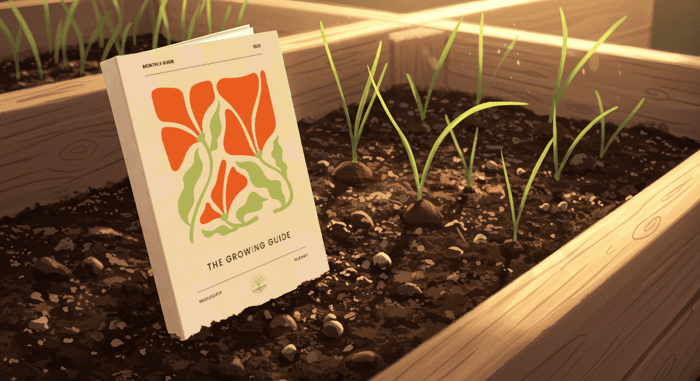
I built a printable garden planner instead of a SaaS app. The product worked. The business didn’t.
The problem with scratching my own itch
I built a tool for planners, not doers.
My product, called The Growing Guide, generates a personalized, month-by-month planting plan based on a user’s local climate and preferred crops. In other words: exactly the kind of product I would want to use.
I’m a classic overthinker, over-planner, over-preparer. My approach to gardening mirrors how I approach many of my interests: start with a mind-numbing amount of research and planning before even dipping a toe in the water.
As a gardener, that means I spend hours planning my garden before the season starts. I wanted a tool that would do that work for me and give me a solid plan to follow. So I built it.
In hindsight, I optimized for people who enjoy planning as much as I do—not necessarily for people who just want to get plants in the ground and learn as they go.
Fear-driven decisions delayed my launch
I was so afraid of missing potential sales that I delayed my initial launch.
To add credibility to the plans I was generating, I wanted to reference real time-to-harvest guidelines from seed suppliers. My idea was to scrape that data and link directly to the supplier from within the plan. Uh oh! What if I send my user to their site, and give them free business? Shouldn’t I be monetizing this relationship?
So I decided to build an affiliate system. It felt like low-hanging fruit—writing the code should be easy.
In reality, it turned into weeks of friction. The seed supplier’s affiliate program ran on fragile, outdated software, and customer support sent me in circles. I spun my wheels thinking I was constantly just an hour or two away from unlocking a second revenue stream.
The result? Zero affiliate sales—and a delayed launch.
Lesson learned: focus on one business model at a time. Seriously.
I chose an expensive demographic to test on
I assumed my target user was a relatively new gardener who wanted to learn and was tech-savvy enough to research problems online. I didn’t want to sell software to someone who struggled to navigate a website.
Some light market research suggested a growing group of younger gardeners (millennials), so I focused there instead of the much larger population of older gardeners who tend to garden for leisure, especially in retirement.
After some lackluster feedback I received in forums, I decided that I needed real validation from strangers—not just opinions.
Because I couldn’t reach this audience organically, I made a decision that shaped the next several months of the project:
I spent a lot of money on Google Ads.
The goal wasn’t sales at first. I wanted to observe behavior. Did people bounce? Use the free tier? Read the blog? Click through to pricing and leave?
I drove paid traffic to the site and used analytics to watch what people actually did.
I also hired a marketing agent. As a solo founder, I wanted someone experienced in my corner to bounce ideas off of. To his credit, I learned a lot. But I also let the relationship derail me.
His job was to believe in the product and push marketing harder. I trusted his confidence more than my data, and we spent time and budget reinforcing lessons we had already identified early on.
More on that in an upcoming post in /growth.
The result
I made three $25 sales. After roughly three months of development—averaging about 25 hours per week—I did the math. My hourly wage came out to around twenty cents.
Still, wins were real: I built a product I’m proud of, gained confidence, and had a lot of fun doing it.
Questions for other builders
For those who’ve built products around their own problems—how do you tell when your behavior isn’t representative enough to build around? At what point do you stop trusting “I’m the target user” and start treating yourself as an outlier?
Alternatively, if you were in my position, which assumption here would you challenge first?

Usually, before deciding to create a product for a user, I research existing solutions, their popularity, their functionality, and reviews describing desired features that are missing from them. If I discover that existing solutions are used by many people, but I'm not satisfied with them, and there aren't many additional requests, I assume I'm an exception rather than a typical user. However, this doesn't stop me from creating an MVP for testing in case the niche simply hasn't been explored.