How to Mint Your Own Set of In-Game Assets
Benefits of Minting NFTs in Metaverse Games: https://blog.mirrorworld.fun/p/benefits-of-minting-nfts-metaverse
Minting in-game assets in crypto games is the process of creating unique, limited-edition digital assets that can be bought, sold, and traded on blockchain networks.
This allows players to truly own their in-game items and have full control over them, rather than simply renting them from the game developer.
As a follow-up discussing the benefits of minting NFTs, this blog will quickly walk through an example of how a developer might mint in-game assets in a crypto game:
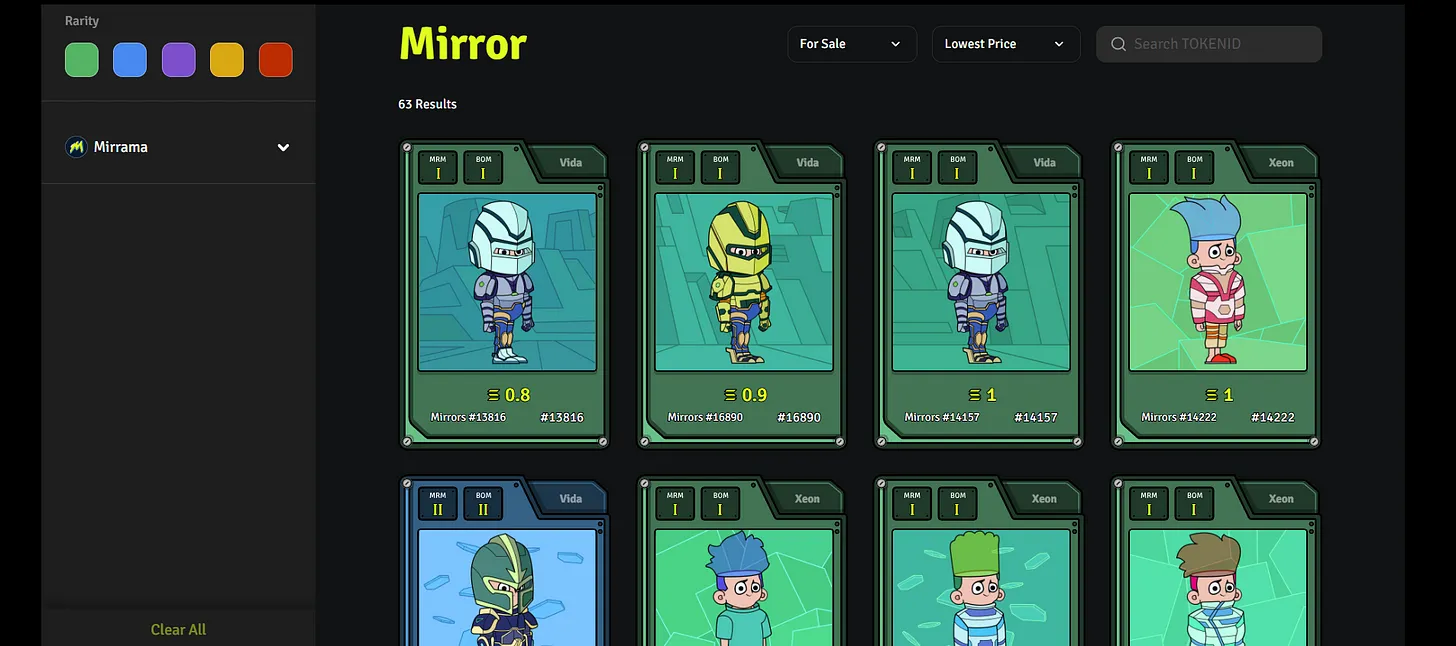
-
The developer first needs to choose a blockchain platform to create the tokens on. Ethereum is a popular choice for creating in-game assets because it allows for the creation of unique tokens using its ERC-20 standard.
-
The developer then needs to design the in-game assets that they want to create. These assets can be anything from digital collectibles, such as non-fungible tokens (NFTs), to in-game currencies or items.
-
Once the assets have been designed, the developer needs to create a smart contract on the blockchain platform that will manage the minting and distribution of the assets.
-
The developer then needs to integrate the smart contract into their game, so that players can interact with it and obtain the in-game assets.
-
Once the game is launched and players start playing, the smart contract will automatically mint new tokens and distribute them to players according to the rules defined in the contract.
The process above could be a pain for a small team, but just as what's mentioned in point 4, an SDK like Mirror World Smart SDK could help a lot with the whole process.
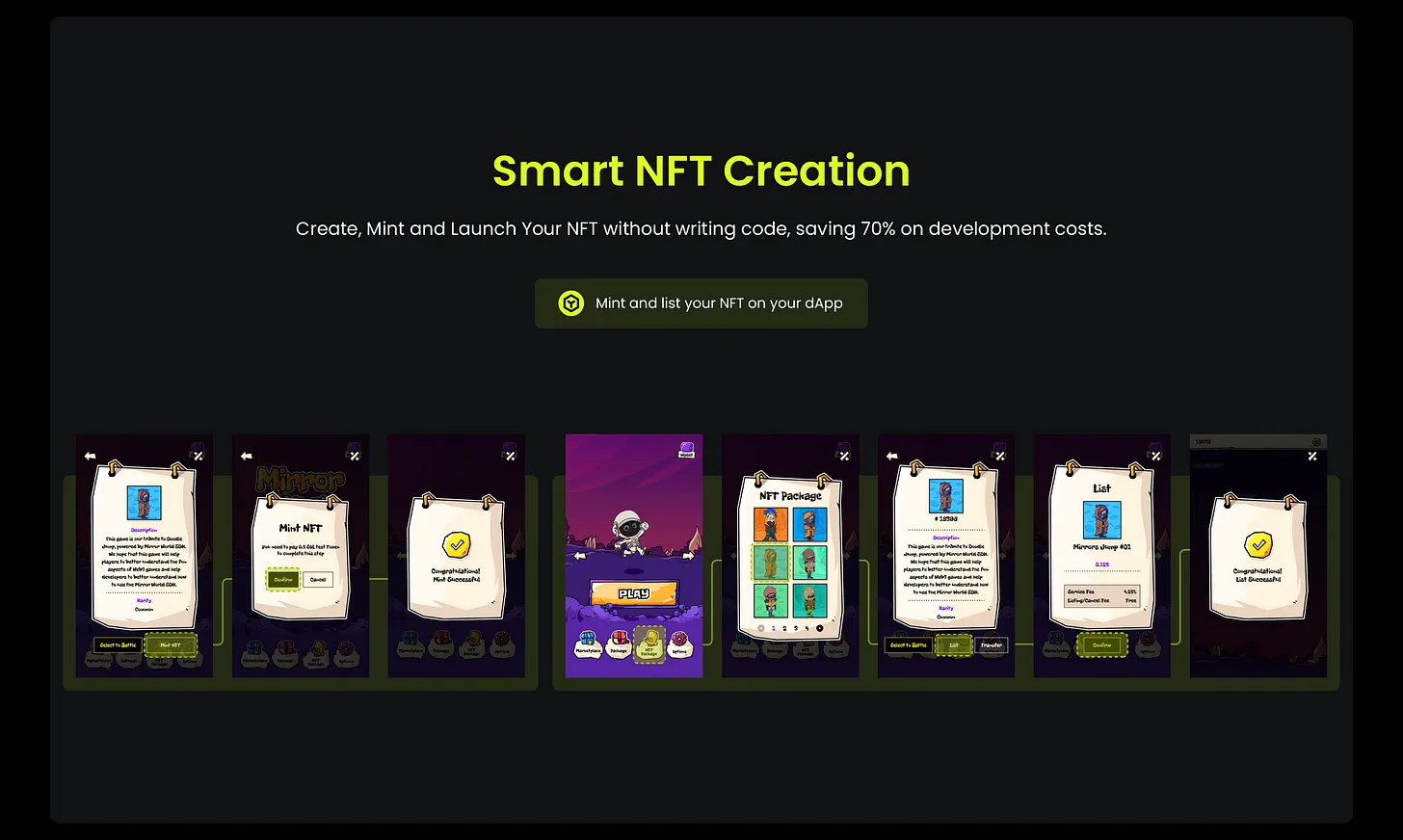
If you were to create an NFT collection in the game, in Mirror World Smart SDK, the whole process would take less than 10 minutes to deploy, which would be significant compared to doing all the steps above all over again.
All you have to do is to enter a couple of different attributes, upload or generate the NFT pictures or any in-game asset you would like to make, and the asset would be on-chain as you wanted.
The SDK would handle the complexities of interacting with the blockchain and managing the smart contract, allowing the developer to focus on the design and gameplay of their game and users to list and sell their items using the in-game wallet.
Such a smooth, coherent in-game purchasing experience would only take 30 minutes overall to deploy, saving tremendous energy for you to focus on your own game development.
