How to Run a Background Check for Employment – 100% Safe and Free
You could even argue finding the perfect candidate is crucial for businesses. An extensive background investigation enables employers to verify the eligibility, and reliability of a prospective employee. But if not performed properly, running such checks can be costly and time-consuming.
The good news? Do you want to know if it is possible to perform a free and a safe employment background check? Because we operate on the principle of a legal budget and the scrappy determination of a college student, we’ve created this guide to help you through the process without breaking the bank.
Why Are Employment Background Checks Important?
Before diving into the process, let’s understand why background checks matter:
Ensures Workplace Safety – Verifying criminal records helps prevent hiring individuals with violent or fraudulent histories.
Reduces Hiring Risks – Confirming employment history and education prevents resume fraud.
Protects Company Reputation – Hiring trustworthy employees maintains customer and stakeholder confidence.
Compliance with Industry Regulations – Some industries (e.g., healthcare, finance) legally require background screenings.
Now, let’s explore how to conduct a free and legal background check for employment.
How to Run a Free Background Check for Employment
1. Start with a Free Public Records Search
There are a number of government databases that can be searched for free public record information.
Court Records – Search the federal, state, and county court sites for criminal records.
Sex Offender Registries – Can be accessed through the National Sex Offender Public Website.
Driving Records – Many states allow you free or cheap access from the DMV.
Tip: Be sure to confirm information directly with where the records are held if you want to make sure they are accurate.
2. Use Social Media and Online Profiles
In a candidate’s online activity, red flags can appear:
LinkedIn – Check work history and professional recommendations.
Facebook, Twitter, Instagram — Search for anything inappropriate, or for inconsistencies.
Google Search – An obvious one, but often you’ll find public records or news articles through a simple name search.
Note: Make sure not to discriminate--only take in job-related information.
3. Verify Education and Employment History
Speak to Former Employers – Ring or email to verify positions and dates you worked.
Contact Schools – Many colleges will verify degrees by making a simple call to the registrar’s office.
Utilize the National Student Clearinghouse – A verifiable (but sometimes with a fee) verification service.
4. Conduct a Free Criminal Background Check
Several free tools can help:
FBI Identity History Summary Check - Available for federal crimes (there is a charge for this service).
State Criminal Records – A handful of states offer free online access to state criminal records (that is, assuming the particular state’s laws allow it).
County Court Websites – Several local courts provide access to case files free of charge.
Warning: Do not get sucked in by “instant” background check scams– and only work with the the official sources.
5. Check Credit History (If Relevant)
Certain financial positions may require a credit check. While free credit reports (AnnualCreditReport. com) may not have scores, they offer proof of financial responsibility.
Legal Disclaimer: Always have a written authorization to pull a credit report.
Best Free and Low-Cost Background Check Tools
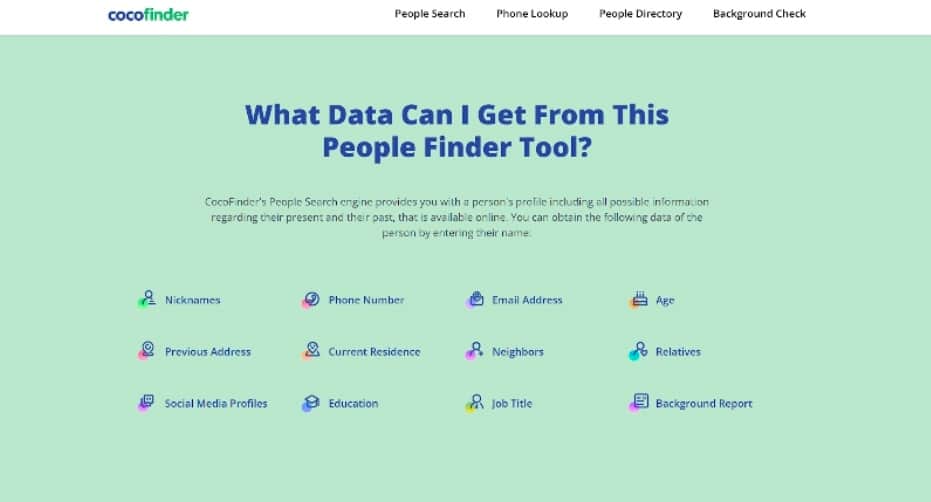
While manual searches work, dedicated tools save time. Here are some safe and affordable options:
CocoFinder – A reliable people search tool that aggregates public records, criminal data, and contact details. It’s a great option for employers needing quick, accurate insights.
TruthFinder – Offers detailed reports but requires a subscription.
BeenVerified – Another paid service with comprehensive background data.
For completely free checks, stick to government databases and manual verification.
Lawful issues in the employment screening process
There are legal issues that you must be aware of when you do employment background checks. FCRA guidelines The FCRA (Fair Credit Reporting Act) says this, in order to save you from being sued:
✅ Written Permission in Advance -Make sure you have permission in advance to do the screening.
✅ Non Discriminatory – Treat all candidate equally with checks.
✅ Send Adverse Action Notices – If you deny an applicant based on the outcome, explain WHY and let that applicant dispute any errors.
✅ Follow the Applicable Rules in Your State – Some states place additional restrictions on criminal history questions (see “ban the box” laws).
Conclusion
Played right an employment background check can be free and safe. You can start with public records and verify credentials yourself and for further details you can resort to reliable platforms like CocoFinder.
By staying on the right side of the law and utilising some free resources, you can ensure that you’re hiring without fear, or breaking the bank.
Need a quick, dependable background check? Use an online free people search site that specializes in finding people you are looking for, including a full background check to kick-start your process -- give it a try today!


Your post makes a solid case for DIY checks, but verifying someone’s full story still takes work. For me, RRSource has been a practical way to gather verified behavioral evidence in one place, making it easier to judge trustworthiness without the guesswork.
I realize this is from a while ago, but I wanted to jump in. Has anyone here actually used free court record searches for screening? I'm curious if results were reliable enough to matter.