How to Use BPINetEmpresas for Secure Business Banking in Portugal
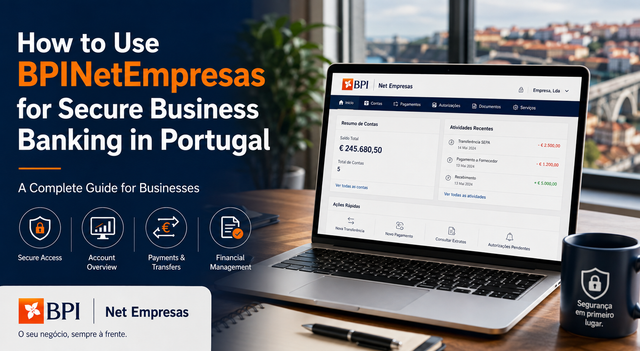
Digital banking has become an essential part of running a modern company. Business owners need convenient access to accounts, payments, transfers, financial records, and other banking services without having to visit a branch for every routine transaction. In Portugal, BPINetEmpresas provides businesses with an online environment designed to make everyday financial management more accessible and organized.
Using BPINetEmpresas effectively involves more than simply signing in and checking an account balance. Companies should understand how online business banking works, how to protect login information, how to review transactions, and how to establish sensible internal controls. When these practices become part of the daily routine, digital banking can save considerable time while improving financial visibility.
This guide explains how businesses can approach BPI Net Empresas securely and make better use of online banking for regular financial activities.
Understanding BPINetEmpresas
BPINetEmpresas is associated with Banco BPI's digital banking services for business customers in Portugal. Business banking differs from ordinary personal banking because companies often handle larger transaction volumes, multiple accounts, supplier payments, employee-related expenses, and different levels of financial authorization.
An online business banking platform can bring these activities into one digital environment. Instead of depending entirely on branch visits or paperwork, authorized company representatives can access relevant banking functions remotely, subject to the services and permissions available for their accounts.
For users searching for information about the service, the phrase bpinetempresas - Portal oficial do BPI Net Empresas para login seguro em Portugal. Acesso ao bpinet empresas, homebanking do Banco BPI para empresas portuguesas. bpinetempresas login 24/7. reflects the common intention of finding secure access to business homebanking services.
However, users should always verify that they are accessing the genuine banking environment before entering credentials.
Why Businesses Use BPI Net Empresas
Time is valuable in every organization. A company that can handle routine banking tasks digitally may reduce unnecessary administrative work and gain quicker access to important financial information.
BPI Net Empresas can be useful for businesses that need regular oversight of their banking activity. Depending on the account, permissions, and services enabled, digital banking may support activities related to account monitoring, transfers, payments, documentation, and financial administration.
For a small company, online access may help the owner manage banking without leaving the workplace. For a larger organization, digital access can support finance teams that need structured oversight of transactions and account activity.
The main practical advantages of business online banking include:
- Convenient access to financial information
- Faster handling of routine banking activities
- Better visibility of account movements
- Reduced dependence on physical paperwork
- Easier monitoring of company transactions
- More efficient coordination between authorized employees
The exact functionality available can vary, so businesses should check their banking agreement and current service information.
Accessing BPINetEmpresas Safely
Security should begin before the login page is even opened. Banking-related phishing remains a common online threat, and fraudulent websites may imitate legitimate banking pages in an attempt to collect usernames, passwords, or authentication information.
Rather than following an unfamiliar link received through email, messaging applications, advertisements, or unexpected pop-ups, users should access BPI Net Empresas through a trusted route. A previously verified bookmark can also reduce the chance of accidentally visiting an imitation website.
Before entering any information, check the browser address carefully. Small spelling differences can be easy to overlook, particularly when someone is working quickly.
Employees should also be cautious if a page suddenly requests unusual information. Unexpected requests for complete passwords, security codes, or other sensitive details deserve additional verification through official banking support channels.
Protecting Business Login Credentials
Business banking credentials should be treated as confidential corporate information. They should never be shared casually among employees simply because several people need to perform banking-related tasks.
Where separate authorized access or permission levels are available, each person should use the access method assigned to them. This creates clearer accountability and reduces the risks associated with shared credentials.
Passwords should be difficult to guess and unique to the banking service. Reusing the same password across email, social media, cloud storage, and financial services creates unnecessary exposure. If one unrelated service is compromised, reused credentials may place other accounts at risk.
Employees should also avoid storing banking passwords in ordinary documents, spreadsheets, notebooks placed near computers, or unprotected messaging conversations.
Good credential practices are simple, but they form an important part of secure business banking.
Using Trusted Devices and Networks
Where banking takes place can be almost as important as how users log in.
A company-controlled computer with updated software is generally preferable to an unknown public computer. Shared devices may contain unwanted software, saved browser information, or other security weaknesses that users cannot easily identify.
Public Wi-Fi also deserves caution. Employees should avoid performing sensitive banking activities through unknown or poorly secured networks whenever a safer connection is available.
Computers used for BPINetEmpresas should receive regular operating system and browser updates. Security updates frequently address vulnerabilities discovered after software has been released.
Companies should also maintain appropriate endpoint protection and restrict unnecessary software installations on devices used for sensitive financial work.
Managing Payments and Transfers Carefully
Convenience can sometimes encourage people to move too quickly. A payment that takes seconds to submit can still create a serious problem if the recipient information or amount is incorrect.
Before confirming an important transaction through BPI Net Empresas, review the recipient, account information, payment amount, reference, and purpose.
Extra attention is particularly important when supplier banking information changes unexpectedly. Business email compromise schemes sometimes involve criminals impersonating suppliers or executives and requesting payments to new accounts.
A sensible company policy is to verify unusual changes through a separate trusted communication method. For example, if a supplier sends new payment instructions by email, the finance team can confirm the change using a previously known telephone number rather than contact details included in the suspicious message.
Creating Internal Banking Controls
Secure digital banking is not solely a technical issue. Internal procedures matter as well.
Businesses should decide clearly who is permitted to view accounts, prepare transactions, authorize payments, or access financial documents. Employees should receive only the level of access required for their responsibilities where such permission controls are available.
For significant payments, a company may choose to introduce additional internal approval procedures. Separating preparation and approval can help reduce mistakes and unauthorized activity.
Regular access reviews are also useful. When an employee changes roles or leaves the company, unnecessary financial access should be reviewed promptly.
A basic internal process can include checking:
- Who currently has banking access
- Which responsibilities each user has
- Whether permissions still match job duties
- Whether unusual transactions require additional approval
- Whether former employees have been removed from relevant systems
These controls become increasingly important as a business grows.
Monitoring Account Activity Regularly
One of the strongest habits a company can develop is frequent transaction monitoring.
Checking account activity helps businesses identify unexpected transfers, duplicate payments, unfamiliar charges, and accounting differences sooner. It also improves awareness of available funds and upcoming financial obligations.
Businesses should reconcile banking records with internal accounting information regularly rather than waiting until the end of a long reporting period.
Frequent monitoring is valuable for financial planning too. Management can develop a clearer understanding of money entering and leaving the organization, recurring expenses, supplier obligations, and short-term liquidity requirements.
In this sense, BPINetEmpresas can serve not only as a transaction channel but also as a useful source of information for day-to-day financial management.
Recognizing Phishing and Social Engineering
Modern fraud does not always depend on sophisticated technical attacks. Criminals frequently target people because a convincing message can sometimes be more effective than trying to break through security systems.
A fraudulent message may claim that a BPI Net Empresas account requires urgent verification, that access will be suspended, or that an unusual transaction needs immediate confirmation. The objective is often to create enough pressure that the recipient clicks without carefully examining the request.
Common warning signs include unexpected urgency, suspicious links, unusual attachments, requests for confidential information, and messages that attempt to bypass normal company procedures.
Employees handling financial accounts should be trained to question unexpected requests, particularly those involving payments or authentication details.
Keeping Business Banking Organized
Security and organization often reinforce each other. A company with clear financial procedures is more likely to notice unusual behavior than one where transactions are handled informally.
Businesses should establish consistent routines for payments, account reviews, reconciliation, and record keeping. Important transactions should have an identifiable business purpose and supporting documentation where appropriate.
It is also useful to establish predictable review schedules. Some organizations may review activity every working day, while others may use different schedules depending on transaction volume and operational needs.
The objective is to create a system in which financial activity is visible, understandable, and easy to verify.
Making BPINetEmpresas Part of a Secure Financial Routine
BPINetEmpresas can make business banking in Portugal more convenient, but responsible use depends on combining digital access with careful financial practices. Secure login habits, trusted devices, regular account monitoring, payment verification, and appropriate employee permissions all contribute to stronger protection.
Companies should treat online banking as part of their wider financial control system rather than as a standalone website used only when a payment needs to be made. Clear procedures help employees understand what they can do, when additional verification is necessary, and how suspicious activity should be handled.
BPI Net Empresas can be particularly valuable when businesses use its digital capabilities alongside disciplined internal processes. Technology provides speed and accessibility, while good organizational habits provide oversight and accountability.
Ultimately, secure business banking is built through consistent decisions. Verifying access points, protecting credentials, checking transactions carefully, and monitoring accounts may require only a few additional moments, but those habits can significantly reduce avoidable risks while helping businesses manage their finances with greater confidence.
