How We Built a Cashless Smart Vending Machine MVP for a Startup
When a startup approached us with the idea of creating a cashless vending machine, the goal wasn't simply to automate product dispensing. They wanted a modern platform that could support digital payments, improve the customer experience, and be flexible enough to grow with their business.
Rather than modifying an existing vending controller, we decided to build a custom solution around a Raspberry Pi, a web-based interface, and the MDB protocol. This approach gave us complete control over the software while allowing the machine to communicate reliably with commercial vending hardware.
One of the biggest design goals was flexibility. Although the first deployment focused on a retail environment, the same architecture can easily be adapted for an Office Vending Machine or vending machine fitness centers, where users increasingly expect contactless purchasing and real-time inventory management.
Understanding the Problem
Traditional vending machines often rely on fixed payment systems that are difficult to customize. Traditional vending machines have no inventory. Manual inventory system is very complicated and hard to manage.The startup wanted something more flexible:
- Cashless payments
- QR code ordering
- Secure transaction verification
- Easy product management
- Remote software updates
- Commercial hardware compatibility
Choosing the Hardware
To keep the system modular, we selected hardware that could easily scale as new features were added.
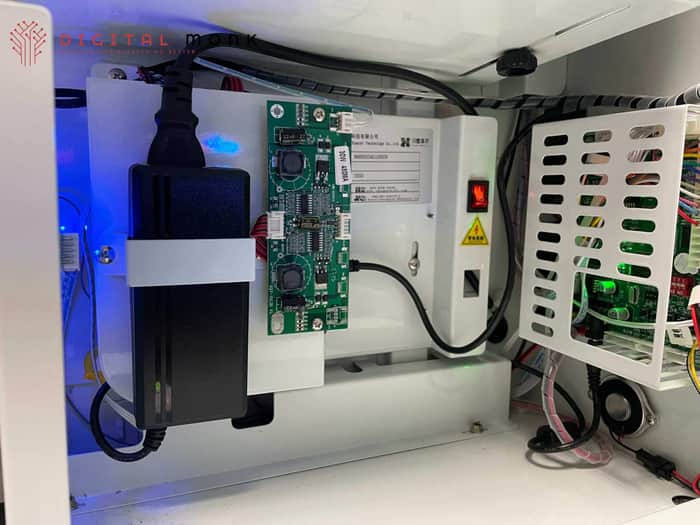
The final prototype included:
- Raspberry Pi
- MDB Interface
- Industrial Vending Controller
- Touch Display
- QR Code Payment Interface
- Network Connectivity
- Secure Power Management
Using Raspberry Pi made software development much faster while still providing enough performance for payment processing and machine control. The hardware components are easily available and affordable in price.
Software Architecture
Instead of writing one large application, we divided the system into independent services.
The software handles:
- User interface
- Product selection
- Payment verification
- Order validation
- MDB communication
- Machine status monitoring
- Error handling
This modular architecture simplified debugging and made future updates much easier.
Solving the Engineering Challenges
Reliable MDB Communication
Commercial vending machines depend on stable MDB communication. The controller had to receive accurate commands while handling unexpected situations without dispensing incorrect products.
Secure Payment Verification
Every purchase is verified before a dispensing command is sent. This prevents duplicate transactions and improves system reliability. If the payment method is not transferred properly then the vending machine indicates the alert signal.
Building for Scalability
Rather than designing software for a single machine, we built a platform capable of supporting additional payment methods, cloud monitoring, and future hardware upgrades.
User Experience
The purchasing process had to remain simple:
- Scan QR code
- Select a product
- Complete payment
- Receive confirmation
- Dispense product
Reducing unnecessary steps helped create a faster and more intuitive experience. This vending machine is approved by users and provides the best user experience.
Results
After multiple development and testing cycles, the final system delivered exactly what the startup required.
The completed platform provides:
- Cashless purchasing
- QR code payments
- Secure transaction validation
- Automatic product dispensing
- Reliable MDB communication
- Modular software architecture
- Commercial scalability
Because the hardware and software are loosely coupled, adding new payment gateways or expanding the product catalog requires minimal changes.
Lessons Learned
One of the biggest lessons from this project was that building embedded systems is only part of the challenge. Creating a dependable product also requires thoughtful software architecture, reliable communication between hardware components, and a user experience that feels effortless.
Designing around modular services instead of tightly coupled code made development easier and created a platform that can continue evolving as business requirements change.
Final Thoughts
Building this smart vending machine was more than an embedded systems project—it was about creating a flexible platform capable of supporting modern automated retail. By combining Raspberry Pi, web technologies, secure payment verification, and the MDB protocol, we developed a solution that is ready for real-world commercial deployment while remaining easy to maintain and expand.
Whether the machine is installed in retail stores, workplaces, or fitness facilities, the same core architecture provides a reliable foundation for the next generation of cashless vending solutions.
