How we cut average product ship time from 120 days to 38 days — what actually changed (and what didn't)
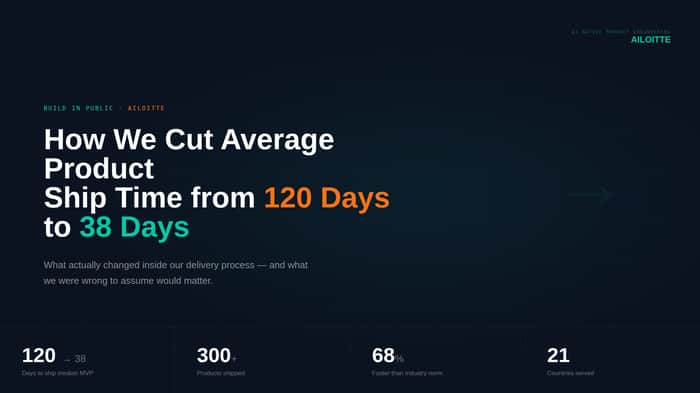
Two years ago, our median product ship time was somewhere north of 120 days. Today it's 38.
I want to be honest about what drove that — because most "we went AI-native" posts skip the parts that didn't change, and those are actually the most important.
What changed: the mechanics of delivery
The biggest shift wasn't the AI tools themselves — it was rebuilding the delivery architecture around them.
- Parallel Test Generation: Test generation used to happen after a feature was built. Now it's parallel. Agentic QA pipelines generate test cases from specs before a line of production code is written. By the time the build is done, test coverage is already there. That alone took weeks off our cycles.
- Async, AI-Assisted Reviews: Code review changed too. We moved from synchronous review gates to async, AI-assisted review with human sign-off reserved for architecture decisions and edge case logic. It sounds small, but it cut 8–12 days off the average engagement.
- Agentic Regression: The third shift was QA architecture itself — from manual regression testing to agentic regression suites that run on every push. Our AI Velocity Pods model is built on these three changes working in combination, not individually.
What didn't change: the stuff that actually matters
Clear requirements still make or break a project. AI doesn't fix ambiguous briefs — it amplifies them. A vague spec in 2022 produced slow, confused output. A vague spec in 2026 produces fast, confident, wrong output. Requirements discipline got more important, not less.
Human judgment on edge cases didn't get automated away. It got concentrated. We spend less time on boilerplate decisions and more on the 10% of decisions that actually determine product quality.
Timeline predictability still requires honest scoping. Our Startup MVP Velocity model works because we scope aggressively upfront, not because AI magically resolves complexity.
The honest takeaway
120 to 38 days isn't magic. It's what happens when you rebuild delivery workflows around AI capabilities instead of bolting AI tools onto legacy processes.
The builders we most respect aren't asking "how do we use AI more." They're asking "what does delivery look like if we design it for AI from day one."
That question is worth sitting with.
What's the biggest bottleneck you've eliminated from your own shipping process? Curious what's worked for other indie hackers and teams here. Let's swap notes in the comments.
Tags: #tech #dev #ai #automation #milestones #growth #bootstrapped #productivity
