I built 12 dev tools that run entirely in the browser - and I'm making $0 (but getting 1000s of users)
Hey IH! 👋
I'm launching noserver – a collection of 12 developer tools that run 100% in the browser using Web Crypto API and WebAssembly. Zero server costs, zero data collection.
The Problem:
I was at work decoding JWT tokens on jwt.io without knowing what they were doing with them. Same with uploading customer images to TinyPNG. Felt wrong. So I built local versions instead.
What I Built:
• JWT Debugger – decode & verify tokens locally
• JSON Formatter, Validator, YAML converter
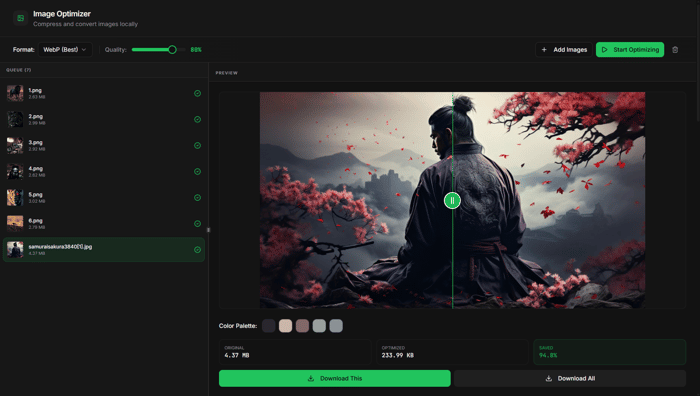
• Image Optimizer (saves 90%+ file size)
• PDF Merger/Splitter
• SVG Optimizer
• UUID, Base64, DevShot (code screenshots)
• Data Transformer (CSV→JSON/SQL)
All runs in your browser. No uploads. Works offline.
The Tech:
- Next.js + TypeScript + Tailwind
- Web Crypto API for JWT verification
- WASM for image processing
- Zero external API calls (everything client-side)
Metrics so far:
- Launched 1 week ago
- 5000+ daily visitors
- 95% bounce rate on initial traffic (need better SEO lol)
- $0 in revenue (intentional – not monetizing)
- ~200 GitHub stars
Why I'm sharing:
I want feedback. Is this useful? Should I:
- Add more tools?
- Monetize premium features?
- Open source it?
- Build a CLI version?
Also happy to chat about:
- Privacy as a feature
- Building tools that solve real problems
- Next.js performance tricks
- WASM integration
Check it out: https://noserver.app
Roast it in the comments! 🚀

— we're also building on Next.js + TypeScript + Tailwind and the developer experience is genuinely hard to beat for shipping fast. The "privacy as a feature" angle is smart and underrated.
On th— people who actually have budget and recurring needs. Dev tools like JWT debuggers attract developers who famously resist paying for anything.
We learned something similar building our AI ad creative tool — the free tool that attracted the right audience (founders who need ads but can't design) converted way better than trying to be everything to everyone. Your 95% bounce rate might actually improve a lot if you pick 2-3 tools that serve one specific audience and build landing pages around their actual workflow rather than a general dev tools directory.
One more thought: the image optimizer alone could be a standalone product if you positioned it as "optimize images for web without uploading to a third party." That's a message that resonates with anyone handling customer data.