I built a free car maintenance app where your data lives in YOUR storage (not mine) — first 50 iOS downloads, already in 3 countries
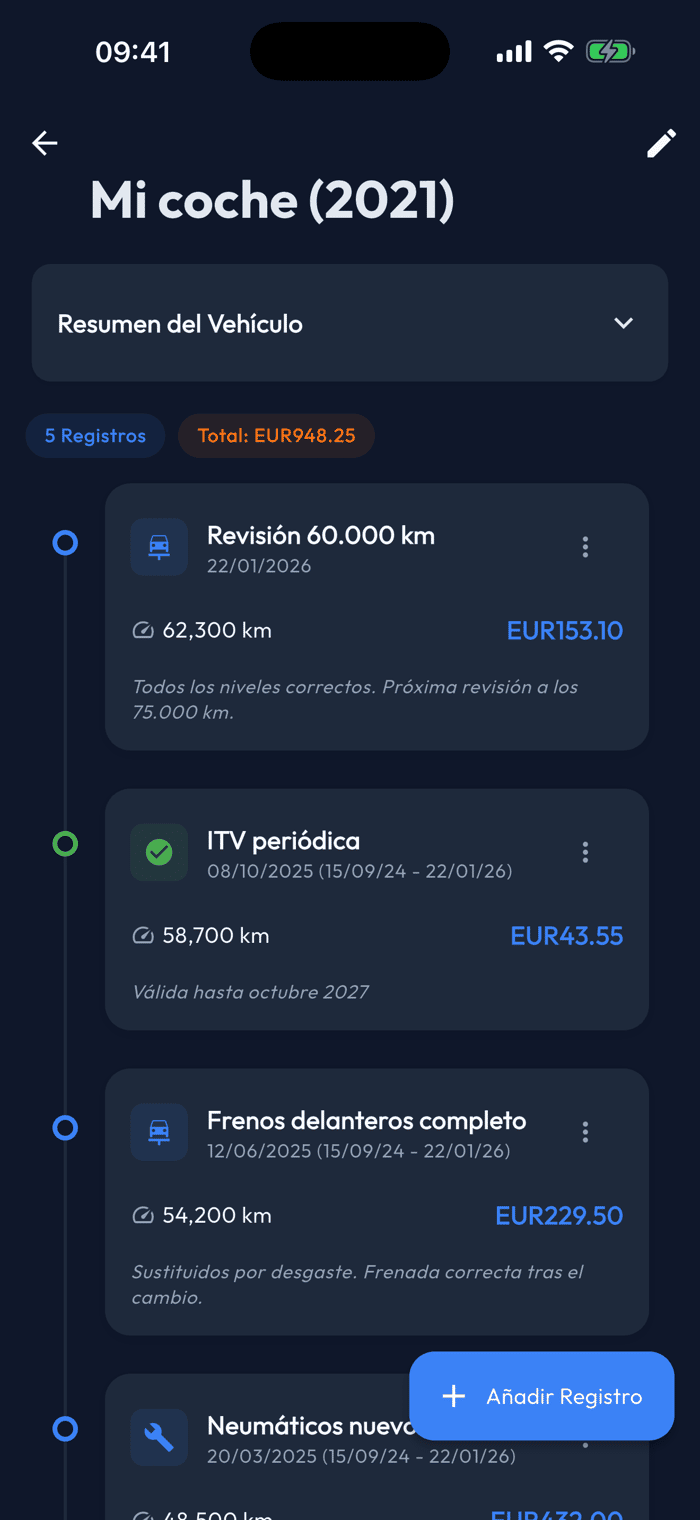
Six months ago I shipped OwnAutoCare, a free vehicle maintenance tracker for iOS, macOS and Android. The core idea: your data never touches my servers. It goes directly to your own Google Drive or iCloud.
Not as a privacy marketing claim — as actual architecture. There are no OwnAutoCare servers. There's no database to breach. The app is just an interface.
Where I am today (no paid marketing):
- 50 first-time iOS downloads, 6,100 impressions in the App Store
- ~12-15 daily active users on Android
- Organic installs in Spain, Ecuador, and Singapore — I targeted Spain only
- 1.19% App Store conversion rate (still low, working on ASO)
What I built:
- Service history with photo attachments for invoices
- Multiple vehicles, ZIP export of full history
- iOS, iPadOS, macOS, Android — built solo with Flutter
The hard part wasn't the tech.
Getting the first real users (not friends) to actually use it consistently is what I underestimated. The app solves a real problem but people open it twice a year. That's actually fine — utility over engagement is the design goal — but it makes growth slow and word-of-mouth hard to trigger.
Currently in the "get traction before monetizing" phase. No subscription yet.
Happy to talk architecture, Flutter cross-platform decisions, or the no-server privacy model.
App: https://ownautocare.com
iOS: https://apps.apple.com/es/app/ownautocare/id6759071393
Android: https://play.google.com/store/apps/details?id=eu.rubenalvarezgonzalez.ownAutoCare

What’s interesting here is that the privacy decision isn’t just a feature—it fundamentally changes the business model constraints. No backend means no data leverage, no sync loops, and no engagement-driven growth mechanics, which forces distribution to rely purely on utility and intent. That’s a much harder growth path, but also a much cleaner trust position, especially for low-frequency apps like maintenance tracking.