I built a metered billing backend so I'd never rebuild it again.
I've shipped four products in the last one year. Same problem every time:
Auth, payments, and basic setup: fast (boilerplate helps).
Usage-based billing infrastructure: brutal.
Every time I need:
- Real-time quota enforcement
- Multi-currency pricing
- Seat-based overages
- Notification workflows
- Plan versioning without customer migration hell
Every time I rebuild it.
After the last rebuild, I packaged it into BuildBase.
What it is:
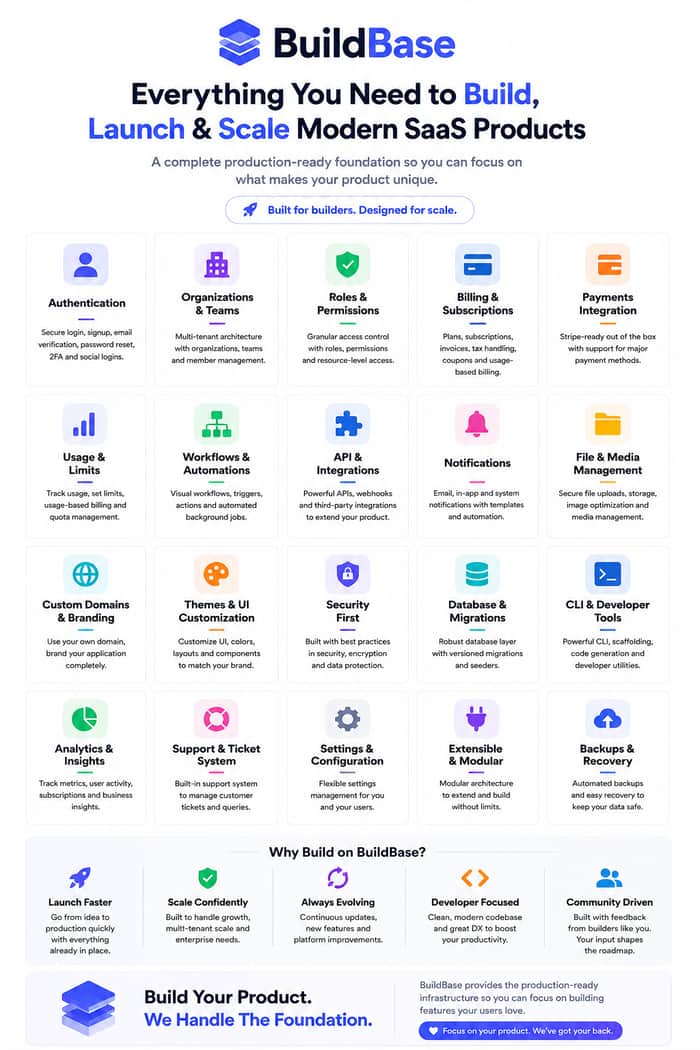
A React/Next.js SDK + hosted backend that handles the infrastructure layer most builders end up needing once they're scaling:
- Auth + workspaces + RBAC
- Metered usage with quota gates (the hard part)
- Email/push notifications + lifecycle workflows
- Multi-currency + plan versioning
- Feature flags + CRM basics
- API-key layer (fully headless if you want it)
One SDK. One dashboard. One bill.
Who it's for:
Indie builders and founders who shipped something and are now hitting the scaling problems that boilerplates don't solve.
You know the type: shipped fast, got users, now managing billing complexity they didn't expect.
Proof:
I use it across my own products: PlugNode (charges per flow-run), AgentCenter (per-agent pricing), RemoteWait (SMS alerts + subscriptions). Live, real revenue, real quota enforcement.
I'm not selling you a demo. I'm using the infrastructure daily.
Why I'm posting:
The builder community (especially founders doing metered/usage-based pricing) is where the real scaling problems happen. Everyone ships fast using templates or boilerplates. Then everyone hits the same wall: you need a real backend infrastructure layer.
We built that layer.
If you're dealing with metered billing and it feels like you're maintaining a second company just to handle billing logic, this is what we solve.
No pressure. We're early (v0.0.x, solo founder), open beta, learning from every customer.
If it resonates, check it out: buildbase.app

This is a real pain, and the proof from your own products makes the post much stronger.
The part I’d be careful with is the first-customer frame.
“Indie builders who need metered billing” is true, but it may still be too broad for the first serious beta customers. The wrong early users could make BuildBase feel harder to sell than it actually is.
I wouldn’t solve that loosely in the thread because the answer changes the landing message, beta qualification, and first outreach angle.
If you’re open to it, share your email and I’ll put the tighter first-customer read together properly.