I built a monitor comparison site because buying monitors still sucks
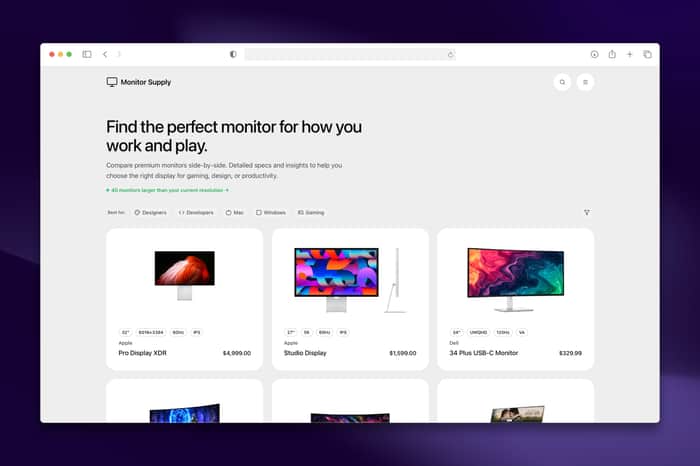
After buying too many monitors and hating every comparison site, I built Monitor Supply. It normalizes specs and ranks monitors by user persona with visible scoring. Some affiliate links, disclosed. It’s early. Would love feedback.

This pain is very real — specs are fragmented and comparison is still oddly hard. Nice to see someone actually ship around it.
At this stage, I’ve found clarity comes from which comparison actually changes a buying decision (price vs panel type vs use-case fit, etc.).
Curious — what’s the one action you’re watching to know the site is helping (e.g., outbound clicks, saves, or users narrowing to a final shortlist)?
For a bit more context:
I built Monitor Supply after repeatedly struggling to compare monitors across brands. Even when two monitors look similar on paper, specs are labeled differently, emphasized selectively, or buried depending on who the product is “for”.
The core idea is to treat monitors as structured data first. Specs are normalized so like-for-like comparisons are possible, and the “best for” lists are based on explicit scoring criteria tied to user personas (designers, developers, gamers, mac/windows users). The weighting and tradeoffs are visible rather than implied.
There are affiliate links on some products, but rankings are not influenced by that and disclosure is explicit.
What I’m trying to learn right now:
If you’ve built a comparison site, marketplace, or data-heavy product, I’d especially value feedback on what you’d pressure-test first or what you’d rip out entirely.
Happy to answer questions or share implementation details if useful.