I Built a Polaroid Camera with AI in 10 Minutes, Then I CriedNot From Nostalgia, But From Shock
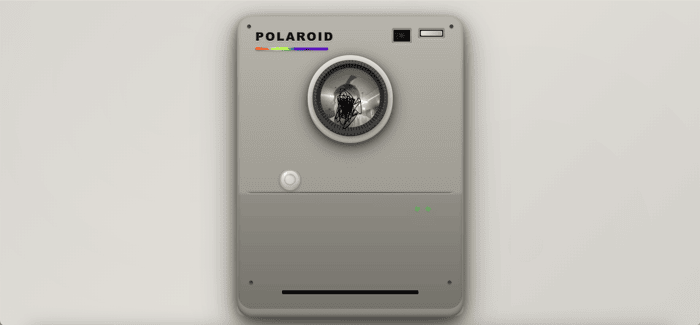
Last night I created a vintage Polaroid camera app on SeaVerse.
In less than 10 minutes, a fully functional app that accesses your camera, prints retro photo papers, and lets you drag them around appeared on my screen.
I stared at those scattered "Polaroid photos" on the virtual desktop, and suddenly felt something indescribable.
Not pride. A shock close to fear.
This Isn't "Coding" — This Is "Wishing"
To build something like this before, I needed:
Set up dev environment (30 mins)
Call WebRTC API (1 hour reading docs)
Write CSS for Polaroid texture (2 hours debugging)
Implement drag-and-drop logic (debug until breakdown)
Mobile responsiveness (another hour)
Now?
I just said: "I want to make a vintage Polaroid camera"
Then AI asked me a few questions:
What style? (I said vintage, warm)
What features? (Take photos, save, drag)
10 minutes later, it was running in the preview.
Open camera, click, photo paper ejects from the "camera," slowly develops, can be freely dragged, even has delicate paper texture and shadows.
I wrote nothing.
I'm Starting to Question What "Technical Barrier" Even Means
You know what? I've been a frontend developer for 5 years.
In those 5 years, I learned React, Vue, TypeScript, Webpack, Vite...
I thought these skills were my moat.
But today, looking at SeaVerse's interface, I suddenly realized:
"Technical barriers" might just be an excuse for tools that aren't good enough.
Polaroid camera doesn't need WebRTC knowledge.
Animation effects don't need hand-written CSS.
Drag interactions don't need coordinate calculations.
You just need:
Know what you want
Describe it in plain language
Wait 10 minutes
This is fucking insane.
But I'm Not Anxious About Job Loss — I'm Excited
Many people panic when they see AI coding: "Developers are going to lose their jobs."
Honestly, I'm not worried at all.
Because what I see isn't "AI stealing my job," but:
AI eliminating the repetitive labor that "shouldn't waste time anyway."
Before, 80% of my time was spent on:
Setting up environments
Reading documentation
Debugging
Writing boilerplate code
Only 20% on actual "creation."
Now?
I can spend 100% of my time thinking about "what to build" and "how to make it better."
I don't have to debate "CSS or JS for this animation" anymore. I only need to think "should I add this animation" and "will it improve the experience."
This is what I actually want to do.
SeaVerse Made Me Rethink "Development"
I used to think development was:
Write code
Compile
Deploy
Pray it doesn't break
Now I think development is:
Think clearly about what you want
Describe it clearly to AI
Rapidly validate ideas
Continuously iterate and optimize
From "code monkey" to "product designer."
From "implementing requirements" to "creating experiences."
This is a qualitative leap.
After Building the Polaroid Camera in 10 Minutes, What Did I Do?
I didn't brag "I built an app."
I opened my idea list — those ideas previously shelved because they were "too troublesome" or "no time":
An AI album that organizes my photos
An interactive math game for kids
A 3D map tracking travel routes
Before, these ideas stayed in my head because the implementation cost was too high.
Now?
Every idea could become reality in 10 minutes.
It feels like:
You used to walk for 1 hour, now you have a teleporter.
You used to lay bricks for 1 day, now you have an excavator.
Not just faster — the entire game has changed.
To Those Still Watching From the Sidelines
If you're still hesitating about trying AI dev tools,
If you're still worried "will I become obsolete if I learn this,"
I want to tell you:
What makes you obsolete isn't AI — it's the moment you refuse to use AI.
SeaVerse isn't a "code generator."
It's an "idea materializer."
It lets everyone with an idea see their creativity running in 10 minutes.
This isn't the end of programming. This is the liberation of creativity.
Finally
I sent that Polaroid camera to a friend.
She said: "Wow, you made this? How long?"
I said: "10 minutes."
She didn't believe me.
I said: "Really, you can too."
Then I sent her the SeaVerse link.
I don't know if she'll try it.
But I know those who dare to try are already living in the future.
And those still debating "will AI replace programmers,"
Are still living in the past.
In 2025, don't learn programming.
Learn to program with AI.
That's the real superpower.
P.S. After writing this, I spent another 10 minutes building an "article image generator" with SeaVerse.
I can't stop now.
Is this what "creative liberation" feels like?
I fucking love it. 🔥
Appendix: What Is SeaVerse?
SeaVerse is an AI Native development platform that lets you:
Describe ideas in natural language, AI implements them
See runnable apps in 10 minutes
Supports web apps, mini games, multimedia content and more
Zero barrier, no programming knowledge needed
Technical Details (for those who care):
Modern architecture based on Vite + TypeScript
MPA (Multi-Page Application) routing system, each app runs independently
Real-time preview, WYSIWYG
Supports LLM API, multimodal API, Agent API calls
My Take:
This isn't "yet another low-code platform."
This is "the first platform where AI actually codes for you."
What's the difference?
Low-code: Drag components → Configure parameters → Generate code
SeaVerse: State idea → AI understands → Runs directly
One is "simplifying operations," the other is "understanding intent."
World of difference.
🔗 If you want to experience the thrill of "10-minute idea realization":
SeaVerse Official Site
💬 Tell me in comments: What idea do you most want to realize with AI?
🔥 Like = You believe AI will change how we create
👀 Save = You're ready to try it
🚀 Share = You want more people to see the future
#SeaVerse #AICoding #CreativityLiberation #FutureIsNow #TechRevolution

Love how fast you were able to build that — it’s a great example of how AI can accelerate prototyping and get you to something tangible very quickly.
From a developer perspective, one of the interesting parts of using AI for physical or interactive builds is handling the gap between the model output and real-world constraints — hardware interfaces, latency, error conditions, etc. It’s one thing to generate code or props, and another to make it reliably function under a variety of inputs or conditions.
In your AI-powered Polaroid, what parts of the experience required the most manual glue or iteration once you moved from “it works in concept” to “it works reliably in practice”? That’s often where the real engineering effort lives.