I Built a Tool to Automate the Boring Part of SEO: Writing Alt Text
As indie hackers and developers, we love shipping. We love writing code, fixing bugs, and seeing our products go live. But there is one part of the process that always kills my momentum: the content grind. specifically, handling image assets for SEO and accessibility.
You upload a screenshot or a product mockup, and then you hit the brakes. You have to stop and describe the image for Google. It sounds simple, but when you have to launch a landing page with 20 visuals, it becomes a massive time sink.
I found myself staring at the cursor, struggling to accurately describe this image of a dashboard without sounding repetitive. I realized I was wasting hours on manual data entry.
I needed a way to describe an image instantly without leaving my browser or context-switching to ChatGPT. So, I built a Chrome extension to handle it.
The Problem: "I'll Add It Later"
We all tell ourselves we will fix the SEO later. We rarely do. This leaves our projects with poor accessibility scores and missed traffic opportunities.
The friction is real. To write a good description for a picture requires creative energy. When you are tired after a sprint, you make mistakes. You might write a generic picture description that offers no value. You might even be so exhausted you search how to "discribe the picture" with a typo because your brain is fried.
I needed an AI describe image workflow that was native to the browser. I wanted an AI image description generator that just worked.
The Solution: Image Describer
I built Image Describer as a lightweight extension. It uses computer vision to analyze pixels and generate semantic text. It functions as a personal image describer AI that lives in your browser.
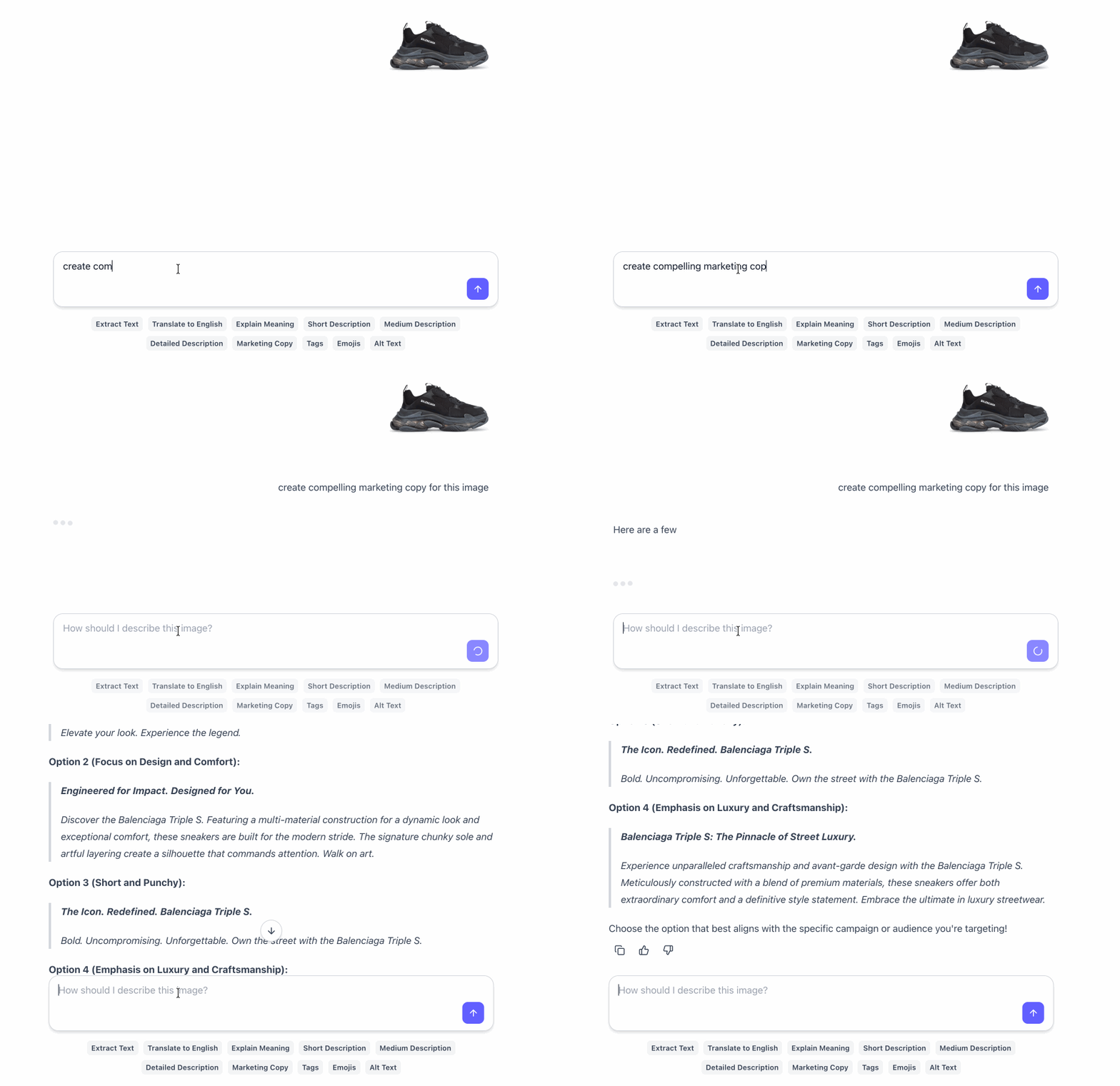
How it fits into the workflow
- Select any asset on the page
- Let the AI describe image context
- Copy the text to your clipboard
You simply ask the tool to "describe this image", and it returns a structured caption.
Use Cases for Makers
While I built this for my own SEO, I realized it is a versatile AI description generator for many "boring" tasks we face.
1. E-commerce & Side Projects
If you are running a Shopify store or a merch site, this is your AI product description generator. It analyzes product shots and writes the specs. It helps you describe this photo of a gadget or tee-shirt to potential buyers without the writer's block.
2. Accessibility (A11y)
This is non-negotiable in 2026. Screen readers need a valid description of a image file. This tool ensures you describe photo elements correctly for visually impaired users.
3. Social Media
When you share your "Building in Public" updates on Twitter, you need captions. The tool helps you describe the picture in a way that provides context. It solves the problem of how to describe this picture for the feed.
Why Not Just Use GPT?
Generic chat interfaces require too many clicks. You have to download, upload, prompt "describe image AI style", and copy back.
My extension acts as an on-page image describer AI. It allows you to describe an image right where it lives.
It captures details I often miss. It knows how to describe photo lighting, text (OCR), and composition. It provides a consistent picture description every single time.
Why Automation Matters
We should focus on building value, not labeling pixels. By using an AI image describer, I saved myself about 2-3 hours a week on content management.
It serves as a reliable AI image description generator that scales. Whether you need to describe this picture for a doc or describe a picture for a blog, automation is key.
What do you think?
I’m putting this out there to see if it solves the problem for others as well as it did for me. I’d love to hear your honest feedback on the UX — specifically, if the generation speed feels right.
You can check it out here: Image Describer for Chrome
Hopefully, this helps you the next time you need to describe a picture for a project. I’m letting the image describer AI handle the grunt work now so I can focus on the product logic.
Let me know your thoughts in the comments! 👇

This is a solid use case — alt text is one of those things everyone knows they should do, but almost no one enjoys doing consistently.
At this stage, I’ve found the key question isn’t how well the automation works, but what behavior it actually changes — e.g. are people adding alt text more often, or shipping content faster because this friction is gone?
Curious — what’s the one signal you’re watching to decide if this is worth doubling down on (time saved, pages optimized, or something else)?
Thanks! You nailed it - removing the friction is the goal. Regarding the signal: I'm focusing on "Time Saved" (implied by the number of generations)
My hypothesis is simple: if a user generates 20 descriptions via the extension, they just saved ~30-60 minutes of manual typing and context switching. If that number goes up, it means the product is worth doubling down on
That’s a strong proxy.
Tracking volume of voluntary usage (20+ generations) ties time saved directly to real behavior, not surveys or intent.
If users keep generating in batches without being nudged, that’s probably the clearest “this belongs in my workflow” signal you could get.
Hey hackers! 👋
I'll be hanging around in the comments for a while. If you have any questions about how I implemented the OCR or the Vision API, feel free to ask. Also open to any feature requests!