I built a URL indexing SaaS in 40 days — here's the honest story
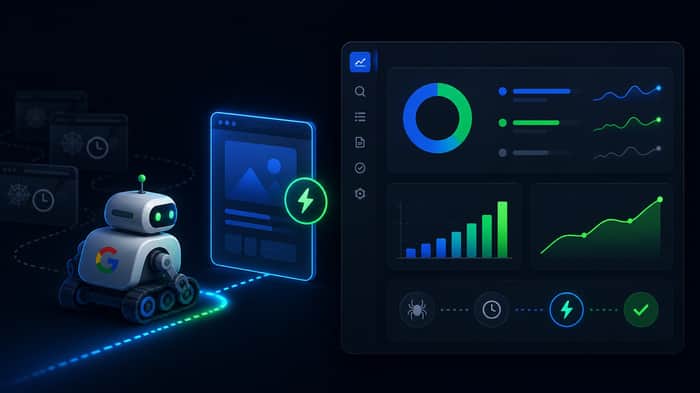
I built a URL indexing SaaS in 40 days — here's the honest story
For years I dealt with the same frustrating SEO problem: publish a page, wait 2–4 weeks for Google to discover it.
The Google Indexing API exists and solves this — but setting it up is painful:
- Create a Google Cloud project
- Configure a service account + OAuth 2.0
- Handle batch requests (max 100 URLs per call)
- Manage quotas across multiple API keys
- Monitor whether Googlebot actually showed up
So I built IndexerPro (https://indexerpro.net) — a SaaS that handles all of this for you.
How it works
- Paste URLs manually, upload a TXT file, or connect your Sitemap
- We submit via Google Indexing API + IndexNow (Yandex/Bing) simultaneously
- Googlebot arrives in 1–4 hours on average
- You get detailed stats on every single bot visit
What makes it different from competitors
Most indexing services just fire-and-forget. You never know if the bot actually came.
We built two things nobody else has:
AI Bot Analytics
Track which AI crawlers visited your pages — GPTBot, ClaudeBot, PerplexityBot, Gemini, Grok — broken down by batch. As AI search grows, getting cited in ChatGPT and Perplexity is becoming as important as ranking in Google.
Bot Guarantee
If Googlebot doesn't visit your URL — we resubmit for free. Still no visit — automatic points refund. No manual support tickets, no questions asked.
Where I am right now
- Built in 40 days with AI assistance
- Launched 10 days ago
- 5 paying users already
- Blog live with SEO content
- Working on distribution (Product Hunt next)
Stack: Laravel, PHP 8.3, MySQL — built solo with AI.
Pricing
10 points = 1 URL = $0.01. No subscription — pay only for processed URLs.
20 free URLs on signup, no credit card required.
Would love honest feedback from anyone who does SEO or manages content-heavy sites.
What's your biggest frustration with Google indexing right now?

Update — Network / Multi-server architecture
Built a master-node network system. One IndexerPro instance acts as "master" — it controls child servers, monitors their status in real-time, distributes Google API keys, and can log into any child server with one click.
Why this matters: Google Indexing API quota is per account. With 50 API keys across 50 servers — each with 100k URLs/day quota — the network capacity reaches 5 million URLs/day.
Each key is isolated to one server. Google never sees cross-account patterns. Clean separation, no ban risk.
The master dashboard shows live stats for each node: URLs sent today, queue depth, errors, load average, online/offline status.
Still early — but the architecture is live and tested.
Update — Bing Webmaster API live
Added Bing Webmaster API integration. Now when you submit URLs, they go to Google Indexing API + IndexNow + Bing simultaneously.
Current Bing quota: 100 URLs/day, grows automatically as the account builds history. Submission happens through a verified redirect domain — cleaner signal to Bing than raw API calls.
The "Google + Bing API" and "All search engines" buttons are live in the submission UI. For now admin-only while quota scales, then opening to all users.
Update — Day 24
Quick numbers since launch:
18 registered users
9,939,496 URLs submitted total
First organic referral from ChatGPT (?utm_source=chatgpt.com) — someone asked ChatGPT about indexing tools and it recommended IndexerPro with a direct link
The ChatGPT referral was unexpected. No outreach, no ads — just a user who got a recommendation from an AI. That's the new organic channel nobody talks about yet.
The "Bot Guarantee" and server-log verification is a massive trust-builder for this category. Most SEOs are so used to "indexing" being a black box that showing them the actual timestamp of Googlebot's arrival is a product in itself.
One thought on the AI Bot Analytics (GPTBot, ClaudeBot, etc.): as Perplexity and SearchGPT start to eat into traditional informational query traffic, the "indexability" for AI bots is going to become a standalone service. I'd consider a version of your landing page that targets people specifically worried about being left out of LLM training/retrieval cycles.
If you want a substantive conversion teardown of the IndexerPro homepage or the onboarding flow, I do them for $1 here:
Tracked example: https://roastmysite.io/go.php?src=external_manual_ih_alex80_indexerpro_may20_usd_presell_hv
The standalone AI indexability service framing keeps coming up in this thread — and you're right that it's a different audience. The landing page targeting LLM retrieval cycles is on the list.
The timestamp visibility was a deliberate product decision — the guarantee only works if the proof of visit is verifiable. That's the whole contract.
5 paying users in 10 days is honest progress. Harder question is whether they stick after their first 1k-URL burst. Most indexing tools hit a wall when the buyer figures out they actually need it every 2 weeks for fresh content, not a steady drip.
That's the exact retention question I'm watching. The pattern so far: users with content-heavy sites (blogs, e-commerce with frequent updates) come back naturally because fresh pages need indexing on a rolling basis. The "burst" users are harder to retain.
The mechanism I'm betting on is the bot visit logs. Once someone sees Googlebot timestamps on their URLs, they start treating indexing as a workflow step, not a one-time fix. That changes the usage pattern from burst to recurring.
The bot-log angle is a strong wedge. It reframes the product from "fix my indexing" to "show me indexing is happening," and the second one people check on a loop. I'd stop treating the burst users as a retention problem though. They're a different product, and you might do better letting them churn cleanly and pricing for that than bending a one-time job into a habit.
Lovely... Lovely… If you are looking for contacts to help boost your sales and marketing... I have lists of high networth investors and could tailor customers that could either invest or boost customer sales. We have also helped founders get featured on Forbes, Bloomberg and many more. shoot me a message on telegram @caseyimafidon
What is the different using the Google indexing API and Google Search console manually?
Great question. Both tell Google about your pages, but they work very differently.
Google Search Console (manual): you paste one URL at a time into the URL Inspection tool and click "Request Indexing." Limit is 10 requests per day per property. Only works for sites you own and have verified. Good for individual priority pages, not practical at scale.
Google Indexing API (programmatic): sends HTTP requests directly to Google's servers with a list of URLs. Fully automated, works 24/7, can be batched up to 100 URLs per request. No manual clicking, no daily limit headaches at scale.
The practical difference: if you publish 50 pages a day, Search Console would take 5 days to submit them all manually. The API does it in seconds, automatically.
IndexerPro uses the API under the hood — you paste URLs or connect a sitemap, and we handle the authentication, quota management, and batch logic so you don't have to set up service accounts or OAuth yourself.
Thanks for detailed answer. I was wondering about the time takes to google to index the page. Is there any different between Google indexing API and Google Search console from the time perspective?
The "Bot Guarantee" and server-log verification is a massive trust-builder for this category. Most SEOs are so used to "indexing" being a black box that showing them the actual timestamp of Googlebot's arrival is a product in itself.
One thought on the AI Bot Analytics (GPTBot, ClaudeBot, etc.): as Perplexity and SearchGPT start to eat into traditional informational query traffic, the "indexability" for AI bots is going to become a standalone service. I'd consider a version of your landing page that targets people specifically worried about being left out of LLM training/retrieval cycles.
If you want a substantive conversion teardown of the IndexerPro homepage or the onboarding flow, I do them for $1 here: https://roastmysite.io/go.php?src=external_manual_ih_alex80_indexerpro_may19_usd_presell_hv
The timestamp visibility was a deliberate product decision — not just a feature but the trust mechanism the whole guarantee is built on. You can't refund automatically without proof of visit.
On AI indexability as a standalone service — that's exactly the direction. The current AI Bot Analytics tracks who came. The next layer is why they came, what they extracted, and whether the page structure made it easy or hard for LLMs to cite. That's a different product from indexing submission, and you're right that it's a separate audience: people who don't have an indexing problem but do have an AI visibility problem.
The landing page targeting LLM retrieval cycles is on the roadmap.
Love the honesty here because distribution is usually harder than building for most founders. Solving a real indexing pain point and shipping fast is already a strong start, but getting consistent distribution is where the real challenge begins.
Foundersbar helps startups think beyond product launches by focusing on growth, visibility, and long term traction planning.
Agreed on distribution being the harder half. Thanks for the note.
The AI BOT Analytics feature is an absolute game-changer.Honestly,most indexing tools are stuck in the 2020 mindset of just pushing links to Google search console.But with perplexity and chatgpt eating up search traffic nowadays,knowing exactly when claudebot or gptbot hits your page is just as critical as googlebot tracking.Also,love the pay-per-URL pricing model instead of a recurring subscription.It's perfect for side-project programmatic SEO sites where content comes in huge,unpredictable batches.Definitely registering to test out those 20 free credits on my latest paoject.
Exactly the shift we built around. The 2020 mindset was "did Google find it." The 2026 question is "which systems found it and what did they do with it." Googlebot and GPTBot are solving different problems for your content, and you need visibility into both.
That distinction between Googlebot and GPTBot is crucial. Googlebot wants to send people to your link, but AI bots want to synthesize your value so users never have to leave their chat interface. It’s a bit of a double-edged sword for distribution.
Having that clear visibility into 'what did they do with it' helps founders decide whether to open the gates for better brand footprint or block certain user-agents to protect proprietary data. Love the clarity you're bringing to this problem space.
Really interesting build, especially the bot analytics part. Most indexing tools never show whether Googlebot actually visited, so the guarantee system is smart.
I’m currently working on an entertainment APK website and indexing new pages fast has honestly been one of the biggest struggles. Especially for pages like PC versions, iOS pages, and app updates.
I’ve been testing indexing methods for sites like and it’s surprising how inconsistent Google discovery can still be.
Curious — have you noticed certain content types getting crawled/indexed faster than others through your system?
Yes, clear patterns exist in crawl speed by content type.
What we actually do: our system brings Googlebot to the URL — that's the guaranteed part. What happens after the bot arrives is Google's decision, based entirely on content quality signals.
For APK and app pages specifically, the pattern that works: make sure each version page (PC, iOS, updates) has genuinely differentiated content — not just a title swap with the same description. Googlebot visits all of them equally fast through the API. But pages that get indexed and stay indexed tend to have unique structured content: real screenshots, version-specific changelogs, platform-specific requirements, user reviews. The thinner the page relative to its siblings, the more likely Google deprioritizes it after the bot visit.
Update pages in particular benefit from fresh timestamps and actual changelog content — Google treats recency signals seriously for app content.
So the short answer: we handle the discovery problem. The indexing-and-staying-indexed problem is a content structure question.
the AI bot analytics feature is genuinely interesting but i'd want to understand what you're supposed to do with that data. knowing GPTBot visited my page is a signal but signal for what exactly? there's no established link yet between AI crawler visits and getting cited in ChatGPT or Perplexity responses. are you seeing any correlation in your own data or is it more of a 'track it now so you have the history later' play?
Honest answer: right now it's more "track it now so you have the history later" than a proven correlation. The link between crawler visits and actual citations isn't established yet — that's true.
What we do see: pages that get crawled repeatedly by PerplexityBot and ClaudeBot tend to be content-heavy, well-structured pages — the kind that also perform well in traditional search. Whether the crawl causes the citation or both are symptoms of the same content quality, we can't say yet.
The value right now is visibility into something that was previously a black box. You can see that GPTBot visited your page but Perplexity never did — and that's at least actionable at the level of "check if robots.txt is blocking it" or "is this page even indexable."
The correlation data will come as the dataset grows. Early adopters get the history. That's the honest pitch.
the dataset growth point is where this gets interesting as a business question. you need enough users submitting enough URLs across enough content types to say anything meaningful about what predicts citation. that's a cold start problem on top of a product. are you thinking about this as something you publish openly when you have enough data, like a public study on AI crawler behavior, or is the correlation data going to be a product feature only paying users see? the first option would probably accelerate the dataset growth significantly
A CRYPTO/DATA BASE RECOVERY EXPERT WITH A LICENSE: ALPHA KEY
After contacting Alpha Key Recovery, a licensed cryptocurrency recovery expert, about my case, I was able to get back on track after a month of being depressed over being conned out of $379,800 in cryptocurrency investments with the wrong broker. Alpha Key Recovery Hacker Expert is a recovery hacker that I will be proud to refer anyone to because of what I have seen out here with scammers.
WhatsApp : +15714122170
Signal : +15403249396
"The 40-day build is the easy half. The day after launch is when you discover that the funnel you imagined doesn't exist yet" — that's the most honest sentence I've read on IH this month. Most of us underestimate it because the build phase is observable (commits, screenshots, lines of code), and the distribution phase stays invisible until you're already in it.
The bit I'd love to hear more on: "first users came from warm existing relationships." That pattern shows up in basically every honest 1-person SaaS story but founders rarely surface it because it feels like cheating. It isn't — but it means the "build → launch → users discover you" mental model everyone starts with is a fairy tale at seed stage.
One product note: the AI crawler analytics piece (GPTBot/ClaudeBot/PerplexityBot logs) is under-marketed here. That's something SEO folks are actively starting to want and it's much harder to clone than Google indexing submission itself. I'd lead with that rather than "we submit URLs faster" — the speed claim is a feature, the AI-crawler insight is a category.
Congrats on the 5 paying users. Worth more than 500 free signups.
"It feels like cheating" — exactly. But warm relationships are the only honest distribution channel at day zero. There's no algorithm, no SEO, no ad that works before you have proof. The first users validate the product; everything else scales it.
On the AI crawler analytics point — you're right, it's under-marketed here. The submission piece is table stakes eventually. The insight layer — knowing which AI system touched your content, when, and how often — is genuinely harder to replicate and more defensible. I'll lead with that framing going forward.
"5 paying users worth more than 500 free signups" — that's the clearest way I've seen it put. Saving that one.
i have website can you assist me aslo in indexing the website?
Absolutely! That's exactly what IndexerPro is built for.
You can get started at indexerpro.net — 20 free URLs on signup, no credit card required. Just paste your URLs, select Google + IndexNow, and Googlebot typically visits within 1–4 hours.
If you have any questions during setup, feel free to ask here or use the support chat on the site.
As my website is still quite young, it takes around 3 weeks for new pages to get indexed, even though the content is unique, expert-written, and in-depth, which is what Google usually prefers. Will try your tool to see whether I can get it on Google faster. Thanks!
3 weeks is the standard pain — that's exactly the gap this solves. Most new sites with quality content still wait weeks simply because Googlebot hasn't prioritized the crawl yet. The API bypasses the queue entirely.
Give it a try — 20 free URLs on signup, no credit card. Would be curious to hear your results, especially on a young domain where the baseline crawl rate is slow.
The "honest story" framing is what makes this worth reading.
Most build-in-public posts only show the wins.
The 40-day timeline resonates, I'm on a similar sprint
building GitPulse Weekly, a tool that scans 500+ GitHub repos
weekly to find startup opportunities before they go mainstream.
One thing I've noticed: the hardest part isn't building,
it's getting the first 50 people to care enough to sign up.
How did you handle early distribution before you had any
traction to show?
Agreed — the build is the easy part. Distribution before you have results is just manual outreach and warm contacts. My first users came from existing SEO clients — I shared a referral link while working with them, not as a pitch but as "I built this tool, try it."
Before any organic traction, it's just people who already trust you. That's the only shortcut that actually works early on.
Good luck with GitPulse — the "find opportunities before they trend" angle is a solid hook. The hard part will be the same: finding the first 50 people who care enough to check it weekly.
That's exactly what I'm experiencing. The warm network
shortcut is real. My first 12 signups came from personal
outreach, not any channel. Working on expanding beyond that
now. Appreciate the honest take.
The “publish and wait forever” SEO phase is painfully real.
Cool to see someone turn that frustration into an actual product.
That frustration is exactly where this started. Publish, wait, check Search Console, wait more — it's a terrible loop when you're managing content at scale. The API exists to fix it, but setting it up yourself is genuinely painful — service accounts, OAuth, quota management, batch limits. That complexity is the whole reason this exists. Plus the guarantee that Googlebot actually shows up, which no one else provides.
5 paying users in 10 days is solid, nice work. I'm on day 1 of my own launch today so I'm basically studying everything you just wrote. The bot guarantee is clever, that one thing probably kills a lot of the 'yeah but does it actually work' objection. How did the first 5 find you, was it people you already knew or strangers?
First 5 came from my existing clients — I do SEO professionally, so I had a natural warm audience. I shared a referral link while working with them, not as a hard sell but as "I built this, try it."
The tool has a referral system: you earn a percentage from your referrals' deposits, and first-time deposits are doubled when someone comes through a referral link. That creates a real incentive to share and for the new user to make a larger first deposit.
Honest caveat: the doubled first deposit is great for activation, but it sets an expectation that's hard to sustain long-term. I'm still figuring out the right balance there.
Good luck with your day one — the fact that you're studying other launches instead of just shipping blind is already a better start than most.
That's a really useful point, the warm audience first makes total sense, and the referral mechanic is clever. The doubled first deposit is an interesting activation trick, I can see why the long-term balance is tricky though.
Appreciate the kind words. Good luck with your own build too.
Reading "honest story" posts has done more for me this month than any growth advice. The pattern I see in mine and yours: the 40-day build is the easy half. The day after launch is when you discover that the funnel you imagined doesn't exist yet. If you don't mind me asking — what was the first signal from a real user that told you the product had a real wedge? I'm trying to learn how to read that signal earlier so I don't spend another quarter on a build that nobody asks about.
Reading "honest story" posts has done more for me this month than any growth advice. The pattern I see in mine and yours: the 40-day build is the easy half. The day after launch is when you discover that the funnel you imagined doesn't exist yet. If you don't mind me asking — what was the first signal from a real user that told you the product had a real wedge? I'm trying to learn how to read that signal earlier so I don't spend another quarter on a build that nobody asks about.
The clearest signal was repeat top-ups. A user deploys their balance, sees the bot visit logs, and comes back to top up again without any prompt. No email, no reminder. That's the moment you know the tool is actually part of someone's workflow, not just a one-time experiment.
For me that signal came early — and it was more convincing than any feedback form or survey. People vote with repeat spend, not with words.
40 days to a working SaaS is genuinely impressive. The honesty here is what makes this post valuable — most "I built X in Y days" posts skip the parts where things broke or felt pointless. The fact that you shipped it, learned the distribution lesson the hard way, and documented it publicly is more useful than any tutorial. I'm in the middle of building a consumer app right now and the biggest thing I keep reminding myself is that shipping is just the start of the work, not the finish line. Thanks for sharing the full story, not just the highlight reel.
Exactly right. 40 days to ship was just the starting point — the real work started after launch. Polishing, fixing edge cases, adding features that only become obvious when real users hit real problems. You can't design a truly working tool in isolation; you need it running in production to understand what it actually needs.
Good luck with your build. The gap between "shipped" and "works well" is where most of the learning happens.
We use Google's Indexing API programmatically for our blog and it genuinely works — new articles get crawled within hours instead of weeks. The manual Search Console process is painfully slow for anyone publishing content regularly.
The AI Bot Analytics feature is forward-thinking. We hadn't even considered tracking GPTBot and ClaudeBot visits, but that's increasingly where discovery happens. A blog post that ranks on Google AND gets cited by Perplexity is worth 5x one that only ranks.
5 paying users in 10 days on a pay-per-URL model is solid validation. The Bot Guarantee is a smart trust mechanism — indexing tools live and die on whether they actually deliver, and most competitors hide behind "results may vary" disclaimers. What's your refund rate looking like so far?
Refund rate is low so far — the guarantee has two stages that filter most cases naturally.
First: if Googlebot doesn't visit within 1 hour, the URL is resubmitted automatically at no cost. That catches most cases — the second submission usually brings the bot.
If Googlebot still doesn't visit after the resubmission window, points are refunded automatically to the user's balance. No ticket, no request, no disclaimers.
In practice, the resubmit stage resolves the majority. Actual refunds are rare — but knowing the safety net exists is what makes users submit confidently in the first place.
The honest 40-day post-mortem is the most useful kind. Indexing is one of those problems that looks like a closed solution but has a long tail of edge cases (JS-heavy pages, rate limits, sitemap drift). Curious what your biggest surprise was on the technical side vs. the distribution side — those usually rank very differently than founders expect going in.
Technical side: edge cases kept appearing — bot verification, redirect domain rotation, guarantee logic, AI crawler tracking. Every "done" feature revealed the next layer. The hardest part wasn't building, it was stopping.
Distribution side: no surprises there — I do SEO and link building professionally, so the first users came through direct referrals and outreach, not content. That part worked as expected.
The real unexpected challenge: idea overflow. While building this, I kept generating new features to add — and a completely separate project idea that's now competing for attention. The hardest thing about a solo build isn't the code, it's staying focused when your own brain keeps expanding the scope.
The “bot guarantee” angle is actually pretty smart because most indexing tools feel like black boxes once you submit the URL.
One thing I find interesting here is how the problem is shifting from:
“Did Google crawl my page?”
to:
“Which systems actually discovered and understood my content?”
The AI crawler analytics part feels more strategically important long term than traditional indexing visibility alone.
Curious whether you’re seeing customers care more about:
or
Honestly, it started as speed — but the users who stick around care more about confidence. Knowing Googlebot actually came, and when, turns indexing from a black box into something you can act on. The AI crawler layer adds another dimension: not just "did Google come" but "which systems touched this content."
This is genuinely impressive for a 40-day build. The Bot Analytics feature is the differentiator — most people aren't even thinking about AI crawler visibility yet, and you're already tracking it. That's forward-thinking.
The Bot Guarantee is also smart. Removes the trust barrier. Users don't feel like they're gambling on whether it actually works.
One thing I'd suggest: your blog content about SEO and indexing is a long-term traffic magnet. Keep publishing there. Every article that ranks is free customer acquisition forever. The SaaS solves the problem. The content brings the people who have the problem.
Curious — what's been the biggest unexpected challenge since launching?
Biggest unexpected challenge: trust. People are skeptical that indexing tools actually work — too many fire-and-forget services with zero proof. So the bot guarantee and visit logs became more important than I expected. Not just as a feature, but as the entire trust mechanism. Users don't buy "fast indexing" — they buy "I can see what happened."
That's a valuable insight. Trust isn't a feature you bolt on after launch — it's the entire product when you're selling something invisible. Users can't watch Googlebot crawl their site. They can't see the API calls. All they have is your word that it worked. The visit logs and guarantee aren't just nice-to-haves; they're the bridge between "I hope this worked" and "I know this worked."
That's a lesson a lot of early-stage SaaS builders miss. They focus on the technical problem — "I solved indexing" — and forget the human problem — "Why should anyone believe me?" You built both at the same time. That's the right order.
The irony is that the more transparent you are with proof, the less people ask for refunds. The guarantee itself reduces the need for the guarantee. That's a good dynamic to have.
One thing we added that's related to this —
an AI Visibility Audit for any URL.
It scores 12 parameters across three categories:
Technical: TTFB, H1-H3 structure, FAQ/lists,
page freshness, page size, HTTP status, AI bot
access in robots.txt, JS dependency
Semantic: content chunk quality, semantic HTML
tags (article/main), trust signals, Schema.org
Retrieval: how well LLMs can actually extract
and cite the content
Most pages score under 50/100. The most common
issues: missing H1, no Schema.org, 403 blocking
AI bots entirely, and zero semantic HTML tags.
You can run it on any URL at indexerpro.net
under AI Audit section.
Genuinely useful angle — the "Bot Guarantee + automatic refund" part is what most indexing tools quietly avoid because the data is hard to claim. Two questions out of real curiosity:
For "Googlebot didn't visit → refund": how do you separate Googlebot from spoofed UA? Reverse-DNS against the official Googlebot host, or UA-string match? Asking because a competitor could point out the refund is gameable by anyone with a "Googlebot" UA in dev tools. Reverse-DNS is cheap if you batch-cache the IPs, but UA-only is the easy path.
The AI Bot Analytics angle is the more interesting moat. Are you seeing actual coverage differences between GPTBot vs ClaudeBot vs PerplexityBot on your customers' pages? Or is one bot orders of magnitude more active than the others?
Good luck on the Product Hunt run. 5-paid-in-10-days curve is in the right shape.
Both questions are sharp.
On Googlebot verification: we track via server
logs, not UA-string matching. If Googlebot hit
the page, the request is in the log. Server-side
logs can't be spoofed — we're looking at actual
requests, not client-reported headers. That's
the core of the guarantee: bot visited = it's
in the log = confirmed.
On AI bot coverage: yes, there are real differences.
PerplexityBot and ClaudeBot tend to be the most
active on content-heavy pages — blog posts,
guides, comparison pages. GPTBot visits are
less frequent but not zero. Gemini and Grok
are the most unpredictable — some pages get
hit within hours, others never.
The pattern that surprises users most: a page
can rank well in Google but get zero AI crawler
visits for weeks. That gap is exactly what the
analytics surface.
This is a solid wedge because the product is not just “submit URLs faster.” The stronger angle is indexing accountability. Most tools stop at submission, but the real pain for SEO teams is not knowing whether Googlebot actually came, whether AI crawlers touched the page, and whether the batch produced any crawl signal.
The AI Bot Analytics part is probably the most interesting expansion point. If IndexerPro becomes more than an indexing utility, the bigger category could be crawl visibility for search and AI discovery, where teams see how Google, Bing, GPTBot, ClaudeBot, PerplexityBot, Gemini, and Grok interact with their content.
One thing I’d watch is the name. IndexerPro explains the current job, but it may box the product into “URL indexing tool” even though the broader value is bot intelligence and content discoverability. If this grows into a serious search/AI visibility layer, Exirra.com would feel more scalable and infrastructure-grade than a descriptive utility name.
This is exactly the direction I'm thinking about.
The indexing submission part is almost a commodity
at this point. The real differentiation is what
happens after you submit — did the bot come, which
bot, when, and what did it see?
The "crawl visibility" framing you described is
spot on. As AI search grows, knowing that
PerplexityBot crawled your page 3 hours after
submission but GPTBot hasn't touched it in 2 weeks
is genuinely actionable intelligence for content teams.
On the name — fair point. IndexerPro describes
what it does today, not where it's going. I'll
keep Exirra.com in mind if the product evolves
into a broader bot intelligence layer.
Thanks for the thoughtful breakdown — this kind
of feedback is exactly what shapes roadmap.
One practical thought, Alexey.
Since you are already thinking beyond indexing submission, the next naming/positioning decision is probably worth pressure-testing before more SEO pages, docs, users, and product memory build around IndexerPro.
I do focused naming and positioning audits for early products: current name risk, category framing, domain/name ceiling, paid-tier perception, and whether the brand can hold up if the product expands.
For IndexerPro, the audit would be specifically around whether the stronger category is still “indexing utility” or something closer to crawl intelligence / AI discovery visibility.
It is not a long consulting thing. Just a sharp written breakdown you can use before locking more roadmap and landing page direction around the current name.
I’m doing a few of these at $99 while refining the format. If useful, connect here and I can put together a clear outside read:
https://www.linkedin.com/in/aryan-y-0163b0278/
That makes sense. The indexing wedge gets people in, but the bigger product sounds like crawl intelligence for search and AI discovery.
That is exactly why I would not leave the name too late.
If Exirra already feels closer to the broader direction, waiting until the product “evolves” can become risky. By then, users, docs, SEO pages, integrations, and early customers may already know it as IndexerPro. That makes the switch harder at the exact moment the brand starts mattering more.
IndexerPro is clear for the current utility, but it trains the market to see this as an indexing tool. If the serious version is bot intelligence, crawl visibility, and AI discovery infrastructure, the broader brand should probably be pressure-tested before that category memory hardens.
Exirra is the cleaner long-term frame here because it does not limit you to submission or indexing.
I would not turn this into public pricing, but if Exirra is genuinely a name you could see for the broader product, message me on LinkedIn. We can discuss whether there is a founder-friendly way to secure it before the product gets locked into the utility frame.
https://www.linkedin.com/in/aryan-y-0163b0278/