I built an AI assistant because app publishing was harder than building my app
Hey everyone!
A few months ago I was getting ready to launch my own app. I thought the hard part was over... but I quickly realized that publishing to the App Store and Google Play was a project on its own.
Then I started reading Reddit and Indie Hackers, and saw that many developers were saying the same thing: building the app was easier than getting it published.
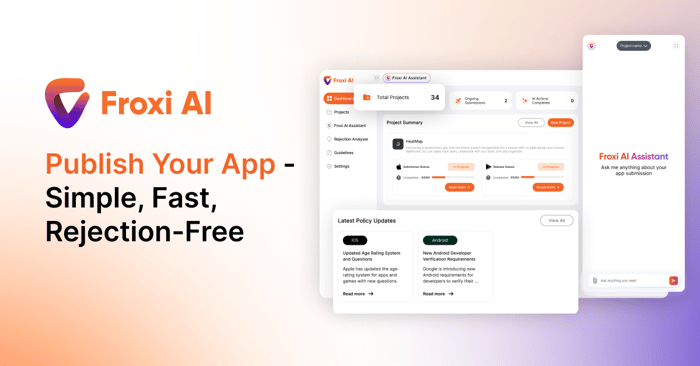
So I built Froxi AI- an AI assistant that helps with the publishing process by creating a personalized checklist, guiding you step by step, and helping generate the information required by the app stores.
I also built a small Chrome extension that works inside App Store Connect and Google Play Console- https://chromewebstore.google.com/detail/froxi-ai-app-store-google/ckfbklpdlnalnjegkofoffagohmgblmg. Instead of copying and pasting everything manually, it can fill many of the metadata fields using the information you've already prepared in Froxi.
I'm looking for honest feedback from fellow indie hackers.
If you're planning to publish an app (or recently went through the process), I'd love to give you free access in exchange for your thoughts. I genuinely want to understand what's useful, what's confusing, and what I should improve.
If you'd like to try it, you can sign up here: https://app.froxi.ai/register
I'd really appreciate any feedback!

The extension is the sharpest part because it meets users inside the console instead of adding another checklist tab. I'd test it on the three failure-heavy surfaces separately: metadata completeness, screenshot and asset requirements, and rejection fixes; measure minutes saved plus fields users still overwrite. Free access is useful, but recruit people within 48 hours of a real submission so the pain isn't reconstructed from memory.
Thanks! I especially like your point that the extension should be validated around specific failure points, and that feedback is much more valuable when people are actively submitting an app.
Out of those three areas, which one frustrated you the most in your own experience? I'd love to focus on solving the biggest pain first
I don't have a personal App Store submission to cite, so I would not rank the three by autobiography. The highest-leverage area looks like failure recovery at the submission boundary: missing metadata, screenshots, or review notes cost time when the user is already trying to ship, while silent overwrites destroy trust. Ten live submissions with prevented failures and time-to-resubmit measured should tell you which pain is real.