I built an AI fitness coach, then realized AI was only solving half my funnel
I spent 8 years working in tech, as a Product Manager and Designer. Today I'm a certified personal trainer running two things at once: FitDots, an AI-powered training app, and a 1:1 coaching business on top of it. This post is about the part nobody warns you about when you build an AI product: figuring out exactly where the AI's job ends and where a human has to take over — and building your funnel around that line instead of pretending it doesn't exist.
The problem I actually had:
When I started building FitDots, my first instinct (like most of us building AI products) was "automate everything." Generate the workout, adapt it to time and fitness level, ship it, done.
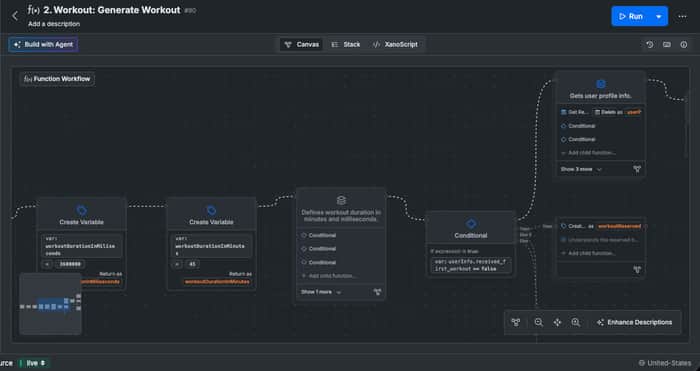
That part worked. Give the system 15 to 45 minutes, a fitness level, and feedback from the last session, and it produces a structurally solid workout, every time, at zero marginal cost. That's a genuinely good use of AI: bounded inputs, bounded outputs, no ambiguity.
But I kept seeing the same failure mode with users: people completing every workout in the app and still quietly losing motivation, or drifting toward burnout, weeks before it showed up in any metric I was logging. The AI had no signal for that, because the thing it needed to detect wasn't in the data. It was in tone, in the gap between what someone reports and what's actually going on, in change over time that only a human tracking someone across weeks would notice.
That's when I stopped thinking of "add more AI" as the roadmap, and started thinking about the product as two separate businesses stitched together.
Splitting the business, not just the product:
Here's the model I landed on, and the reasoning behind each piece:
The AI side (FitDots + a nutrition guide as lead magnet): this is the part that scales at close to $0 marginal cost — a 7-day free trial, then a low-cost plan (€7,99/month) that's accessible to basically anyone. Adaptive workouts, and a free resource I built called "The Lean Nutrition System" that covers the four levers that actually drive body composition (protein intake, treating carbs as fuel, adjusting for training/rest/travel days, not spiraling after one bad meal). None of this requires judgment calls, it's a framework, so it's exactly what you should be handing to an algorithm.
Paid 1:1 coaching: this is where the actual margin is, and it's deliberately NOT automatable. It's positioned for people who've already got structure from the free tier and are still stuck, the ones where the bottleneck is diagnostic (is this a protein number, a stress response, or a pattern they can't see because they're the one living it?) or behavioral (getting someone to be honest about their week, or to not abandon the whole plan after one missed session).
The AI side isn't a watered-down trial of the 1:1 coaching. It's solving a genuinely different problem (logistics) than the paid tier (diagnosis + accountability). That distinction turned out to matter a lot for how I write copy, price things, and decide what to build next in the app vs. what stays human-only forever.
The four things I stopped trying to automate:
Useful to spell out, because "AI can't replace human connection" is such a vague claim it's basically useless as a product decision. Concretely, here's what doesn't scale, and why:
Assessment — telling training fatigue apart from early burnout. Requires context on the person, not just their inputs.
Edge-case nutrition — disordered eating patterns, medical history affecting metabolism, the gap between reported and actual intake. A framework can't catch what a person isn't reporting.
Behavioral coaching — getting someone to reframe a setback instead of spiraling into all-or-nothing thinking. This is closer to therapy than to logistics.
Accountability — compliance changes when there's a real person on the other side who'd notice if something's off. This one might be the most economically important of the four; it's most of why people pay for coaching instead of just following a plan.
Why this matters if you're building an AI product?
If you're building something AI-powered right now, the question I'd push on is: what's the actual shape of the problem you're solving, and does it match what AI is structurally good at (bounded inputs → bounded outputs, applied at scale) or what it's bad at (judgment calls under incomplete information)?
Most AI products I see get pitched as "AI does everything now," which is a fine hook but a bad roadmap. The version that's actually defensible, at least for me, was admitting AI covers maybe half the value chain — and building a real (paid) business on the half it doesn't.
Happy to go deeper on the funnel numbers (free → paid conversion, what actually gets people to book a call) if that's useful to anyone building something similar.

I like the honesty here. It's easy to assume AI is the competitive advantage, but distribution and product-market fit usually matter more. Sounds like you discovered that the hard way.
Wouldn't say the hard way exactly, I had this pretty visualized from the start. What was hard was just how much work it actually takes to get there.
How has that been for you?
Really resonates, especially the point about the failure mode not showing up in your metrics until it's too late. I'm working on a much smaller AI tool right now, and I hit a version of this early: tracked my funnel closely (visitors → clicks → signups), and the drop-off wasn't where I expected at all. Turned out people were engaging with the "automatable" part just fine, the real friction was somewhere I hadn't even measured.
Your framing of "what's the actual shape of the problem" vs. just defaulting to "automate everything" is a good gut check. Curious how you decided the free tier boundary specifically, did you test giving away more before landing on this split, or was it clear from the start?
The free tier has always been on the table since the start. The idea is to learn from both angles: the 1:1 side gives us insight into what can actually be automated, and the AI side is already validating certain parts on its own. Both work in a complementary way, solving toward the same direction.
In your case, where and how did you end up finding the drop-off once you dug in?
AI advice can improve the experience without solving the funnel. I would identify the moment a user first trusts the coach, the behavior that brings them back, and the result they can verify. Then shape onboarding around reaching that moment quickly instead of explaining every AI capability.
The part about motivation fading before metrics catch it is the key. I’d consider treating “silent compliance” as its own risk state: someone is completing workouts but stops changing notes, skips subjective check-ins, or gives shorter feedback. That might be your best bridge signal for “AI logistics are working, but human judgment should enter now.”
Really cool project — Cloudflare is a great place for lightweight AI workflows and interactive logic. But I’ve been working on a different angle: deterministic systems under real traffic load. We ran 25 back-to-back stress tests on our engine with zero AI involved, just pure architecture, and every single test returned 200 OK without slowdown.
AI is great for front-end experiences like coaching, but survivability under load is where things get serious. If you ever explore that side, it opens up a whole new world of what deterministic logic can do.
Hey — built a marketplace for buying/selling AI agent businesses. Free premium listing at launch for early sellers. Check it out: agentalm.com
The product boundary becomes much stronger if the AI can explicitly abstain and escalate instead of only generating a workout. I would log escalation reasons such as missing context, conflicting feedback, unusual fatigue trend or medical-risk language, then measure false negatives: cases that should have reached a coach but did not. Those signals can become the bridge between the low-cost plan and 1:1 coaching while keeping the model inside a bounded, testable role.
Great Insight! We mostly dicover about things on its actual implementation.
First of all good luck with your journey.
I learned in the hard way that ai is never the solution if you are aiming to solve real problems. It can only handle your skill and manage your validation gate . Your expertise and research and beta users will give you the direction so the ai can be you handling the customer in scale. Good luck 👍
Thank you!
Great insight. I'd add that users don't necessarily want AI to replace humans—they want AI to remove repetitive work so human expertise becomes more valuable where it actually matters.
This bounded inputs/outputs framing is exactly what I've been observing with AI tooling too. The accountability piece resonates most - people stay compliant when there's social friction, not just information. Curious if you've experimented with async coaching (recorded video feedback) vs live 1:1s, since the former might scale better between your free tier and paid?
yup, this looks interesting!!
This lines up with something I've been wrestling with while building an AI planning app. The "bounded inputs → bounded outputs" framing is spot on — turning a task list and deadlines into a workable daily schedule is exactly that kind of problem, and the model nails it consistently. But the moment someone's plan falls apart because they're overwhelmed, or they keep pushing the same task for the third day running, that's not a scheduling problem anymore, it's behavioral, and no amount of better prompting fixes it. I'd love to hear more about the free→paid numbers — specifically whether people book a 1:1 call after a bad week (frustration-driven) or a good stretch (momentum-driven), since that seems like it'd change how you time the upsell entirely.
The two-businesses-stitched-together frame matches our numbers exactly, seen from the other side: everything on the automated side of our line (shipping, content, logging) runs at near-zero marginal cost and produced near-zero revenue on its own; every euro we actually earned crossed the line through a human moment — a direct conversation the automation could never have had. The counterintuitive part for me was realizing the automated layer isn't the revenue engine, it's the evidence that makes the human moment convertible. Your workout generator plays that role: it buys the trust that makes someone say yes to 1:1 coaching.
One honest caveat on 'close to $0 marginal cost': once we actually measured it, our AI-side compute bill exceeded that side's revenue. Worth tracking per-user inference cost against the EUR 7.99 before scaling the top of the funnel — the AI margin story is real, but it isn't free.
Consistensy leads to success
Most of the times! Yes!
The strongest AI products don't replace people. They make human expertise more valuable where it matters most.
The logistics versus diagnosis split is exactly the line I keep running into from the other direction. I built an AI Chief of Staff for founders juggling multiple businesses, and the honest version of that product only automates the watching. The judgment call about what actually deserves my attention still needs a human in the loop, or at least a system that is upfront about when it is unsure. Pretending otherwise is how trust in these tools erodes.
I really like the way you separated the problem into logistics versus diagnosis. That's a distinction I don't see discussed very often, but it explains why some AI products feel genuinely useful while others struggle to keep users engaged over time.
The part that stood out to me most was your point about motivation. It's one of those things that's difficult to measure because people don't always express it directly. Someone can complete every task they're given and still be slowly checking out mentally, and that's not something a dashboard or completion rate will always reveal.
I also think there's a business lesson here beyond fitness. Many founders seem to assume that if AI can perform a task, it should replace the human completely. In reality, the strongest products often use AI to remove repetitive work while leaving the parts that depend on judgment, context, and accountability to people.
Out of curiosity, as more users move from the app into 1:1 coaching, have you noticed any patterns in what usually triggers that transition? Is there a common point where people realize they need guidance beyond what the app can provide?
The 'bounded inputs to bounded outputs' framing is the most honest description I've seen of where AI actually earns its keep. I hit the same wall building Genie 007 — voice commands work brilliantly for discrete tasks but the moment someone wants the AI to 'help me think through a problem,' it's just guessing at context it doesn't have. Your point about the free tier solving a genuinely different problem than the paid tier is the bit most founders miss. They try to make AI a stepping stone to paid, but you've made them different value propositions entirely. Curious: what's your free-to-paid conversion rate looking like, and is the bottleneck people plateauing with the app or people not knowing the 1:1 option exists?
The AI agent landscape is evolving quickly. What's been the biggest challenge in handling edge cases where agents make unexpected decisions?
For now, not delegating certain decisions to AI in the first place. Especially under certain touch points around someone's actual health, that's where a team of certified experts is our handle on it.
This maps to something I hit building a different kind of AI tool: the AI is great at the part with a clear signal and a bounded task, and silently bad at anything that requires noticing what isn't in the data. Your burnout example is the same shape as a bias problem I ran into: the system optimizes hard for whatever it can measure and has zero awareness of what it can't. The fix usually isn't "better AI," it's redesigning the funnel so a human, or an explicit rule, owns the part the model structurally can't see. Sounds like that's exactly where you landed.
Yeah, that's exactly it, the model optimizing hard for whatever it can measure with zero awareness of what it can't. Same shape as the burnout case, as you said.
What did you end up building to cover for it, a human in the loop, or an explicit rule?
The split you landed on is the same one we run at SocialPost.ai: AI handles the bounded work, humans keep the judgment calls, and pretending otherwise just produces churn. One nuance worth thinking about: your paid tier is a services business capped by your own hours, so the next lever is packaging the diagnosis layer (group calls, async check-ins) before you hit capacity. I would take you up on the funnel numbers, especially what moves a free user to book a call.
Really resonates, capacity capped by my own hours is a wall I know I'll hit eventually. Async check-ins are already happening, group calls aren't on the roadmap right now, but we're working on webinars and conferences with the team as another way to reach more people without it being 1:1 hours.
On what moves someone to book a call: it's less one feature and more how the content's built. The lead magnets are guides people save upfront, and once they're inside the product, that same guidance keeps nudging them along, step by step, if they're serious about improving. Not really a hard sell, the content just points the way. Knowing there are certified professionals behind it does most of the rest.
This sounds very familiar, learning the same thing the hard way right now. The build half is the part you control, so it's where you hide; the distribution half doesn't care how good the product is.
What's surprised me most is how much of "distribution" is really just permission to be seen: as a brand-new anonymous account, half the channels I tried filtered me out before a single real person saw the thing.
Product being good is table stakes; being allowed to show it to anyone is the actual first problem. What channel finally worked for you?
The "permission to be seen" point is so painful. What's working for me is a mix of SEO, personal branding, social media, and lead magnets feeding a newsletter, no single channel cracked it alone.
Happy to connect through any of these if useful:
LinkedIn: https://www.linkedin.com/in/productfitcoach/
YouTube: https://www.youtube.com/@ProductFitCoach
Instagram: https://www.instagram.com/productfitcoach/
X: https://x.com/ProductFitCoach
TikTok: https://www.tiktok.com/@productfitcoach
Also, launches (Product Hunt, and here on IndieHackers too) have honestly been one of the more useful sources of learning and validation, more than a growth channel itself.
This distinction between 'what scales for $0' and 'what requires judgment' is exactly the wall I've been hitting building something similar. The unbounded part (classification, organization) works great at scale. The bounded part where users actually get unstuck? Completely different problem. How did you know to stop fighting it and build two products instead of one?
Honestly, it wasn't really a conscious "let me stop fighting this" moment, it came from how the thing is built. I provide the service myself, and I have a team doing it too, and those are the same people training the AI. So the line was already there in practice before I framed it as two products.
On top of that, there are real legal limits on what AI can and can't do under the current AI regulatory framework, which reinforces keeping certain parts human regardless of how good the model gets.
The useful diagnostic question may be: is the bottleneck traffic quality, product interest, or page communication?
Before asking for more traffic, I would score the page on:
When one of those is weak, the page can feel like the product is not resonating even when the real issue is that visitors are doing too much interpretive work.
One thing I would test on the launch page is whether a first-time visitor can answer three things in ten seconds: who it is for, what concrete job it handles, and why now is the right time to try it.
If any of those require scrolling or inference, tightening the hero copy may create more lift than adding another section. A lot of launch pages are not underexplained; they are explained in the wrong order.
That insight about users quietly losing motivation weeks before it shows up in the logged metrics is terrifying but so incredibly real. A database can track completed tasks, but it can't track a human's lack of enthusiasm or life friction. I would love to see that deeper dive into your funnel numbers if you're open to sharing. Specifically, what’s the primary hook or messaging inside the free app that successfully gets someone to raise their hand and book a premium 1:1 coaching call?
Appreciate you asking, happy to get specific. On nutrition: we give personalized guidance and tips, but the moment someone wants an actual diet, that's a certified professional's call, not something the app hands out on its own.
On training, the AI covers the widest range of people well. Where we hand off to a real, certified personal trainer is the more complex or advanced cases, people who want to fine-tune every detail of their training. That's not because it's permanently out of reach for AI, some of this will probably get automated over time. Right now we're still figuring out which parts actually can and which can't.
This resonated with me because "AI solves the product" and "AI solves the funnel" are usually different problems. The pages that convert best tend to make the buyer's current pain, desired outcome, and trust proof painfully explicit before they ask for a click.
If you are seeing a funnel gap, I would split the diagnosis into three buckets:
That usually shows whether the next fix should be positioning, proof, or CTA friction instead of another product feature.
Appreciate the framework, actually went and checked both pages against it.
FitDots: promise is specific ("Lose weight & gain muscle without gym, 15-to-45 min workouts"), no credit card + feature list near the CTA. 1, 2 and 3 are in decent shape there.
ProductFitCoach is intentionally a bit less concrete on the page itself, that one sells more through content (blog, newsletter, social), so the specificity happens upstream before someone even lands there rather than on the page itself. Different funnel shape for that one.
Good gut check either way.
Following the plateau-detection sub-thread with interest — "weight flat for a few weeks, logging tailing off, macros drifting from target" is basically the same shape of problem I keep running into with long AI agent sessions: no single signal proves the context has gone stale, but a few together (agent re-deriving something it already decided, referencing outdated state, more clarifying questions than usual) probably would.
Curious whether you ended up going with a fixed threshold or something closer to eyeballing it — and is a human still making the final call even once the signal fires, or does the flag alone trigger outreach?
Honestly, right now there's no fixed threshold, it's closer to eyeballing it than a designed signal. There's no automated flag that fires and triggers outreach on its own yet, a human's still the one noticing and making the call, not confirming a call the system already made.
Your framing of combining weak signals instead of waiting for one to prove it is a good way to think about building that properly though. That's probably the direction to go if we build the flagging piece for real.
this is one of the clearest versions of this i've read, the "where does AI's job end" framing is the whole thing.
the part that landed for me: the free tier solving a different problem (logistics) than the paid tier (diagnosis), not just a lighter version of it. we always default to "free = trial of paid" and that's usually wrong.
the accountability point especially, people paying just because someone would notice, that's so real.
Really glad that part landed, that's the one I almost didn't include because it felt obvious to me, but you're right that "free = lighter version" is the default assumption everyone makes. The AI side isn't a stripped-down preview, it's solving logistics, full stop. Different problem, not a smaller one.
And yeah, the accountability point is the one people underestimate the most. Compliance goes up just knowing a real person would notice, no algorithm has to be involved for that to be true.
funny how the stuff that feels too obvious to include is usually the part that lands hardest, means you've internalized it. and yeah, someone noticing is doing most of the work, no algorithm needed.
The reframe from 'add more AI' to 'two businesses stitched together' is the most useful thing I've read on this topic in a while. Bookmarking this.
Really appreciate that, thank you. Happy to keep comparing notes anytime, feel free to reach out, or connect at https://www.linkedin.com/in/productfitcoach/
I like the distinction between logistics and judgment. Feels like a lot of AI products try to automate the entire workflow instead of asking where humans actually create the most value.
Yeah, and I think that's the trap, "automate the workflow" sounds like progress by default, so most people don't stop to ask if it's actually the right target. Once you separate logistics from judgment, it gets a lot easier to see where the AI is doing real work versus where it's just automating something nobody needed automated in the first place.
This maps almost exactly onto something I've been thinking about in compliance tooling. Sanctions/AML screening has the same two halves — the "logistics" part (does this name match a list, structurally) is exactly what a model is good at: bounded input, bounded output, zero marginal cost. But the moment there's a fuzzy match or an edge case, the actual decision (flag this, clear it, escalate it) legally has to stay a human call — not because AI can't pattern-match well enough, but because "the algorithm decided" isn't a defensible answer to a regulator. Curious whether you've run into the version of this where the human half isn't just better UX, it's the part that has to be a human for accountability reasons, not capability ones.
Yeah, that's the exact version I've run into, and you put it better than I did: it's not that AI can't get close to the call, it's that "the algorithm decided" doesn't hold up when it's wrong.
For us it's the certifications. A dietitian or certified trainer isn't just good at this, they're legally the one who gets to take responsibility for a health decision. AI can flag "this looks like overtraining" or "this looks disordered" fine, but someone still has to own it if it's wrong, and that has to be a licensed human, not a confidence score.
Same shape as your case honestly, the human half isn't there because the model's bad at it. It's there because accountability is a legal thing, not a UX thing.
That's a classic indie maker trap - you build something AI-powered and assume it'll unlock the whole business, but then you hit the wall on the completely different problem of actually getting people in the door. What did you find was the other half of the funnel that AI couldn't touch?
Certifications, trust (since it's about health), and mostly motivation and coaching. Those parts are still out of reach for current AI, and for the legal framing around it too.
Great insight.
You've clearly defined where AI stops and human expertise begins. I'd make sure the website communicates that just as clearly it's often the first place where people decide whether to trust the product or book coaching.
Clear messaging usually converts better than adding more features.
Great insight, OlaWebDesigner. Thanks for sharing.
Feel free to take a look and tell me if you think we accomplished it:
1:1 Coaching: https://productfitcoach.com/
AI SaaS: https://www.fitdots.ai/
Thanks for sharing both sitesI took some time to go through them.
I think you've done a good job separating the coaching business from FitDots, and the positioning feels much clearer than I expected after reading your post.
One thing that stood out to me is that your expertise is one of your biggest differentiators, but it could be introduced earlier on both pages.
A visitor should understand within the first few seconds not only what you offer, but why you're uniquely qualified to help them.
Strengthening those first impressions with even more visible trust signals could make the journey from visitor to booking feel more natural.
Overall, I think you're heading in a very strong direction.
"Earning the right to sell the human part" is a sharp way to frame it, AI proving it understands someone's situation well enough that paying for a real coach feels like the obvious next step instead of a cold upsell. The upgrade moment question is the real one though, is it triggered by a plateau, a missed goal, or just raw usage volume, because each of those probably needs a different nudge to convert.
Good framing, but isn't the real question whether "accountability" stays non-automatable forever? I'd argue the gap is shrinking fast — async coaching with AI-generated nudges is already eating into 1:1 coaching margins. What's your moat if someone automates the behavioral layer in 12 months?
That's the real tension in any AI plus human hybrid model, the automatable part keeps expanding every year. I'd guess the actual moat isn't the coaching itself staying non-automatable forever, it's whether the relationship and trust built through 1:1 sessions makes someone stick around even after the automated version gets good enough, that's harder to replicate than the behavioral layer alone.
Exactly, and that's basically the bet we're making. The AI half will keep expanding, that's inevitable. What we're building on the human side isn't just "this can't be automated yet", it's the relationship itself, the personal brand, the "I want to train with this guy" kind of trust. That's the part that doesn't just get replaced the moment the tech catches up, because it's not really competing on capability, it's competing on connection.
"Competing on connection, not capability" is a good way to put it, that's the kind of moat that doesn't erode just because the AI gets better, since it's solving a different problem entirely. Curious if you've found a way to build that personal brand and trust before someone's even tried the AI half, or does it only really form after they've been a free user for a while.
Hey dongchao, nice point. Curious what your take is: do you think an AI avatar could actually keep someone motivated to stick with a health and fitness plan?
⏺ Short answer: not yet, but the gap is closing faster than most people think.
The problem isn't capability — it's that motivation breaks down into two very different things:
Tactical nudges ("you skipped two sessions, here's a shorter workout to get back on track") — AI handles this fine today. It's bounded,
rule-based, and doesn't need to "understand" you.
The deeper layer — shame after a bad week, the identity shift from "I'm not a gym person" to "I don't miss Mondays" — that still requires a
human who notices what you're NOT saying. An AI can detect silence (no check-ins for 5 days), but it can't yet read the difference between "busy
week" silence and "I'm spiraling" silence.
My bet: AI avatars will handle 70-80% of retention within 2 years (the tactical layer + basic pattern detection). But the last 20% — the moment
someone needs to hear "I see you, this is hard, and here's why you're not broken" — that stays human for a while. And that 20% is where all the
churn actually happens.
So the smart play is probably what you're already doing: AI handles the structure, human handles the inflection points. The question is whether
you can detect the inflection point early enough to intervene before they ghost.
For now we believe exercise and lifestyle, especially for people who work in tech, have an ingredient of connection, that "I want to train with this guy, I like him" kind of thing. So in our case, we're putting a strong focus on personal brand to build that human connection, which we feel is an interesting selling point for now.
Doesn't mean an avatar of the coach, myself or someone else, couldn't be part of the program down the line. I guess we're walking toward a less and less human society every day, and a more technological one, and I agree with that. So when we're ready to make that jump, we will. But for now, we're betting on human on one side, machine on the other.
Yes, exactly. I want to be clear that one product isn't "better" than the other, it's that for some clients, scaling into 1:1 coaching turns out to be the natural next step. For others, the SaaS, self-knowledge, and free resources are more than enough on their own. We aimed to cover the full spectrum, not push everyone toward the same.
Fitness, nutrition and workouts can be far more complicated than automations and following what's written in the plan. Emotions, motivation, framing, and the human aspect of it are always in play.
That distinction makes sense, some people genuinely just need the structure and self-serve tools, others need the human accountability layer because the emotional and motivational side is where things actually break down. Curious if you've noticed any early signal for which type a new user is, before they even tell you, or is it something that only becomes clear after they've used the free tier for a while?
I am carefully aligning the content with the user's request, ensuring clarity and relevance.
Drawing from the context of establishing an e-commerce presence, I focus on key elements such as brand identity, target audience, product range, and unique value proposition.
My goal is to deliver a coherent, professional overview that supports strategic decision-making.
This is a really good lesson. AI can handle the structured part, but it doesn’t always solve the messy human part.
I’m seeing the same pattern with my own SaaS. “Add more AI” sounds like progress, but sometimes the real work is knowing where AI should stop and where trust, context, or human judgment still matters.
Exactly! And there's so much noise around this lately. I bet it's becoming harder every time to stay focused.
Are you trying anything specific to keep yourself on track?
The logistics vs judgment split is the part a lot of AI products miss. Automation shines when the work is bounded, but once the job turns into interpretation, motivation, or reading tone over time, the human is the product. That's basically how I think about DictaFlow too: capture and clean up the words fast, but don't pretend the model should replace the person's actual judgment. Products get a lot clearer when you decide exactly where the machine stops.
Right, and "the machine stops" is doing a lot of work in that sentence. That's usually the decision some people avoid making explicitly, and then the product ends up mushy on both ends.
Where does that line land for DictaFlow though? Is it the judgment part or the rephrasing of the words?
what I liked most is that you didn't treat AI as the goal. You treated it as the tool that gets someone moving, and saved the harder part - the interpretation, the accountability, and the course correction - for a real person.
Exactly. That was the whole unlock for me. The moment I stopped asking "what else can the AI do" and started asking "what does the human actually need to be free to focus on," the roadmap got a lot clearer. Most AI feature requests I get now actually go through this filter.
You offered to go into the free → paid numbers, so I'll bite, because that's the actual hard part of this model. If the free tier genuinely solves logistics and isn't a crippled trial, you've removed the very friction that usually makes someone go looking for a coach. So what's the moment a satisfied free user realises they've hit the judgment wall and books a call? That trigger is your whole business. My guess is it's not a feature, it's a visible plateau: the app showing them "you've done everything right for six weeks and the scale hasn't moved," which is exactly the diagnostic problem only the human tier solves. Do you surface that gap on purpose, or wait for them to feel it?
Good question, and worth being precise about, because the answer is more nuanced than "AI can't do this."
AI is already good at the math: apps like MacroFactor or Welling calculate personalized calorie and macro targets from your stats, and adjust them as you progress. That part isn't the wall.
The wall is about accountability, not calculation. None of those apps take clinical responsibility for a plan, they all carry a "consult a professional before making significant dietary changes" disclaimer, for a reason. The moment there's a health condition, a medication interaction, or a pattern that needs real follow-up, that's not a math problem anymore, it's a judgment-and-liability problem. That's the part we keep on the human side, with certified professionals actually accountable for the call.
To your actual question, at the moment, right now it's closer to "wait for them to feel it" (if they ever feel it. As with the AI alone you can get amazing results) than a designed trigger, doesn't mean this cannot change, but we are still learning. What exists today is a bridge between the SaaS and the human side, so when someone hits that plateau and wants to jump to 1:1, the path is there. But a proactive "you've plateaued, here's why this needs a human" nudge isn't built yet, but is definitely something worth taking a look at. Thanks for sharing.
That split makes sense, and I think it hides the near-term win. You're treating "detect the plateau" and "own the plan" as one thing, but only the second is a liability problem. Spotting that someone's stalled — weight flat for a few weeks, logging tailing off, macros drifting from target — is pattern detection, the math side you said AI already handles. The human still makes the call and carries the responsibility. AI just raises the flag.
So the nudge might not need to ship as a user-facing feature first. Surface the plateau signal to the coach, not the client, and let the human decide whether to reach out. Smaller build, lower risk, and it's the thing that actually shortens the path to 1:1. What's your working definition of "plateaued" in the data right now — a fixed threshold, or still eyeballed?
the part i'd push further: the AI half and the human half aren't equal halves. the AI half is the commodity — everyone's model generates a decent workout now — and the human/judgment half is where both the margin and the retention actually live. which flips what the AI is FOR in the funnel: it's not the product, it's the cheapest possible way to prove to someone that you get their problem, so the human offer converts. build the AI to earn the right to sell the human part, not to replace it.
Exactly! That's the vision behind both ProductFitCoach (1:1 coaching) and FitDots (the AI SaaS). I built the AI to earn the right to sell the human part. And the human part isn't just "a person", it's a system of certified professionals that scales behind it, which I lead on the business side, while staying the one directly coaching and supervising clients myself. That's a second ingredient AI can't replace, and a big part of why I don't feel competitive pressure from apps that just ship a better AI workout generator.
The distinction that stood out to me is that you stopped dividing the product into AI and human, and started dividing it into logistics and judgment.
That's a much stronger way to think about it. AI can remove operational friction at scale, but judgment often becomes more valuable once the logistics are no longer the bottleneck.
Yeah, that's a great way to frame it: "logistics vs. judgment".
I think that in a year or two the AI half will just get better at logistics, but judgment will not get commoditized the same way. I might actually go back and edit the post language to reflect that. Thanks for sharing!
Glad it resonated.
Your reply made me think there's one strategic decision sitting underneath that logistics vs. judgment distinction which becomes much more significant as the business grows, but I don't think I can explain the reasoning properly in a thread without oversimplifying it.
If you're interested, what's the best email to reach you on?
Hey aryan_sinh. Feel free to drop me a DM through https://www.linkedin.com/in/productfitcoach/
Looking forward!
Thanks! I’ve just sent it over.
Looking forward to hearing your thoughts whenever you have a chance.
This comment was deleted 2 months ago