I Built the AI Assistant I Wish I Had as a Founder
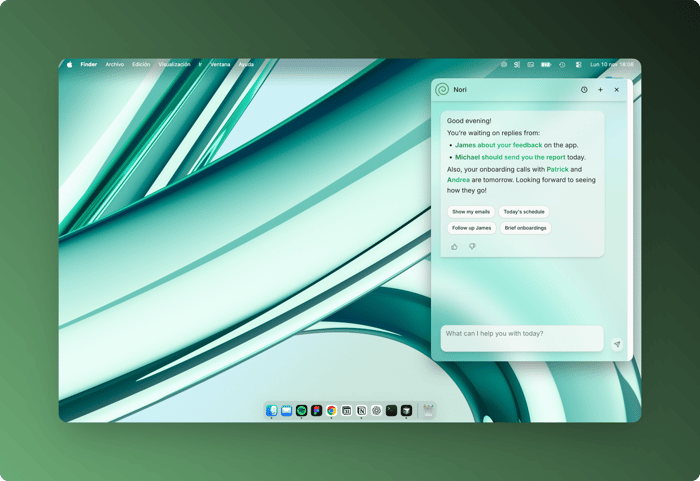
I spent four years as a CTO at my last startup, and somewhere along the way, I realized I was managing work more than doing it. Emails, meetings, follow-ups, the endless admin loop that eats your day before you even open your IDE. When I posted about building something to fix this, 150 people joined my waitlist in 48 hours. That's when I knew I wasn't alone. Every founder I talked to said the same thing: "I need this yesterday." So I stepped down and went full-time on Nori, an AI executive assistant that actually executes tasks instead of waiting for you to prompt it.
Here's what makes it different. Nori connects to all your tools (Gmail, Slack, Calendar, Notion...) and learns how you work. Then it starts acting autonomously. Drafting emails in your voice, resolving calendar conflicts, preparing meeting briefs, following up with clients. It's not another chatbot you have to babysit. It's infrastructure that runs in the background, the way a $150K/year EA would, except most of us can't afford that. I've been obsessed with LLMs since 2020, and the tech is finally mature enough to deliver real autonomy with personality. This is the moment.
I'm three weeks into the private beta with a handful of CEOs and VPs using it daily. Early feedback is strong, they're actually relying on it, not just testing it. My goal is simple: 100 paying users at ~$40/month in the next 60 days, then scale from there.
If this resonates, try Nori at getnori.ai. I'm looking for founders who'll actually use it and tell me what sucks.

I really appreciate the transparency about building an AI assistant you wished existed — that kind of reflection is rare.
One thing I’m curious about from a validation lens is: what early signal told you this was worth building before you invested the time?
For example, did you see repeat frustration from your own workflows, user interviews, landing page interest, or specific behavior patterns that made this clearly higher priority than other founder problems?
Figuring out which signal you trusted most (and why) can be extremely helpful for others trying to validate their own assistant-style ideas.
That's a great question! I'm a second-time founder, been a cto for 4 years. i loved building but i spent so much time buried in admin tasks. i spoke to other c-levels and founders and they all shared the same issue, but couldn't afford an ea. so i thought, i'll build it with ai.
How do you handle your workflows that are not primarily building?
That makes a lot of sense — especially the “can’t justify an EA yet” gap. I’ve seen that exact tension with founders who are early but already overloaded.
For me, the workflows that aren’t pure building usually fall into three buckets:
• decision tracking (what did we decide and why),
• follow-ups that slip through cracks,
• and context reconstruction after interruptions.
What I’ve found useful from a validation lens is watching what founders try to offload first when time gets tight — not what they say they hate, but what they actively delegate, automate, or pay for.
Curious: when you spoke to other founders, did any of them ask “how much would this cost?” or try to use your assistant themselves? Or was it more shared frustration at this stage?
Nice, thanks for the feedback! I spoke to some in the pre-building phase, but we spoke more about the problem. A few people did say they'd pay around 100$ /mo to solve this issues. Also i did some personalized onboardings so I got to see how they interact with the tool, super useful!