I came up with a great idea for a solo Vibe Coding project, and I'm testing it out right now
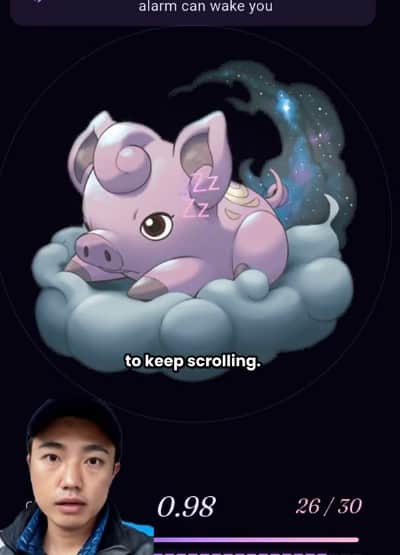
Promoting an app is harder than building it! Reddit is strict & ASO is slow. As a Korean dev with limited English, I started making Shorts for global marketing. Using just a selfie, voice memo & screen recording, it looks pro & downloads are up! Solo devs, let's connect!

Using a voice memo plus screen recording is a good way to keep production native to your own workflow. I'd track the correction cost, though: minutes spent fixing captions per published Short and the share that survive with sound off. If English cleanup starts taking longer than assembly, the pipeline has moved the bottleneck instead of removing it.
Splitting the AI generation from the diff-based assembly is smart, that is exactly the part that usually rots into spaghetti later. The thing I'd watch: with views still tiny in week one, when you change the frame-zero hook or the caption, can you actually tell which one moved the number, or is the sample still too small to read? Rooting for the wins-or-zeros writeup either way.
Honestly, right now it is too small to read. Week one views are low enough that any gap between two hooks sits inside the noise, so I am not going to pretend a winner exists yet. What I am doing is not changing the hook and the caption in the same video, keeping the install goal fixed, and only counting a hook as better once the same variant wins across more than one batch. Until then I treat single-video spikes as luck. The wins-or-zeros writeup is coming either way, thanks for watching.
The cross-batch rule is the right instinct, most people call a winner off one spike and fool themselves. The thing I keep running into: by the time enough batches stack up to trust a hook, the format has usually moved on anyway. Have you hit that yet, where the signal finally clears the noise but the trend is already stale, or are your batches fast enough that a winner still stays current when it lands?
Love this, turning a language constraint into a format advantage is underrated. What's converting better for you: the "problem" hook or the "result" hook? Following along, I'm about to hit the same distribution wall with my own solo build.
Too early for me to hand you a real answer, the sample is still tiny and I do not want to give you a number I cannot stand behind. My working guess, not data yet, is that the problem hook buys the first second of attention while the result hook is what actually makes someone tap install, so I am testing them as a pair rather than either or. When you hit the same wall, the first thing I would wire up is the video-to-install click, not raw views, so you can tell which hook did the work. Following your build too.
That distinction between what buys attention and what actually converts is something I hadn't separated clearly before. Testing them as a pair rather than either/or is the smarter frame.
This resonates so much. I'm on the marketing side — helping my family promote their iOS app — and I have the same combination: limited English, zero prior experience, and the constant feeling that distribution is 10x harder than building.
The self-recorded video idea is something I hadn't seriously considered. Curious — did you find short-form video worked better on specific platforms, or across the board?
That combination, limited English and distribution feeling ten times harder than building, is exactly where I started, so I hear you. Too early for me to claim a platform winner with any confidence, but one thing held across all of them: silent autoplay means the first frame and the on-screen text carry the whole message, sound is a bonus. So I would not pick a platform first. I would make one video that survives with the sound off, post the same asset everywhere, and let the click-through tell you where your family's app actually lands. Happy to compare notes as you go.
That's a really practical way to think about it — test the asset, not the platform. I hadn't considered that silent-first framing at all.
I'm in a similar spot with TankSync (the aquarium app) — no video content yet, mostly text posts and community threads so far. Might actually try your approach: build one silent-friendly video, post it in a few places, see where the clicks come from.
Would love to hear how it goes for you too.
I like the local-first angle for small business tools. One thing I’ve noticed while working on my own small data tool is that people often care less about “advanced analytics” and more about spotting obvious issues quickly: missing fields, weird totals, duplicate-looking IDs, and whether the file is safe to share. Curious if your users are asking for operational checks like that too.
You are pointing at something real. In my experience too, people reach for catch the obvious problem fast far more than advanced analytics, missing fields and duplicate-looking IDs and is this safe to share are the everyday fears. My current apps are consumer utilities rather than a data tool, so I do not get that exact request yet, but the bar is the same: surface the obvious issue in one glance instead of burying it under features. Curious which one your users ask for most, the safe-to-share check or the duplicate detection?
I actually used vibe coding to design pages for MS Beauty Salon, and I had a very similar experience. While it feels great and fast in the beginning, once you design lengthy pages, going back to edit the entire page becomes incredibly hectic and time-consuming. It really turns into a massive hassle to maintain later on.
Yes, that is the exact wall. Vibe coding feels fast until the thing gets long, and then one edit means touching the whole page and you are scared to breathe on it. The only fix that worked for me was to stop producing one big output and start producing small reviewable pieces, so a change is a diff, not a rebuild of the whole page. Same idea whether it is a landing page or a video. Once each piece is small enough to review on its own, maintenance stops being terrifying.
Thats awesome
The diff not a project line is the best part of this for me. I run coding agents on production code daily and the failure mode you are avoiding, treating every output as a one off instead of a small reviewable change, is exactly what kills automation pipelines once they need maintenance. On the growth question, I would watch the clicks from video to install more closely than raw views. A checklist that catches honest claims and readable captions gets you attention, but the gap between production and growth is usually a targeting problem, not a quality one. Early tiny numbers on a first batch do not tell you much either way, the real signal shows up once you can compare hook variants against the same install goal.
This is the most useful reply I've gotten, thank you.
The "diff, not a project" framing is the whole thing for me too. Once an output is a one-off, nobody can review it, and the moment it needs maintenance the pipeline quietly dies. Keeping each piece small and reviewable is the only reason a solo person can run this at all without it collapsing.
You're right that the checklist is a floor, not a lever. It keeps me honest and the captions readable, but it was never going to move installs on its own. And I think you're right that the production-to-growth gap is a targeting problem. That's the part I've been underweighting.
So I'm moving the metric from views to video-to-install clicks, and closing that loop before I run more experiments. Tiny first-batch numbers really don't tell you much, I've felt that firsthand. The plan is close to what you described: same install goal, compare hook variants against it, and only trust a signal once it repeats.
Curious where you've seen these pipelines break first once maintenance actually kicks in.
I like that you solved your own distribution bottleneck instead of treating marketing as a separate skill.
When one workflow can consistently turn a screen recording into content that's good enough to publish, it becomes a repeatable growth system rather than a one-off marketing effort.
That really stood out to me as well. Solving your own distribution problem is often more valuable than adding another feature. Once content creation becomes part of the product workflow instead of a separate task, growth starts to feel much more repeatable and sustainable.
Thank you, that is exactly the reframe that made it click for me. I used to treat marketing as a separate job I was bad at, so I kept postponing it. Turning it into a pipeline made it feel like engineering again.
Two things made it repeatable in practice. First, hard checklists instead of taste. Every video has to pass the same gates before it counts as done: hook visible on frame zero, captions readable with sound off, no claims the app cannot keep. Second, splitting generation from assembly. Heavy AI generation runs on a separate GPU machine, and the editing side is just a script that swaps sources in fixed slots, so each new video is a diff, not a project.
One honest caveat: the system is repeatable, but I cannot call it a growth system yet. I published the first videos this week and the view counts are still tiny. I will share the numbers here either way, wins or zeros.
I appreciate the honest caveat.
Reading your reply gave me one thought about the distinction between a repeatable production system and a repeatable growth system. I'd rather explain it in the context of what you're building than try to compress it into a thread.
If you're interested, what's the best email to reach you on?
I am not currently considering commercializing this video system. However, since I sense that you are grappling with similar issues, I am sharing my email address with you: shoedogai@gmail.com.
Thanks! I’ve just sent it over.
Looking forward to hearing your thoughts whenever you have a chance.
This comment was deleted 2 months ago