I didn't want to build another AI chatbot
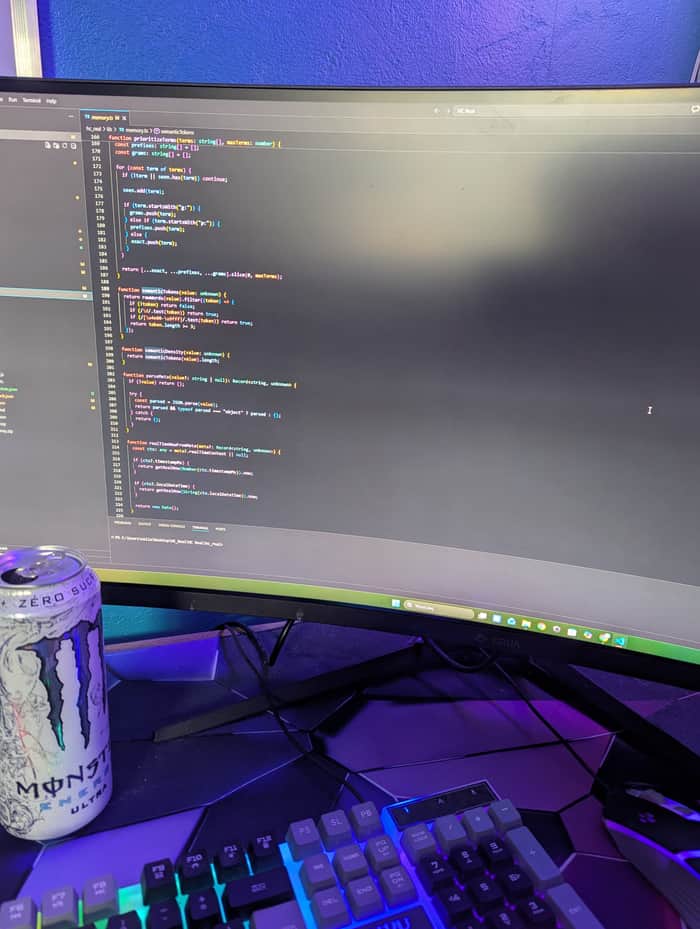
Three months ago I started building HC Real.
At first, I thought the hardest part would be integrating AI models.
I was wrong.
The hardest part wasn't AI.
It was making conversations feel continuous.
Today's AI is incredibly good at answering questions.
But after a few days, every conversation feels like starting over with someone you've just met.
That didn't feel natural to me.
So I started asking myself:
What if an AI could actually grow with its user over time?
Not by storing everything forever.
Not by becoming creepy.
But by remembering what actually matters.
That idea became HC Real.
Over the last three months I've built:
• Local memory stored on the phone
• Voice conversations
• Vision with contextual understanding
• Memory Guardian V2
• Google Play Closed Testing
There were countless bugs, rewrites and moments when I seriously considered starting over.
Looking back, I realized something.
Building AI isn't the difficult part anymore.
Building an AI that feels human, remembers naturally and earns your trust is much harder.
I'm still learning every day, and HC Real is far from finished.
But for the first time, it feels like I'm building something people might actually want to use every day.
I'm curious about your experience.
If you're building AI products...
What has been the hardest problem you've had to solve that wasn't actually AI?

I’m seeing a similar problem in AI-Coding product building.
Generating the first version is becoming easy. The harder part is maintaining continuity when the user changes requirements later — what should remain, what should be replaced, and how the new change affects the rest of the product.
It feels less like a model problem and more like a product memory and state-management problem.
Exactly. The difficult part is not generating the first answer or version it is preserving continuity when reality changes.
I saw the same thing during yesterday’s HC Real tests: a user changed an appointment from 9:30 to 14:30, and the system had to preserve the history while treating only 14:30 as the current state.
That is why I am starting to see memory and state management as the actual product layer, while the model is only one component underneath it.
1
Building voice AI for small businesses and this matches my experience. The AI was maybe 20% of the work. What actually hurt: telephony plumbing (SIP trunks, transfers, callers hanging up over 300ms of silence) and calendar math. Our worst bug had nothing to do with the model: naive datetimes got read as UTC and every booking landed 4 hours early.
This lands. I had the same wrong assumption early on, that the model integration would be the mountain. It wasnt.
Hardest non-AI problem for me has been distribution and monetization clarity. Getting the product to answer one simple question for a user: what do I do next, and who actually pays for this. Continuity of memory on your side, continuity of progress on mine.
With Make it RAIN, the tech was never the blocker. The hard part was turning a pile of “helpful tools” into a path people could follow without getting lost. Trust comes from that feeling of progress, not from another clever model call.
Local memory on device is a strong trust move too. People can feel when something is remembering for them vs harvesting them.
You’re aiming at the right layer. The human-feeling part is the product.
People can feel when something is remembering for them versus harvesting them” is very close to the core idea behind HC Real.
I am finding that the hard part is not the model call, but deciding what deserves to remain, what should be updated, and what should disappear as noise. The human-feeling continuity is becoming the real product.
Distribution and monetization clarity are definitely the next hard problems for me once this memory layer is stable. I appreciate your perspective.
This resonates. The model layer is mostly commoditized now. The product problem is continuity: what to remember, what to forget, and how to surface it without feeling creepy.
Local memory on device is a strong trust signal. Most people will not give that up for a slightly smarter cloud brain if it means their personal history leaves the phone.
One question that helped me when thinking about memory products: what is the smallest memory that still makes day 3 feel different from day 1? If that moment is clear in the first session, retention gets easier to test.
Also curious how Memory Guardian decides what matters versus noise. That filtering layer is probably the real product, more than voice or vision.
If you are in closed testing on Play, what early signal are you watching first: daily opens, conversation length, or people coming back after a few days?
You framed the test exactly right.
The smallest “day 3 feels different from day 1” moment I am aiming for is a corrected detail surviving an app restart. For example, the user changes an appointment from 9:30 to 14:30, and later HC Real recalls only the final time, including why it changed.
Memory Guardian evaluates each candidate against the existing local memory and can create, update, supersede, review, or ignore it. The difficult part is not remembering more it is remembering selectively without turning normal conversation into noise.
The first signal I care about is whether users return and naturally ask about something they mentioned earlier. That repeated trust in memory matters more to me than conversation length alone.
Building voice AI for small businesses and this matches my experience. The AI was maybe 20% of the work. What actually hurt: telephony plumbing (SIP trunks, transfers, callers hanging up over 300ms of silence) and calendar math. Our worst bug had nothing to do with the model: naive datetimes got read as UTC and every booking landed 4 hours early. The other thing nobody warns you about is third-party token expiry — Google OAuth tokens in testing mode die every 7 days, so the "AI" broke weekly for a reason no model card mentions. Your memory point resonates too: remembering a user across sessions without getting creepy is a design problem, not a model problem. The model is the easy dependency now. The edges are the product.
I couldn't agree more.
The deeper I go, the more I realize the LLM itself is only one component. Most of the work is around designing a system that feels reliable, consistent, and genuinely useful over time.
Memory has been one of the biggest challenges. I ended up building a dedicated memory layer that continuously organizes, updates, and cleans stored information instead of simply accumulating conversations. The goal is to make continuity feel natural without becoming intrusive.
It's reassuring to hear someone else had the same experience the model is often the easiest part.
"Every conversation feels like starting over with someone you've just met" — this is exactly the UX problem AI products keep shipping with. The hard part isn't the model, it's continuity across sessions.
I'm seeing the same pattern in a different domain: I built a set of Shopify/KDP guides for beginners. The AI helped me write and format the content, but the real product challenge wasn't generation — it was making the learning path feel continuous across 3 separate PDFs so the user doesn't feel like they're restarting in each file.
Curious how you handle the "memory what matters" piece technically — are you doing semantic summaries of past conversations, or key-value style explicit memory?
That's a great way to describe it, and I think we're solving a very similar UX problem.
I'm intentionally avoiding conversation summaries as the primary memory. Instead, HC Real stores structured facts and events locally, then retrieves only what's actually relevant to the current conversation.
Behind the scenes, there's also a dedicated memory layer that continuously organizes, updates, and cleans stored information. Rather than simply accumulating conversations, it keeps the memory relevant over time by reinforcing important facts, updating changes, and letting temporary information naturally fade.
I'm still refining that approach, but so far it feels much more natural than relying on long conversation summaries.
I like that you're framing the challenge around continuity rather than model capability.
I'll be interested to see what users naturally describe after a few weeks of use. Whether they talk about trust, memory, or simply feeling understood will probably reveal what the product is actually becoming.
Thanks, I really appreciate that perspective.
That's exactly what I'm curious about as well. Right now I have my own assumptions, but I think the real definition of HC Real will come from how people describe it after living with it for a few weeks.
If they naturally say things like "it remembers what's important to me" or "it feels like talking to the same companion every day," I'll know I'm moving in the right direction.
Appreciate the context.
The gap between what users describe after repeated use and what founders assume upfront is usually where the real product insight appears.
Would be good to hear what you discover as those patterns emerge.
What's the best email to reach you on?
Sure — you can reach me at hcreal.review@gmail.com Happy to stay in touch.
Thanks! I’ve just sent it over.
Looking forward to hearing your thoughts whenever you have a chance.
This comment was deleted 2 months ago