I got my first $159 in sales after realizing I was building in silence
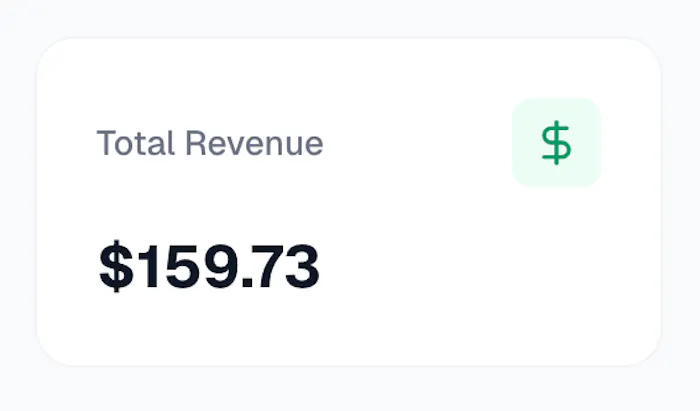
I got my first $159 in sales for my MicroSaaS recently.
(21 customers total)
Obviously not a huge number, but honestly it felt like a big deal
because it was the first time complete strangers paid for a tool I
built.
I got there once I realized I had made a very basic mistake:
I was initially building in silence.
I spent 1+ month working on the product, polishing the flow,
tweaking the landing page, making sure payments worked, improving the
output, etc.
All the normal stuff you do when you’re convinced that “once it’s
ready” you’ll just put it out there and people will care.
Then I launched it and… basically nothing happened. Crickets
And silence is weirdly painful because you don’t even know what the problem is.
Is the product bad? Is the offer bad? Is the landing page bad? Is the pricing wrong?
Maybe all of those, but none of these mattered. because nobody knew it existed.
When I realized that building in silence was a big mistake, I also realized X could be a great tool for me.
The product is called PageGains. It gives quick feedback on SaaS
landing pages and tells founders what they could improve to get more
conversions.
So after the quiet launch, I decided to stop pretending distribution would magically happen later.
I went to X, not because it is some magic growth machine, but because my target users were already there.
That was the part I had not fully understood at first.
PageGains is mostly useful for early-stage SaaS founders with landing pages.
The build-in-public crowd on X is full of early-stage SaaS founders with landing pages.
That was a match made in heaven!
Once I saw that, X stopped feeling like “social media” and started
feeling like the place where my customers were already hanging out
every day.
So I started "Building in public" and engaged on there like it was my new full time job.
The thing that helped most was replying. I replied to founders
sharing what they were building, people launching things, people asking
for feedback, people talking about landing pages, copy, positioning,
conversion, etc.
And I tried to make the replies actually useful. Not “great
post.", “love this.” Nothing revolutionary, but just small comments that
were relevant to the thing I was building.
And this is where most customers have come from so far: from lots of small interactions with the right people.
Someone sees a reply, then maybe they see another one, then they click the profile.
Then they understand what I’m building, then a few of them try it. That’s basically it..
The “magic formula”, if there is one, was not: “Post on X every day.", it was more like:
product audience == platform audience
That’s the part that made it work. If I were selling software to
dentists, I don’t think grinding build-in-public X would have done much.
But because I was building a tool for SaaS founders, and SaaS founders
were the exact people I was talking to every day, every interaction had
some chance of being useful.
A few things I’d do again:
-I’d spend way more time in replies than posting into the void.
-I’d talk about the problem way more than the product.
-I’d make the product painfully easy to understand.
-I’d have something real people can actually try, even if it’s not perfect.
-And I’d start building the audience earlier instead of waiting until launch day.
Current numbers are still very small:
-$159 revenue.
-21 customers.
And most of it came from X, but psychologically, it changed a lot.
Before, it felt like I had built something and thrown it into an
empty room. Now it feels like there is at least a tiny signal from the
market.
Not enough to call it validated, but enough to keep going.
I guess my takeaway is: Don’t just ask “where can I promote this?”
Ask “where are the people already talking about the problem I solve?”
For me, that happened to be X. For someone else it might be
Reddit, LinkedIn, SEO, cold email, niche communities, whatever.
The platform matters less than the match between the product, the problem, and the people there.
Curious how others here got their first paying users.
Was it X, Reddit, cold email, SEO, communities, or something else?

Building in silence is the trap. I'm at zero clients right now and this is exactly the push to just post and talk about what I'm building publicly. What was the first thing you shared that actually got traction?
Congrats on the traction! Love the formula, your product fits "product audience == platform audience"
But I think the X reply grind only works for B2B tools like yours. For B2C or gaming/interactive utilities, founders will give you a nice project comment but won't actually use it much, saying from experience.
"Product audience = platform audience" is the cleanest way I've seen this articulated. Most founders pick their distribution channel based on where they're comfortable, which almost never matches where their buyer actually spends time. You landed on it through iteration but the question is worth asking at the start: where does the specific person who has this problem already spend their day? Not their whole professional life, the specific context where they feel this problem.
For PageGains and SaaS landing page feedback, that's founders in the week before launch, or in the week after a launch that didn't perform. Finding those people in that week is more valuable than finding founders in general at any time. The replies approach you took works because it catches people at the moment of relevance rather than broadcasting into a feed where timing is random.
One thing I'd try next: find posts where founders are sharing launch results that didn't meet expectations. Those people have just felt the exact problem your product solves, in the last 48 hours. That's the highest intent window you'll find.
The silence after a launch is genuinely the worst part because you cant tell if its the product, the price, or just that nobody saw it. and you nailed the actual fix, product audience == platform audience is the whole game. replying instead of posting into the void is also so true, nobody converts off a broadcast.
one thing id push back on gently, you found the right people AFTER you spent a month building. that same "go where they already talk about the problem" move works just as well BEFORE you write code. like go read what early SaaS founders are complaining about with their landing pages, then throw up a tiny waitlist with 2-3 survey questions and see if anyone even bites. for that pre-build part i use Lighthouse because it keeps the waitlist and the survey answers in one place instead of duct taping a form tool to a mailer (disclosure, i actually build this). but it doesnt do the talking for you, you still gotta live in those replies every day like you did, theres no shortcut for that part.
honestly the $159 isnt the real headline. the headline is you proved the channel match is real. so id stop treating X as "the marketing i do after launch" and start treating it as the validation step itself. if a problem cant get you replies and clicks from the exact people who have it, thats your answer way before launch day.
Great read, thanks for sharing!
I'm doing something similar right now on Instagram, targeting travel creators. My app creates visually stunning travel animations on a 3D globe, fully editable on mobile with cloud rendering.
I get that you said the biggest impact comes from talking about the "problem". How would you position this on a travel reel that's already a creative ouput. Any mentioning of what could be better about it easily sounds petty and negative (even if true).
Congratulations on your first sales!
I really enjoyed reading your post. The lesson about "building in silence" resonated with me as a developer. It's easy to focus on building features and forget how important it is to get feedback early.
Thanks for sharing, and I wish you continued growth!
This is the exact GTM mistake I’m trying not to make with AnveVoice right now.
I don’t think the question is “where can I promote a website voice agent?” The better question is: where are people already talking about missed website leads, bad chat widgets, slow support handoffs, and conversion leaks?
That changes the channel mix. X is useful for founder/agency conversations. Indie Hackers is useful for GTM thinking. Quora is useful for evergreen customer-service/search intent. Direct agency outreach is useful for buyer objections.
The reply grind only works when each reply could have been said on a real sales call. If it would feel awkward in a 1:1 conversation, it probably should not be posted publicly either.
product audience == platform audience is the whole thing.
mine's been different though. X is slow for me. what actually worked was commenting on indiehackers, the site not the sub. helped one founder fix their landing page and that did more than 12 days of posting.
replying > posting is so underrated. posting feels productive, replying is where the humans are.
congrats on the first 21. empty room to tiny signal is everything
been there myself and did the same thing with past projects. spent months on the product convinced that a good launch would carry it. it didn't. the shift was finding the specific communities; reddit threads, niche forums, places like this. same idea as what you found on X, the platform doesn't matter as much as whether your people are actually there
Hi !
Just realized I've been building in silence as well. Was it difficult for you to have an audience ?
The realization that building in silence is a trap is a brutal but necessary rite of passage for every technical founder. Getting those first sales proves you've broken through it. Your breakdown of the reply strategy is pure gold—shouting into the void does absolutely nothing, but dropping contextual, genuinely helpful insights where your exact users already hang out changes the whole equation. It turns distribution from a creative chore into a systematic engineering problem. Congrats on the momentum!
Hi ! Can you please a bit about your journey, how it went for you? : )
the replies-over-posts principle is right but theres a sequencing nuance most people miss. early days: replies build recognition, your handle starts appearing in threads adjacent to the people you eventually want to buy. once you have ~50 thoughtful replies in the same orbit, THEN a single original post from you converts 5-10x better than the same post from a stranger would, because the audience now has a parasocial sense of who you are. so the actual rule is 'replies until people know you, then posts when they will pay attention.' rough order matters more than ratio.
$159 from 21 strangers is massive. built for 6 weeks before mentioning it to anyone outside my circle. first reply from someone who found it on their own still felt bigger than feedback from people I know.
21 people from replies is a good signal. Even this achievement is good enough. I was using the reddit method. And I think it bring me my first signup, but currently reddit decided to ban it. If you try reddit, be very cautious of how you promote. I also tried SEO and it has started bringing me a few clicks every month. for instance I got 100+ impressions and 10+ clicks in 28 days. Not big, but hopeful that it someday be a good acquisition channel.
The "product audience == platform audience" insight is the most underrated distribution principle I've seen. Most of us default to posting everywhere and hoping something sticks, but you nailed why that wastes so much time.
One nuance I've been thinking about: this gets harder for consumer apps where your users don't self-identify on any platform. Someone who wants help planning their day doesn't hang out on X debating productivity frameworks — they're silently suffering in their Notes app. For B2B SaaS the audience match is often obvious, but for consumer products you almost have to do more ethnographic research just to figure out where to show up.
To your question about first paying users — for iOS apps I've seen App Store Search ads work surprisingly well for getting that first validation signal, because the intent is already there. People searching "daily planner" are ready to try something new. Not as community-driven as your approach, but cuts out a lot of the noise.
That point about consumer app users silently suffering in their Notes app is spot on. Finding where those quiet audiences hide requires some creative digging before you can even think about scaling up.
The "building in silence" realization hits different when you have kids. You don't have the luxury of endless iteration — every hour you spend polishing instead of posting is an hour nobody knows you exist.
Curious: what was the actual moment you stopped building and started talking? Was it a calendar decision ("I'll post every Tuesday no matter what"), or did you hit a specific milestone where you said "this is good enough to show"?
21 customers from replies is a strong signal because those people saw your work, chose to click through, and chose to pay. zero came from an algorithm pushing your content. the next move is figuring out which specific type of reply converts fastest so you can do more of exactly that.
Bravo for your first customers! Love the “product audience == platform audience” point.
I think the underrated part is not “post more,” it's finding where people are already discussing the problem you solve.
I'm seeing the same pattern with CiteMePlz: instead of guessing where to promote, I'm trying to find the sources, threads, and communities AI tools already cite in a niche then show up there with something genuinely useful.
Feels much more like earning distribution than forcing it.
I have this exact problem, feeling like nothing I make is ever good enough to show people. Even replying on social media, it doesn't feel like I have anything valuable to input. Thanks for the inspiration to just get out there and start doing it until it doesn't feel weird anymore.
The "product audience == platform audience" framing is the clearest way I've seen this explained. It also works in reverse as a filter, if you can't quickly describe where your specific customer already spends time online talking about their problem, that's a signal you don't know your customer well enough yet, not that you need to try more platforms. For me the honest answer was that my customers (agency owners dealing with vague client briefs) aren't really concentrated on any single obvious platform, which forced me toward SEO as the primary channel, the problem gets searched regardless of where the person hangs out. Still early but the organic signal is starting to show up. Good reminder that the distribution decision should follow the audience, not the other way around.
That 'audience-first' approach is such a vital reminder. Chasing platforms instead of finding where the target audience actually hangs out is an easy trap to fall into, especially early on.
Exactly, and the trap is even easier to fall into when a platform feels active and relevant. r/SaaS looks like the right place if you're building SaaS, but the people there are mostly other builders, not the ones who'd actually pay for what you made. The audience-first filter cuts through that pretty fast.
This seems to happen to almost everyone eventually.
Building feels productive because you're creating something.
Talking to customers feels slower because the feedback is messy.
One thing I've noticed is that most founders don't have an idea problem. They have a visibility problem.
They're getting signals from the market, but they're buried under feature requests, ideas, tasks, and everything else competing for attention.
The shift usually happens when conversations become more important than features.
This hit close to home — I made the exact same mistake. Spent months building PaintFlow AI in silence, polishing every feature, convinced that "launch day" would somehow bring users. It didn't.
What worked for me was finding Facebook groups where people were already asking "how do I start painting?" and just answering genuinely. No pitch, just helpful replies. A few of those turned into actual users.
Your point about "product audience == platform audience" is the key insight. For me that meant art communities, not dev communities. Took me a while to figure that out.
Congrats on the $159 — that first stranger paying for something you built is a completely different feeling than friends or family supporting you.
Congrats on the first 21 customers. That moment when complete strangers pay for a thing you built is a real one, and no number changes that.
Now, the irony here is too good to pass up, so I'll just own it. You built a tool that scans landing pages and tells founders what to fix, and I happen to do that by hand for fun. So naturally I pointed my own eyeballs at your page instead of pasting it into PageGains.
And there's one thing your own tool really should be flagging. Your signature red, that bright #ff3b1f, lands at about 3.56 contrast on white, where 4.5 is the readable minimum. It's used all over the page, including button labels and smaller text. So the brand colour doing your conversion work is itself a little hard to read, especially at small sizes or on a dim screen. Easy fix: darken the red a notch for text and buttons, and keep the bright version for the big display headers where size carries it. For a conversion tool, your own CTAs reading crisply is about as on-brand as it gets. (Lighthouse Best practices also dipped from some third-party cookies, but that's minor next to this.)
Now the actual post, because the page stuff is the easy part. Your real insight, that product audience and platform audience have to match, is the whole game, and most people miss it. "Where are the people already talking about the problem I solve" beats "where do I promote" every time. I'm running the same logic for my own thing right now, finding the room where my people already gather instead of shouting into the void. The replies-over-posting point is the other half of it, and it's why your customers come from small useful interactions rather than broadcast.
So a question back: of those 21, can you tell what actually converted them, the genuinely useful replies, or just being consistently around? I'm curious whether it's the usefulness or the familiarity doing the heavy lifting.
This is a really relatable experience — building in silence is something most first-time founders underestimate.
I had a similar situation with a small local service project (carpet cleaning Tracy market). I built a simple site, polished everything, but got almost zero traction at first because nobody actually knew it existed.
The shift came when I stopped focusing only on the product and started showing up where customers already were — local Facebook groups, Google searches, and even small community discussions. That’s where real visibility started.
Same lesson you mentioned: distribution matters more than perfection at the start. If the right audience doesn’t see it, even a good product stays invisible.
In my case, just aligning content with intent like “carpet cleaning Tracy” searches brought more results than weeks of tweaking the website.
Your point about matching product + audience + platform is exactly what makes the difference in early stage growth.
Building in silence is such an easy trap for new founders. It’s tough to realize that a perfect product means nothing without visibility, and focusing on distribution channels early on saves so much wasted effort.
Congrats on the first $159! That first dollar from a complete stranger hits totally different.
Your takeaway about product-audience match on platforms is gold. I actually made the exact same mistake with my tool, voca-translation.com (an AI writing/grammar overlay). I built in silence for months, launched, and got crickets.
I recently took your advice and started replying to people on X. The problem? I have 0 followers and my replies only get 3–4 views.
How did you overcome that initial absolute zero phase? Did you target specific big accounts, or just keep grinding small threads until something clicked?
This hits hard.
“Building in silence” is probably the trap a lot of us fall into. It feels productive because the product is improving, but nobody is actually learning that it exists.
I’m trying to force myself to share earlier now, even when it feels uncomfortable.
The replies over original posts shift is something more founders need to hear. Original posts feel productive but replies are where actual conversations start and conversations are what convert.
The platform-audience match point is also huge. Most people just go where they're comfortable rather than where their actual buyer already spends time. That one realization probably did more for you than months of content ever would have. What made you finally make that shift?
I got my first paying customer for Consilium from Meta advertising. Trying to organically grow, too. Definitely harder than building the tools. Takes patience and dedication for sure.
This part is underrated:
"product audience = platform audience"
The real win isn't posting everyday - it's being useful where your buyers already are.
And $159 from 21 strangers is a stronger signal than 1,000 likes from the wrong audience.
"product audience == platform audience" is the whole game and you nailed it. Your dentist line is literally me: I build WhatsApp and voice AI for local businesses (insurance agents, salons), and months of build-in-public on X/LinkedIn got me peers, not buyers. My one genuinely warm lead so far didn't come from any platform at all, it came from a friend mentioning me to someone who had the exact problem. For builder tools X is the watering hole; for offline local businesses the channel seems to be plain human intros and word of mouth. Still figuring out how to scale that part.
This hits hard.
I've spent the last few months building and posting content for my startups, one I decided to pivot bcz it's taken me 3 months to promote and ended up getting 0 users. Now I'm realizing visibility isn't the same as feedback.
but i'm curious what was the single thing that got you out of building in silence?
The "product audience is platform audience" point is probably the biggest lesson here. A lot of founders ask where they should promote when the better question is where their users are already talking about the problem. Distribution gets a lot easier when you're joining existing conversations instead of trying to create them from scratch.
"Product audience == platform audience" is exactly the realization I'm mid-way through right now. I spent over a month heads-down doing a full stack migration (Spring Boot to Next.js, new DB, the works) before I let anyone touch what I was building. Classic building-in-silence mistake, just with infra instead of a landing page.
When I finally went looking for users, my first instinct was dev communities — they're where I'm comfortable, I understand the culture, I can talk shop. But my actual users are English learners, not developers. So I've been forcing myself into language-learning communities instead, where I'm honestly less fluent in the social norms and it's slower and more uncomfortable. Your post is a good reminder that the discomfort is probably the signal I'm in the right place, not the wrong one.
The replies-over-posts point also matches what I'm seeing. A solo intro comment with a link gets ignored; an actual reply with something specific to say gets a response. Slower, but it's the only thing that's worked so far.
Question back: how did you keep the bar for "actually useful, not just relevant" high once you were doing it at volume? I find the first 5 replies a day easy to make thoughtful, and by reply 20 I'm fighting the urge to phone it in.
The matching insight is the one that matters most here. Most founders go looking for "where should I market?" when the real question is "where are my users already complaining about the problem I solve?" You backed into the answer because your product literally analyzes the thing the X build-in-public crowd produces every week: landing pages.
One thing to watch: replying works because it is a relationship channel, not a broadcast channel. The moment you start optimizing reply volume over reply quality, the conversion drops. The replies that convert are the ones where you said something the person actually screenshots or bookmarks. If you find yourself replying to 30 posts a day with surface-level encouragement, that is a signal to slow down and go deeper on fewer threads.
Also worth tracking: what percentage of your 21 customers came from your own posts vs. from replies on someone else's thread? That ratio tells you whether your distribution is "audience-powered" (fragile, depends on your posting cadence) or "network-powered" (compounds, because every good reply puts you in front of a new cluster of followers). If it is mostly replies, you have something more durable than most X-first launches.
The fact that your first real users came from your own effort is so encouraging, congrats! You wrote this so well that I found a lot of myself in it and learned from it.
I'm still at the very beginning of the road. I built a site that applies a systems approach to small businesses through a short diagnostic, and gives them a tool to actually take action on it. Because I have a systems engineering background and have lived the pains of small businesses myself, I think this different approach, if applied right, could genuinely add value.
But just like you said, I'm standing right in front of the invisibility wall right now. I know where my target audience is, but your message was a real warning to me about moving forward without my own message getting scattered.
Wishing you all the best on the road ahead!
This really resonates.
One thing I'm learning with NewsSphere is that getting feedback and finding customers are two different problems.
I've been sharing it in founder communities and getting some really useful feedback. That's actually where I discovered people kept describing it as a "catch-up tool" rather than a news app.
The challenge now is figuring out where the people who experience that problem regularly actually hang out.
Crypto users have been one interesting group so far because stories move fast and people often lose context if they miss a few days.
Your point about "product audience == platform audience" is making me realize that's probably the next question I need to answer before worrying too much about growth.
"product audience == platform audience" is the most underrated distribution insight and most people skip past it.
For Commitment Crawler (a Slack bot that tracks commitments and nudges people before they slip), the match was Slack-native teams who already feel the pain of missed follow-throughs in chat. LinkedIn worked well because ops leads and engineering managers talk about team accountability there constantly. Cold outreach to r/productivity and r/remote work would have been wasted energy by comparison.
Your point about replies > posting into the void also resonates. One genuine reply in a thread where someone says "our team keeps forgetting what was promised in Slack" converts infinitely better than a launch post.
Congrats on the 21 customers — first paying strangers is the real milestone.
The 'product audience == platform audience' formula is something I had to learn the hard way too. For an iOS productivity app, the instinct was to post on Twitter with #buildinpublic — but those people are builders, not the everyday users you're trying to reach. Had better luck finding specific Reddit threads and niche communities where people were already complaining about the exact problem the app solves.
Your point about spending more time in replies than original posts is underrated. A well-placed reply in a conversation already happening is worth way more than 10 posts shouting into the void. And congrats on 21 paying strangers — that first payment from someone who doesn't know you personally hits completely differently.
the enough to keep going framing at the end is the right way to think about early revenue. $159 from 21 strangers doesn't validate the business but it validates that the problem is real and that people can understand and pay for the solution. those are two separate questions and a lot of products fail because they never get past the first one. you're past both of them and that's actually worth noting
the "silence is weirdly painful because you don't even know what the problem is" line hit hard.
when nothing happens after launch you can't tell if the product is bad, the positioning is bad, or nobody knows it exists. all three feel the same from the inside.
$159 from complete strangers is a different psychological milestone than any amount from people who know you. that's the part most people don't talk about.
congrats on finding the match between your audience and your platform. that's genuinely the hardest part.
"Product audience == platform audience" is the cleanest way I've seen
this framed.
The tricky version of this problem: what if your product audience and
your builder audience are in completely different places?
I'm building a snoring tracker — the build-in-public crowd on X isn't
my user, they're just my peers. My actual users are on Reddit at 2am
frustrated that they keep waking their partner up.
So I'm running two tracks in parallel: X for the builder community
(distribution leverage, feedback), Reddit for actual users (direct
acquisition). It's more work but I don't think I can collapse it into one.
Congrats on the $159 — first stranger-money always hits different.
"product audience == platform audience" — this is the real filter. I've been posting to builders about a tool for local businesses. Builders don't buy it. Still figuring out where those business owners actually hang out online. Did you find the replies worked better than original posts from day one, or did you need some post history first?
This is such an honest breakdown. The "building in silence" trap is real you spend so much time perfecting the product that by launch day you have no audience, no feedback loop, and no way to tell what's actually broken. The platform-to-audience match point is underrated. Most founders just go where they're comfortable, not where their actual customers are. Matching the channel to the buyer completely changes the conversion math.
product audience equals platform audience is the whole game, and most founders learn it the expensive way after a silent launch. The reply strategy works for a reason most people miss: when you give a founder real landing-page feedback in a reply, you are running a free live demo of PageGains in public. Lean into that. End your best feedback replies with a light note that this is the kind of thing your tool flags automatically, so the value and the product become the same motion. On your question: almost every first paying customer I have had, going back years, came from being in the room where people were already complaining about the problem, not from broadcasting at them. Find the complaint, show up useful, the sale follows. $159 from 21 strangers is a real signal. Keep pulling that thread.
"Product audience == platform audience" is the right equation. Most distribution advice fails because it's channel-specific rather than fit-specific. The channel matters less than whether your target user is already there having the conversation you're inserting yourself into.
The thing I'd add: quality of engagement compounds in a way volume doesn't. You mentioned making replies "actually useful" rather than empty reactions — that's what builds the recognition effect where someone sees your name twice and then clicks the profile. Each useful reply is a small trust deposit. The conversion happens after the account has positive balance, not from any single interaction.
$159 from 21 strangers is also more meaningful signal than the same number from your network. Strangers make a decision based on the product, not the relationship. That's the signal that tells you something real.
What was the spread on those 21 customers — did most come from one or two threads, or was it distributed across a lot of different conversations?
Congrats — first strangers paying for something you built is a big milestone.
The “building in silence” part is very relatable. I’m early with a small SaaS too, and I can feel how easy it is to keep improving the product instead of putting it in front of people.
The product audience == platform audience point is a good reminder. Feels obvious after reading it, but very easy to ignore while building.
恭喜你有收入,这说明本身产品还是不错的,所以用户愿意去付费,我最近也刚开始帮我哥哥他们做的app在x、ph上做尝试,我是一个纯文科生,英语也很差,但是抱着试试的心态就这么开始了。今天也是刚注册了这个平台的账号,看到你这个帖子还是翻译成中文认真看完了。并且用中文给写了评论。希望我自己的推广也能顺利一点,早日看到那第一个付费用户。一起加油。
choosing the right platform is truly crucial.I initially chose platform X,but my account was banned because my posts were overly promotional,I was forced to switch to other platforms,but the results weren't great either,that's why it's essential to select the right platform before you start marketing.
Congrats on the first sales, that 'building in silence' trap is real. I caught myself doing the research version of it: auditing prospect after prospect instead of actually reaching out. At some point the validation becomes procrastination. What finally got you to break the silence and put it in front of people?
Founder
NexioFront
The part I'd probably spend more time on isn't the revenue itself.
It's the conclusion that gets drawn from it.
Early wins can be surprisingly convincing because several very different stories can produce the same result.
That's what makes the next decision difficult.
Not because the signal is bad.
Because it's easy to become confident in an interpretation before it has actually earned that confidence.
This comment was deleted 3 months ago