I got tired of switching AI APIs every time a new model shipped
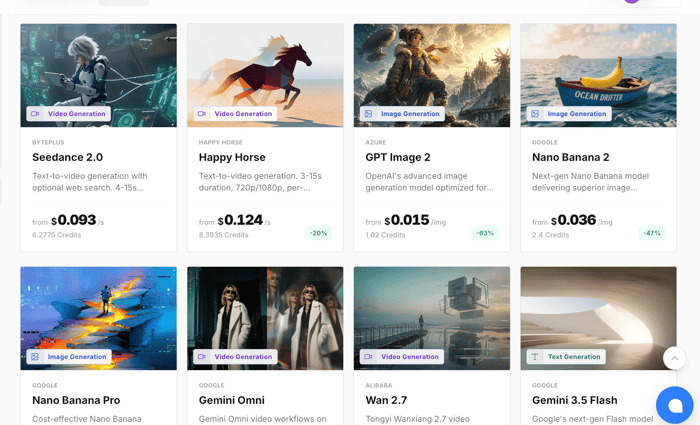
I kept running into the same annoying problem while building with AI models.
Every time a new model shipped, the actual work was not just “try the model.”
It was:
- create another provider account
- read another API doc
- change model IDs
- check pricing again
- update fallback logic
- test latency
- explain to the team which model should be used for which task
At some point I realized the model itself was not the only problem.
The real problem was routing.
For a small team or indie builder, you usually do not want to rebuild your stack every time Claude, Gemini, GPT, or a video/image model changes. You want one place where you can compare models, switch routes, and keep the app stable.
That is what we are building with EvoLink.
The idea is simple:
one API key,
one endpoint,
many models,
with routing flexible enough for production apps.
The use case I care about most is not “use the newest model because it is new.”
It is more like:I kept running into the same annoying problem while building with AI models.
Every time a new model shipped, the actual work was not just “try the model.”
It was:
- create another provider account
- read another API doc
- change model IDs
- check pricing again
- update fallback logic
- test latency
- explain to the team which model should be used for which task
At some point I realized the model itself was not the only problem.
The real problem was routing.
For a small team or indie builder, you usually do not want to rebuild your stack every time Claude, Gemini, GPT, or a video/image model changes. You want one place where you can compare models, switch routes, and keep the app stable.
That is what we are building with EvoLink. https://evolink.ai/
The idea is simple:
one API key,
one endpoint,
many models,
with routing flexible enough for production apps.
The use case I care about most is not “use the newest model because it is new.”
It is more like:
- use the cheaper model for simple agent steps
- use the stronger model for planning or code review
- use fallback when one provider is unstable
- keep cost visible before it gets out of control
Curious how other indie builders handle this today.
Do you usually call model providers directly, or do you put a gateway/router layer in between?
- use the cheaper model for simple agent steps
- use the stronger model for planning or code review
- use fallback when one provider is unstable
- keep cost visible before it gets out of control
Curious how other indie builders handle this today.
Do you usually call model providers directly, or do you put a gateway/router layer in between?

This is a real infrastructure problem. The pain is not just switching model IDs. It is keeping cost, latency, fallback behavior, routing logic, and team-wide model decisions stable while the model market keeps changing every few weeks.
The strongest positioning here is “AI model routing infrastructure,” not just “one API for many models.” That makes EvoLink much more serious because production teams eventually need control, observability, and reliability, not just access.
One thing I’d pressure-test early is the name. EvoLink is clear, but it may sound more like a connector than an infrastructure layer. If the product becomes the routing layer between apps and every major AI provider, the brand should feel more durable and system-level.
Davoq .com would fit that direction better as a hard technical brand for AI routing, fallback, cost control, and model infrastructure. The product does not need to change, but the name should make it feel like something teams can build on top of, not just plug into temporarily.
I’d think about this before docs, SDKs, and developer memory lock around EvoLink, because in infrastructure the name has to carry trust before the API call does.