I just launched my first Next.js 16 starter kit after months of work — Nexus
Hey Indie Hackers.
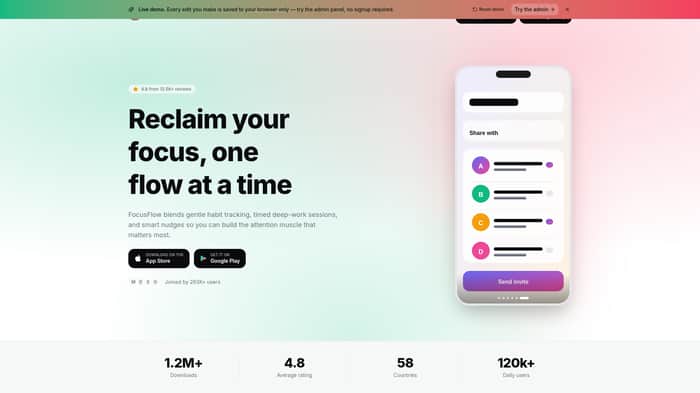
Today I'm launching Nexus — my first production-ready starter kit for mobile app landing pages with a built-in admin panel.
What I built
After months of daily work, Nexus is now live:
-
15-section landing page (Hero, Features, Pricing, Reviews, FAQ, etc.)
-
17-page admin dashboard (full CRUD, no code changes)
-
Live theme editor (5 fonts, colors, radius)
-
Blog with markdown + draft/publish
-
Analytics dashboard (charts, KPIs, top countries)
-
JWT auth + bcrypt + CSRF + rate limiting
-
GDPR cookie consent + privacy pages
-
626 tests passing
-
Docker + GitHub Actions CI
-
65KB documentation (README + FEATURES + SECURITY)
Tech stack
-
Next.js 16 (App Router, standalone output)
-
React 19 + TypeScript 5 (strict)
-
Prisma 6 + SQLite (Postgres-ready)
-
Tailwind CSS 4 + shadcn/ui (New York)
-
Vitest 4 + Playwright (626 tests)
-
Bun 1.3 runtime
Live demo
Try the full thing — no signup required:
https://nexus-by-hadi-kits.vercel.app/
Every visitor gets their own browser sandbox. Edit colors, write a blog post, change pricing. Your changes are saved locally only.
Pricing
$89 for the launch (instead of $149)
-
Up to 2 developer seats
-
Unlimited client projects
-
Lifetime updates
-
6 months support
Full transparency
All demo data (downloads, active users, ratings, top countries) is AI-generated for demonstration purposes only.
Buy: https://www.getly.store/product/nexus-next-js-16-mobile-app-landing-starter-kit-with-admin-panel
Demo: https://nexus-by-hadi-kits.vercel.app/
Telegram: https://t.me/HadiKits
—
My goal: 5 sales to fund a new dev machine ($850, I have $500 saved).
If you like what I built, a share or a purchase means the world.
#buildinpublic #indiedev #nextjs #starterkit

Congrats on shipping. The trap with starter kits is the same one templates hit: pretty and unused by Wednesday. The ones that stick keep the surface area small — a handful of pieces that earn a Monday glance — and delete everything else. Structure beats aesthetics here, so I'd document the four or five decisions a buyer no longer has to make; that's the actual product.
Hey @routinekit — really appreciate this, and you're dead on.
The "pretty but unused by Wednesday" trap is exactly what I tried to avoid. The surface area is intentionally narrow: one landing page + one admin panel that controls every word on it. No half-built features.
The decisions I'm trying to eliminate for a buyer:
If those four decisions take a buyer from "I should set up auth" to "I'm shipping today," that's the product.
Curious — what's the last starter kit you actually used past Wednesday? Always looking to study what sticks.