I keep thinking about the week between coaching sessions
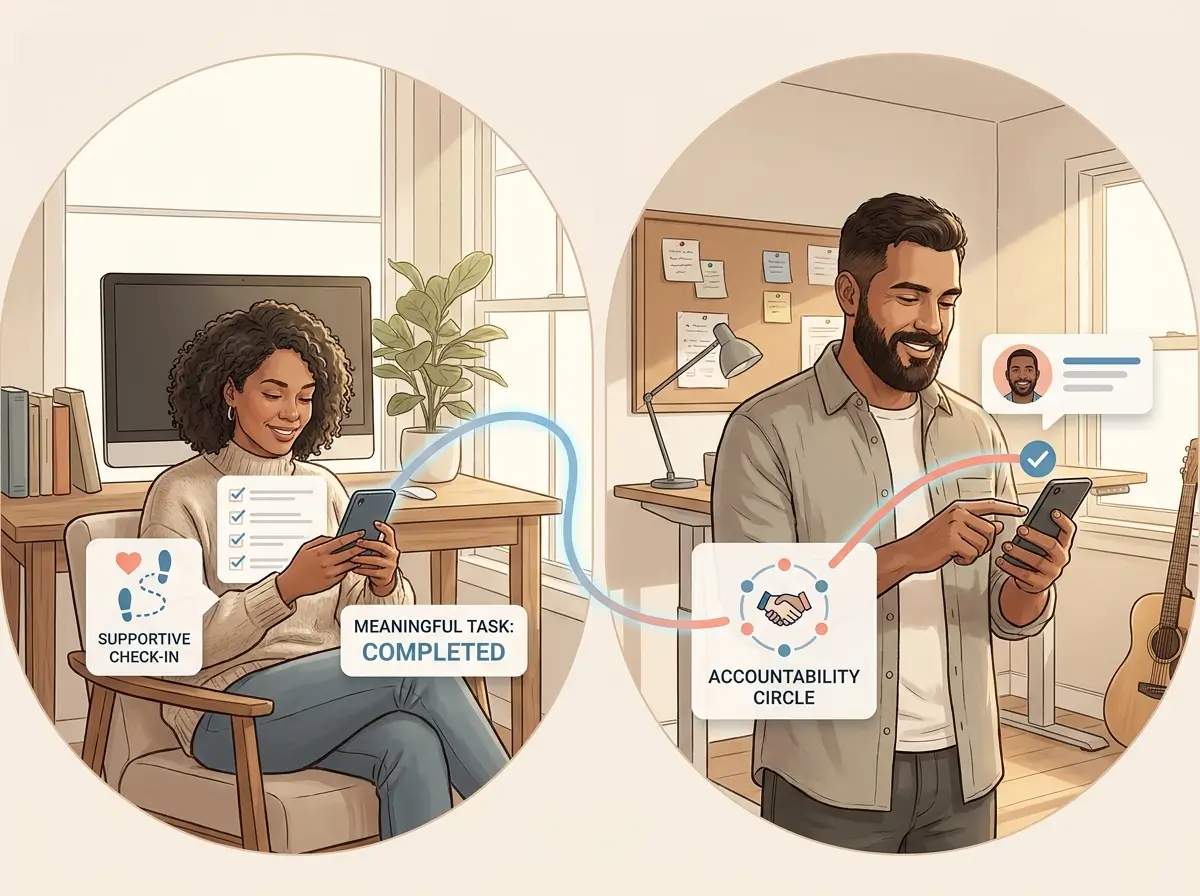
I have been thinking about a quiet problem in coaching.
Not the coaching call itself. Not the quality of the questions. Not whether a client can name their values, their goals, or their blockers.
I mean the days after the call.
The Tuesday morning after a powerful Monday session.
The moment when someone has a clear intention, a realistic plan, maybe even a little energy, and then real life shows up. Meetings pile up. A child gets sick. The inbox becomes a minor horror film. The task starts to feel awkward. They tell themselves they will begin tomorrow.
And suddenly the week is gone.
As founders, we often talk about “engagement” as if it is a product metric floating in space. But in this context, engagement is much more human. It is the difference between someone staying connected to a promise they made to themselves and quietly abandoning it.
That is the problem we have been exploring with Focido.
Not “how do we build a better to-do list?”
There are already plenty of to-do lists. Most people do not lack a place to write “send proposal” or “go for a run.” They lack a bridge between intention and action.
The obvious answer might be more reminders. More push notifications. More AI-generated encouragement. More dashboards.
But I am not sure that is the answer.
A reminder can be useful. But a reminder is still just software asking you to obey your past self.
A message from another human can feel different. Not because it creates guilt, but because it adds context. Someone knows what you are trying to do. Someone can notice the effort, not only the outcome.
That led us to a simple question:
Can accountability become lighter, more human, and less exhausting for both the coach and the client?
Here are a few things we have learned while thinking through it.
1. Big goals are terrible daily interfaces
“I want to change careers” is a meaningful goal. It is also a terrible task.
The brain sees it and says: cool, impossible, maybe later.
A better daily interface is:
Update the first paragraph of my résumé by 5 PM
Send one message to a person working in the industry
Spend 20 minutes researching three relevant roles
Book one portfolio review
Coaches know this already, of course. But product design has to respect it too. If the interface rewards vague ambition, it can accidentally reinforce avoidance.
The product should make the next action painfully clear.
2. The first 24 hours matter more than the perfect roadmap
A client can leave a session with a beautiful 90-day plan and still do nothing.
But if they take one small action in the next 24 hours, something changes. The plan stops being an idea. It starts becoming evidence.
For builders, this is a useful reminder: the first meaningful action matters more than feature depth. It is probably true in products, too.
Do users experience value quickly?
Do they have a reason to return before novelty fades?
Can they see that something moved?
3. Accountability should never become a punishment system
This is the hard part.
It is easy to build gamification that rewards people for being visibly productive. It is easy to create leaderboards that make high performers feel great and everyone else feel behind.
But behavior change is messy. People have bad weeks. They get tired. They care for others. They fail. They restart.
So we keep returning to this principle:
Support the next step, not the performance of perfection.
A good accountability message is not “You broke your streak.”
It is “Still want to do this? What is the smallest version you can do today?”
That feels less like a product mechanism and more like a decent friend.
4. Coaches need leverage, not another admin job
Many coaches run programs through a mix of Zoom, Notion, spreadsheets, WhatsApp, Telegram, email, and memory.
That works, until it does not.
Every additional client can create more follow-up work. More “just checking in” messages. More context switching. More invisible emotional labor.
The ideal tool should not turn a coach into a manager of notifications. It should make the client’s own actions, progress, and support needs easier to see.
A coach should spend more time on patterns, reflection, and meaningful intervention. Less time hunting through chat history to remember whether someone completed a task three days ago.
5. Community works when it creates safety, not pressure
Group accountability can be powerful. People often find it easier to act when they see others showing up too.
But communities become unhelpful when they are built around comparison, constant availability, or public shame.
The version we find most interesting is smaller and calmer: a private group, a shared challenge, daily proof of effort, occasional encouragement, and clear boundaries.
No hustle theater. No “rise and grind” cosplay.
Just people trying to keep promises to themselves, together.
I do not think software can manufacture motivation. That would be an absurd claim.
But software can lower the friction around follow-through. It can make commitments visible. It can create a moment for human support. It can help someone restart without turning a missed day into a personal failure.
That feels worth building.
For other founders, coaches, or community builders: how do you think about the gap between a person’s intention and their actual weekly behavior?
Is it a product problem? A social problem? A design problem? Or just one of those deeply human problems that software can only partially improve?

