I know you want it: Product Market Fit in 3 + 1 Steps
For any entrepreneur, achieving product-market fit (PMF) is the key to success.
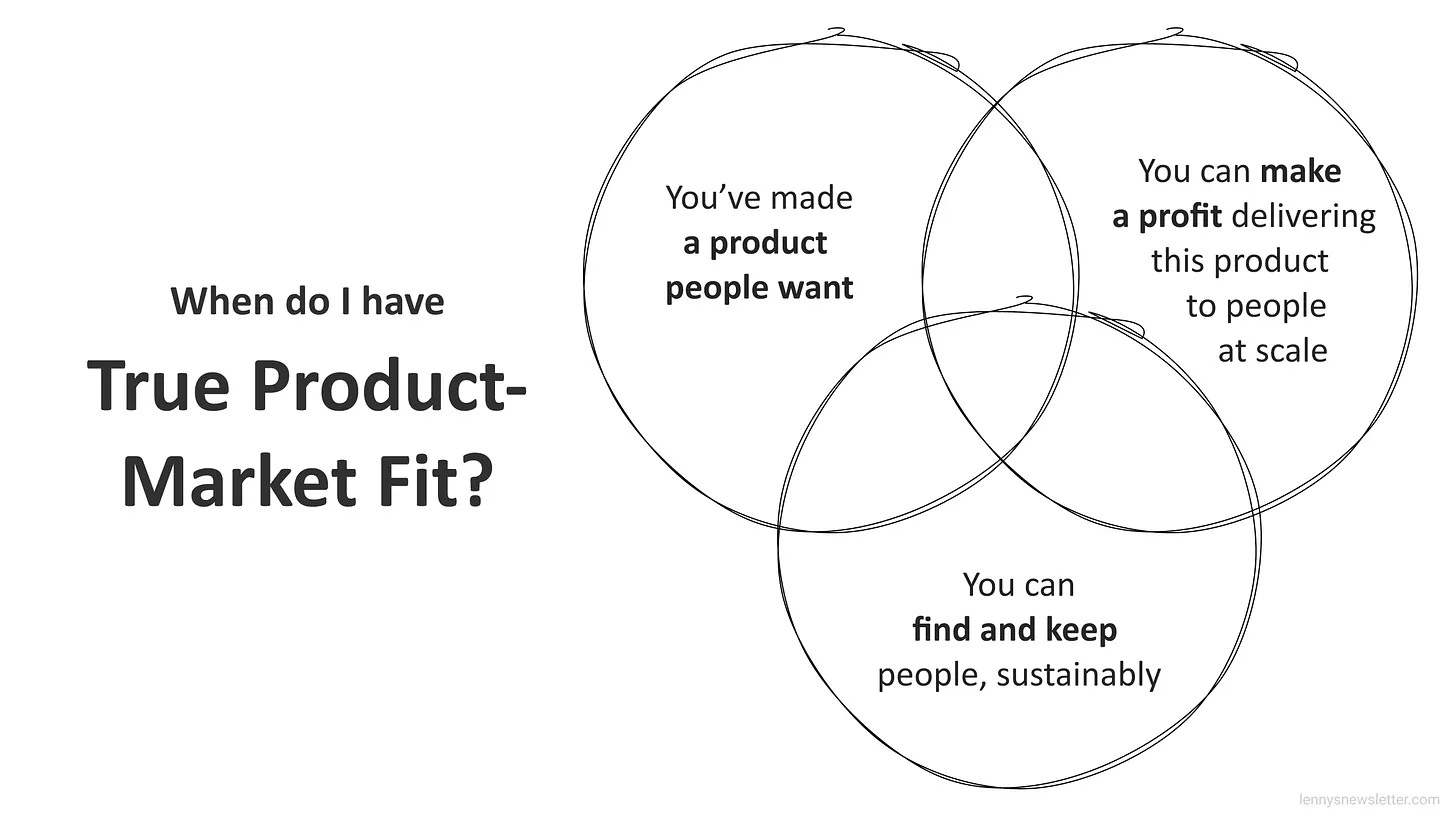
It's the moment when everything just clicks with and the hockey stick growth begins.
"The only thing that matters is getting to product-market fit.” —Marc Andreessen
Thousands of articles search for the secrets, but quite honestly, it's not THAT hard. Let's see:
First things first: Before you defile it — Define it!
We can go on about it and mention business lingo just like... demand, sales curve, product alignment, etcetc. I prefer looking at some quotes from founders and experts:
“Survey your users and ask them ‘How would you feel if you could no longer use the product?’ and measure the percent who answer ‘very disappointed.’ If that percentage is over 40%, you have PMF.” — Sean Ellis / Rahul Vohra
— I like this because it mentions a measurable number, if you have 100 users and 40 LOVE your product, you have a fit.
“For enterprise businesses, at the end of your free trial, you should pull the trial. If the customer doesn’t scream, you don’t have PMF. Because if they aren’t going to buy it at the end of the 30 days, they aren’t desperate. And if they aren’t desperate, you don’t have PMF.” — Doug Leone / Andy Rachleff
— Again, something you can apply in PLG, although it mentions enterprise clients, it applies to any customer. Resonates with the quote before: users should be "desperate" i.e. "very disappointed".
"This is a Measure of Product-Market Fit. The startup that generates $1M million in ARR by burning $2M is more impressive than one that does it by burning $5M. In the former case, it appears that the market is pulling product out of the startup, whereas in the latter case, the startup is pushing its product onto the market. VCs will make inferences about product-market fit accordingly." — David Sacks
— I like this simple measurement, look at how much money you are making and if you are spending more, you still have some work to do.
Just as the definition of PMF, PMF itself is a mysterious state.
Looking back I would not be able to point to a time when I knew we had reached market fit, it was more like a 3-6 month process of talking to customers, reading feedback and growing organically.
Once you have THE product customers turn enthusiastic, you see organic growth through WOM and recommendations (and SEO). PMF is not static, it still will need iteration and learning as markets and customer needs change. Achieving and maintaining it is the key to long-term success.
Therefore, as I list the steps below, just like in the lean startup methodology, you keep measuring, learning and building to maintain your company's fit.
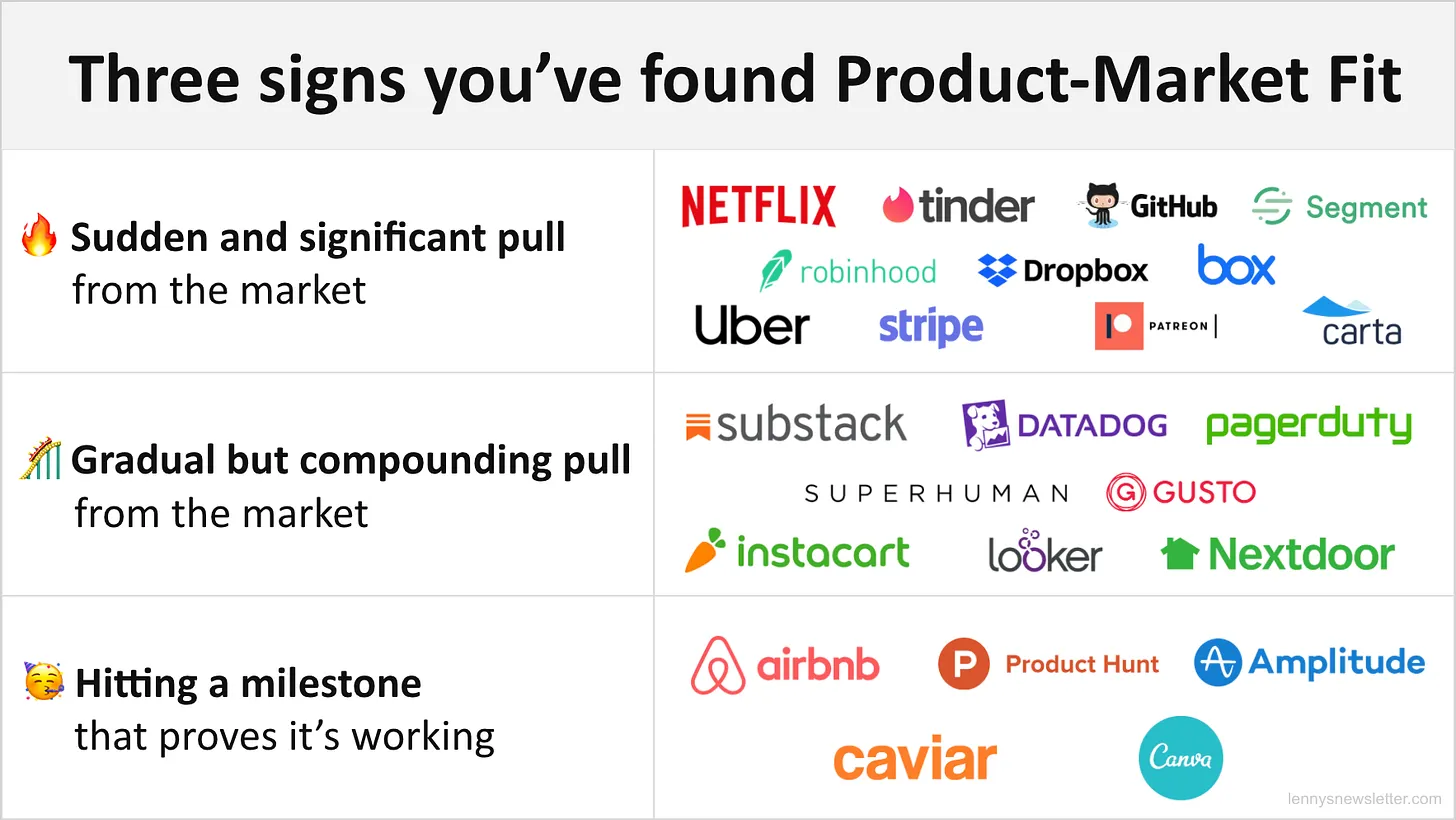
Step 1: KYN: Know your Niche
Understanding your customers is the foundation of product-market fit. Get to know your niche, if you have not worked in the niche for many years (like many founders did, who step out of the corporate environment to work on an idea) you will need to learn about the market and users (buyer and user - if you like Persona — although I think analysing the Persona is just as useless as filling out the Lean Startup Canvas).
Tools for understanding your user: No need to go further than SurveyMonkey for surveys, Zoom or Google Meet for interviews, and Google Trends for market research. Additionally, check out HotJar, Mixpanel, maybe Ubersuggest.
Indie Success Story:
Notion, the all-in-one workspace tool, achieved impressive product-market fit by addressing the specific pain point of teams overwhelmed by using different tools for tasks, notes, and documents.
My story:
We went on for about 6 months spending USD10k on Google Ads, when finally we had enough data in Mixpanel to see that L&D clients were the happiest and were most likely to pay for our product, once we were clear on this, we switched focus to them. Ironically, our main competitor was focusing on that segment for nearly a year, but we would just not believe that marketing related use-cases were not that big.
Step 2: Building it
The MVP, and here, please get dirty! Use no-code, use templates, use APIs, steal from competitors - whatever to make the process quicker and cheaper. I just love it when the website IS the whole product (like we did with upsum.io) - it makes me warm and fuzzy on the inside, when the BS is cut to minimum and the website VISITOR will right away turn into a USER. Done deal.
Tools for Building an MVP: Miro, Figma (if you are all that good of a designer), Zapier for making some dirty and quick API connects, Webflow and Bubble for builsing a realllly quick and dirty webapp. There is so much no-code out there, really no reason to complain. Also, check out any related research and open source projects where you can recycle and steal.
Indie Success Story:
Buffer, a social media scheduling tool, began as a simple MVP. The founders expanded the tool to include other social media platforms after receiving positive feedback.
My story:
we launched upsum.io in less than 10 days — Bubble and Webflow for development and ChatGPT API on the backend. In my startups earlier on, we would pay 5k for an Eastern European team to develop and app in 2 months, or hire students and interns to develop on AWS for months, even before we knew what we were building... Not cool.
Step 3: Datadatadata: measure, feedback, collect, ask - be curious and read between the lines (of data)
Once your MVP is live (meaning: looks good on the front-end and barely alive on the back), gather as much feedback as possible and iterate on the product.
Look for small signs of enthusiasm in your users: Are they using it (just look at the logins or HotJar heatmaps). Add a Pro plan on your website, will they even look at/click on it? Are users recommending your product to others? Is usage growing organically? If not, nothing is lost, reach out to users, ask them, do research, give them free credits for feedback, even from just very little information you will learn a lot about your users. What do they need? What would make them pay and how much?
Tools for Feedback and Iteration: Use tools like Google Analytics for usage data, Hotjar for heatmaps and user behavior, Mixpanel, Auth0, Stripe —and don't be afraid to reach out to users, they will be annoyed 9 times and one time very happy to help. Your job is to increase the one to two, then three and then hopefully ten.
Common Pitfall:
Don't get too attached to your initial idea. Be willing to pivot based on the feedback you receive. For example, Slack started as an internal tool for a gaming company. When the game didn't succeed, the team pivoted and achieved significant product-market fit.
My story:
we started to build a fake image detector. One year later, nobody paid for it, seeing the market dynamics, we switched to create a "fake" video creator (synthetic video) — after 6 months, we knew what we needed to build, and after a year we had market fit.
Step 4: Scale
Sweet, you reached to an initial fit, you are happy, your customers are happy, you fixed the backend and you dare to call your product version 1.0. Great, you can breathe. Now scale... easy. Not that fast... well, that's a topic for another article.
Good luck hackers.
Useful readings:
https://www.ycombinator.com/library?categories=Product Market Fit
https://www.lennysnewsletter.com/p/what-it-feels-like-when-youve-found
https://www.lennysnewsletter.com/p/how-to-know-if-youve-got-productmarket?s=r

Thanks, I appreciate the prescriptive and straight-to-the-point take.
Curious if you have any generic tips on sourcing your first impressions/users, or if it really depends on the audience/niche?
Thanks for sharing.