I ranked #1 on Google with a DR 11 site. Drop yours, I'll find keywords you can rank for.
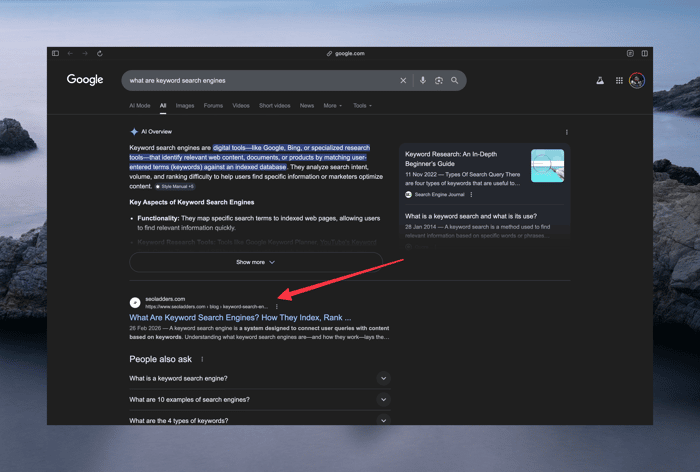
3 months ago i was writing blog posts that never ranked.
the problem wasn't the content. it was the keywords. i was targeting terms that sites with DR 50+ were dominating. my site had a domain rating of 11. i had zero chance.
once i started matching keywords to my actual domain rating, everything changed.
one article hit #1 on google in 3 weeks. chatgpt started citing it too.
here's what i learned:
→ most founders target keywords they'll never rank for
→ a DR 11 site can't compete with a DR 60 site for the same keyword
→ but there are hundreds of keywords the big sites aren't targeting
→ those are the ones you win
i built seo ladders (seoladders.com) to automate this. it finds keywords matched to your DR, writes full articles with images, citations, and internal links, and auto-publishes to your site.
but before anything, i want to test something.
drop your website in the comments and i'll tell you:
- your current domain rating
- 3-5 keywords you can realistically rank for
- which one i'd target first and why
no catch. i'll reply to every single one.
i genuinely want to see if the keyword matching approach works across different niches. your feedback helps me improve the tool.
who's in?

The DR matching angle is underrated. Most founders pick keywords based on search volume and ignore competition entirely, then wonder why nothing ever ranks. Starting with what you can actually win given your current authority is a smarter way in. The ChatGPT citation alongside the #1 ranking is a nice bonus too — more sites are finding that LLM visibility and search ranking often move together now.
been hitting the same wall with our dev tools site. DR is probably around 10-15 and we kept targeting "seo analyzer" and "website speed checker" which was honestly delusional looking back lol. every established seo company already owns those terms.
we built a free seo analyzer + speed checker ourselves (search "vemtrac" on gumroad if you're curious) and even ranking for our OWN product category felt impossible. your DR-matching approach makes a lot of sense — curious if you've seen better results going after really specific long-tail stuff like "check if my site has broken meta tags" vs the broader "seo checker" terms?
exactly. long tail keywords carry way higher intent and are what actually bring paying users. someone searching "check if my site has broken meta tags" is ready to use a tool right now. someone searching "seo checker" is just browsing.
the broad terms like "seo analyzer" and "website speed checker" are dominated by ahrefs, semrush, moz etc. with DR 10-15 you're not competing with them anytime soon.
but something like "how to check meta tags on my website" or "free broken link checker for small sites", those are winnable and the people searching them are more likely to convert because they have a specific problem they need solved right now.
the DR matching approach works exactly for this reason. stop fighting for keywords you can't win and target the ones where you actually have a shot.
This is really impressive — especially getting results with a DR 11 site.
I’ve been thinking a lot about how SEO is shifting toward more specific, intent-driven queries rather than broad keywords, especially with AI tools starting to surface content differently.
I’m working on a product in the clinical documentation space — it helps therapists turn a short post-session summary into a structured note (SOAP, DAP, etc.), without recording sessions.
Would love your take on what kind of keywords you’d prioritize early on, especially given it’s a pretty niche audience.
try it out for free here with this tool --> https://www.seoladders.com/tools/domain-keyword-research
Thanks! I went and signed up for seo ladders right after reading your post!
nice initiative, please let me know when you need any help or you don't understand anything. I will be glad to help you out anytime.
https://www.intelens.xyz/
I’m building around subscription tracking / recurring expense visibility (trying to target people who lose money on forgotten subscriptions).
Not sure if I should go after:
“subscription tracker” (feels competitive)
or something more niche like “track recurring payments” / “stop subscription charges”
Curious what direction you’d take here.
subscription tracker best describes it