I spent 25 years studying wildlife in the field. Then I realized I was sitting on a business nobody else could replicate.
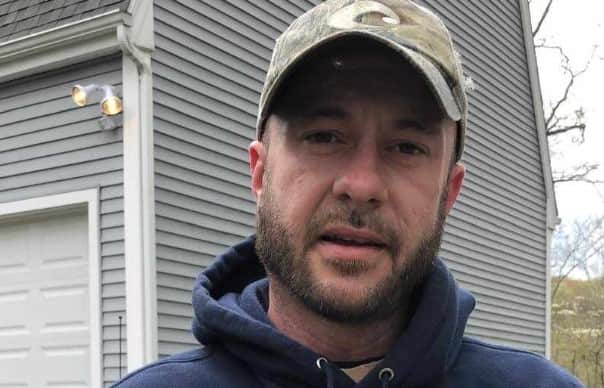
I spent years tracking coyotes across Connecticut forests. Then I built a business that no competitor could copy.
I did not start with a business idea. I started with field research.
For years I followed eastern coyotes across Connecticut. I did snow tracking before sunrise. I used radio collars to follow wild coyotes through forests and wetlands and farmland. I flew in small planes to track them from the sky. I collected scat samples in every season. I even helped test blood samples to check if coyotes were mixing with wolves. This work later became a short graduate thesis at Southern Connecticut State University and it was even covered by local newspapers.
At the time I was not thinking about business at all. I was thinking about animal behavior and how coyotes move through the land.
It took me years to understand something important. All that field work had quietly given me a huge advantage. I just had not noticed it yet.
The problem I kept seeing
Connecticut has a lot of trees and stone walls and wetlands close to homes. So people and wild animals end up living very close together. This creates conflict.
Here is what I noticed again and again. A homeowner hears noise in the attic. A company comes and removes the animal. Then a few months later the same thing happens again. Same house. Same hole. Sometimes even the same kind of animal.
The animal gets removed but nobody ever asks why it picked that house in the first place.
That question is exactly what my field research trained me to answer. Animals do not choose a spot by accident. There is always shelter or food or warmth or a travel path pulling them in. If nobody fixes that reason the problem always comes back.
What I built
I started a company called Suburban Wildlife Solutions to bring this kind of thinking into everyday wildlife control.
Every job starts with a real inspection. Not a quick fix. I find out what kind of animal it is. I look for how it got in. I look at what the house or building is offering the animal. Then I build a plan around that specific spot.
The services include things like bat removal and animal proofing repairs and bird control and mouse and rat prevention. But honestly the service itself is the easy part. The real value is the thinking behind it.
Why the research still matters
My old research was about coyotes not about pest control. But the skills carried over perfectly. Reading tracks. Noticing small clues. Understanding how seasons change animal behavior. These are the same skills I use when I look at a torn vent or a damaged roof edge.
I am not just seeing a hole. I am seeing a clue about what the animal was doing and why.
This background also helps build trust fast. People feel more comfortable when they know the person inspecting their home actually studied wildlife seriously for years.
What I learned building this business
A few lessons stuck with me.
The research is not the product. Clients care about results. They want the problem to stop coming back. The science just explains why my method works.
Doing one thing well beats doing everything everywhere. I only work in Connecticut. I know this state's animals and homes and seasons very well. Growing too fast in new places would weaken that advantage.
The inspection is where everything happens. If I skip it and just remove the animal I become just another average company. The inspection is where real experience gets used.
Removing the animal is the easy part. The harder and more valuable part is fixing the reason it came in at all.
What most people do not expect
People assume I focus only on animals. Actually I focus more on the building.
The animal will always move on eventually. What stays behind is the house and its weak points. If I do not fix those weak points the same problem returns every season.
That is the biggest lesson from years of field research. You cannot understand an animal without understanding its surroundings. For this business the surroundings are simply someone's home.
About Thomas Pepe
Thomas Pepe is the founder of Suburban Wildlife Solutions, a Connecticut wildlife control company built on field biology. He holds a BS and MS from Southern Connecticut State University. His graduate research produced the thesis Ecology of Coyotes in Connecticut and involved nearly five years of field work including radio telemetry, wildlife capture and handling, aerial surveys, disease testing, and scat analysis. His research was featured in Connecticut newspapers. He is a licensed Connecticut Nuisance Wildlife Control Operator.
