I Started Selling Men's Shorts Online 6 Months Ago. My First Product Flopped.
Six months ago, I launched a small online store selling men's shorts.
Like a lot of first-time founders, I thought I already knew what customers wanted.
I was wrong.
My initial product was a classic cargo men's short. It seemed like a safe bet. Cargo shorts have been around forever, and I assumed men would naturally want extra pockets and utility.
So I invested in inventory, launched the site, and waited.
The sales never really came.
Not terrible. Not great. Just... flat.
The Problem: I Was Selling What I Thought People Wanted
After a few weeks, I started reaching out to customers and potential buyers.
I sent messages. Read reviews. Asked simple questions:
"What do you actually look for in a pair of shorts?"
The answers surprised me.
Most men between 20 and 40 weren't looking for traditional cargo shorts at all.
They wanted something that could work almost anywhere.
Something comfortable enough for the gym.
Clean enough for casual dinners.
Versatile enough for travel.
The common themes kept showing up:
Athletic fit
7-9 inch inseam
Lightweight materials
Minimal branding
Neutral colors
Functional pockets without bulk
Nobody was asking for giant cargo pockets.
The Pivot
Once the pattern became obvious, I made a decision.
Instead of trying to convince customers they wanted cargo shorts, I'd build what they were already asking for.
I switched manufacturers and redesigned the collection.
The new shorts featured:
Moisture-wicking fabric
Athletic cut
Navy, charcoal, and olive colorways
Cleaner design
A dedicated phone pocket that stays flat
The goal wasn't to create the most fashionable shorts on the market.
The goal was to create the pair someone reaches for three times a week.
We launched the new collection and waited.
This time, the response was completely different.
The Numbers After 3 Months
The business is still small, but the results gave me confidence that we were finally moving in the right direction.
Current metrics:
47% return customer rate
$82 average order value
Most customers buy two pairs
Best seller: our Everyday Hybrid Short
The biggest surprise wasn't the sales.
It was how quickly customer feedback translated into better performance.
What I Learned
The biggest mistake I made wasn't choosing the wrong product.
It was assuming I already knew the market.
As founders, it's easy to believe we're the customer.
Sometimes we are.
Most of the time, we're not.
The turning point came when I stopped guessing and started listening.
Customer conversations taught me more in a few weeks than months of market research.
The lesson was simple:
Comfort beats trends.
Versatility beats hype.
And real customer feedback beats assumptions every time.
Building While Working Full-Time
One thing I don't talk about enough is that I'm running this business completely solo.
Product sourcing, customer support, marketing, inventory management, website updates—everything happens outside my regular working hours.
Some days it's exhausting.
Some days I wonder if it's worth it.
Then an order notification comes in from a returning customer, and it reminds me why I started.
The business isn't huge yet.
But it's growing.
And more importantly, it's growing because we're solving a real customer need.
Final Thoughts
If you're building an ecommerce brand, don't spend months trying to predict what customers want.
Talk to them.
Ask questions.
Watch how they buy.
Listen to their complaints.
The answers are usually much simpler than we think.
For me, the winning formula wasn't revolutionary.
It was simply creating shorts that men genuinely enjoy wearing every day.
Sometimes the best business insights come from admitting you're wrong.
And that's exactly what happened here.
If you're in ecommerce, apparel, or consumer products, I'd love to hear what lessons you've learned from customer discovery.
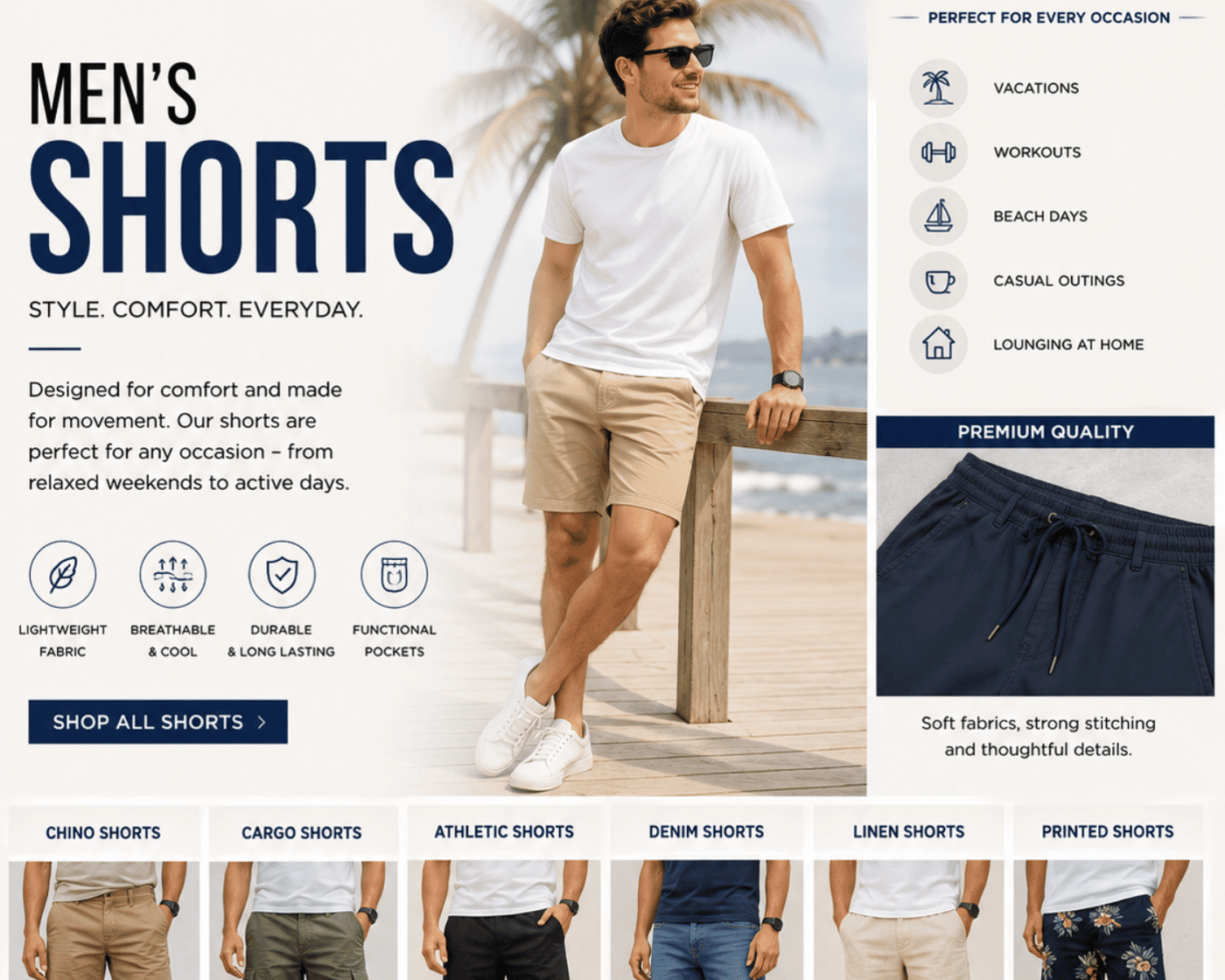
You can also check out our men's shorts collection here:


Love that you found comfortable flats that look chic. It's such a pain to find shoes that don't make your feet ache by lunchtime. Have you tested them on a full day of walking, like 10k+ steps?
I feel this. One thing I've noticed is that the biggest hurdle isn't building the product, it's getting those first few people to care enough to give feedback.
What's interesting is that the customer interviews didn't just change the product.
They changed what "success" meant.
Cargo shorts failing could have been interpreted as a marketing problem. Instead it turned out to be a customer-definition problem.
Those two paths often produce very different businesses, even when the feedback sounds positive in both cases.