I was sure a million people would want it. Week one: 0 users.
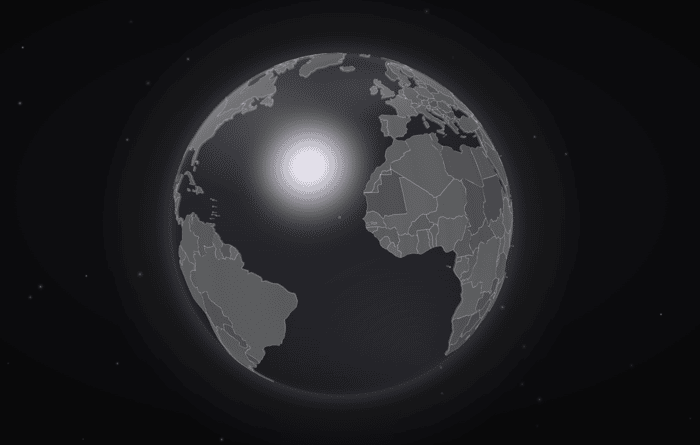
I'm building Odyssa solo — a 3D globe where you mark every country you've visited and keep the photos, videos, and notes from each trip inside it. Web-first, shareable by a single link, no app to install. Less a travel tracker, more a shelf you actually walk past.
I want to write this the way I wish more build-in-public posts were written: honestly, including the parts that didn't work. So here's my real first month, numbers and all.
The setup
My background is design — graphic, 3D, UI/UX, motion. Twelve years of it. My husband is a developer, and I built Odyssa with AI-assisted coding, mostly at night after our one-year-old was asleep.
I'll be blunt about something that might be unpopular here: building it was the easy part. It came together fast. It's genuinely beautiful — the globe spins, it loads quick, you drop a photo on a country and it becomes part of your world. I was proud of it.
The first time I said my goal out loud — a million users, $0 budget — my husband went quiet and shook his head. He's shipped products inside real companies and managed the teams that do it. "A million people is an enormous number," he said. "Do you understand how enormous?" I nodded like I did. I didn't. Then he stayed up helping me anyway.
Launch: the number that wouldn't move
I hit deploy at 1 a.m., leaned back, and thought the hard part was over.
Week one, my dashboard read 0 users. Not "slow." Not "a few." Zero.
I did the math I'd already done a hundred times — billions of people travel, everyone has a phone full of trip photos, everyone loves looking back — and none of it produced a single user. I lay awake wondering if I'd built this for no one but myself.
Here's the first thing I got wrong, and I think it's the one that gets most of us:
Building a thing and being found are two completely different problems. I'd solved the first and assumed it bought me the second. It doesn't. A good product does not find its own users. I'd built a beautiful room at the bottom of the ocean.
Somebody came — and it taught me the opposite of what I expected
Then two strangers showed up.
The first was a guy who'd spent years working on ships and had been to 88 countries. He found Odyssa and emailed me, unprompted — said it was the kind of thing he'd wished existed for years, and that he'd share it with his colleagues and the yachting groups he's in. A few days later, a woman in the Netherlands replied to one of the cold messages I'd been sending to people who love to travel. Same warmth. Said she'd share it with her friends and her daughter.
I watched the dashboard tick up off zero and nearly cried. Two people, opposite edges of the map, who found the thing I made and wanted to hand it to someone they loved. In my head the avalanche had already started: he tells his ships, they tell their groups, and away it goes.
The avalanche did not come. A week later, the numbers had barely moved.
Second lesson — and this one cost me a week of false hope:
Being loved is not the same as spreading. They feel identical from the inside. The joy is so total your brain quietly concludes "if two strangers love it, surely thousands will." The feeling is real; the conclusion is false. Two passionate users who both promise to share still don't create distribution. The product was validated. Distribution was — and still is — the entire game.
There was a bonus lesson hiding in there too:
Fresh eyes catch what you've gone blind to. Both strangers gave me better product feedback in 90 seconds than I'd gotten from months of staring at it myself. I'd stopped seeing my own friction the way you stop seeing clutter in your own hallway.
Where I am now
I have proof the product works. What I don't have — what I'm still fighting for — is distribution. Nobody is coming to find me; I have to go get them. That's the actual job, and it's the part nobody warned me about.
I'm documenting the whole thing as it happens, mistakes included.
If you've crossed this wall — good product, no distribution — what actually got you your first 100 real users? Especially curious what worked vs. what everyone says works.
Full long-form write-up, with the messier details: https://medium.com/@odyssa.hq/nobody-came-88d1dc6b3118

"A beautiful room at the bottom of the ocean" is the whole lesson in one line. The detail I'd underline for anyone reading: your first two users came from an email and a cold message, not from the launch. That's not a consolation prize — that's the actual channel telling you what it is.
The trap with a product like Odyssa is that the addressable market ("everyone travels") is so big it gives you nowhere to stand. The guy with 88 countries from ships is not "a traveler," he's a specific person with an identity built around a number he wants to display. That's who to build the next month around: people who already keep a count. Nomad/expat forums, long-haul crew, Couchsurfing-era groups, the r/solotravel type crowds — small, findable, and already emotionally invested in the artifact.
Also, the shareable-link-with-no-install thing is your only real distribution loop. Every completed globe someone posts is an ad you didn't pay for, so I'd spend the next build cycle purely on making the shared view irresistible to a person who's never heard of you.
This might be the most useful comment I've had on here, thank you.
The channel point lands hard. You're right that every user who actually mattered came from a 1:1 touch — an email, a cold message, a reply in a thread — never the broadcast. I'd been filing the silent launch under "the sad part of the story" instead of reading it as the signal it was.
And "people who already keep a count" is the reframe I didn't have words for. It's almost embarrassing in hindsight — my highest-engagement posts are literally people commenting their number. I've been standing in a room full of count-keepers without naming them as the segment. Long-haul crew and the r/solotravel-type crowds are exactly where I'm pointing next.
The shared-link loop too: the first time the thing moved without me pushing was someone sharing their globe unprompted. Making that shared view convert a cold stranger is going straight to the top of the build list. Genuinely grateful you thought this through.
You speak a lot of truth. I’m in the same boat with Agora. It’s a social media site with no algorithm, data collection, likes, follows, or post metrics. Nothing to promote performative posting. Sometimes your product just needs time. I have a full time job and I built Agora in my free time as well. Trust the process and it will work out. It took years for Pinterest to take off and Ben Silbermann personally sent 6,000+ emails for several years to get it off the ground. Keep selling it. It will find its place in the world.
Thank you — and the Silbermann example is perfect, because it actually proves the point I'm circling.
He didn't "trust the process" and wait. He sent 6,000 emails by hand because the algorithm was never going to deliver Pinterest for him. That's manual, un-scalable, human distribution — exactly where I've landed too. The lesson I'm taking isn't "be patient," it's "stop waiting for the feed to save me and go reach people one at a time."
Rooting for Agora, by the way — a social site with no metrics sounds like a hard, honest thing to build. How are you getting your own first users?
My site will be funded via a paid subscription and I can afford to give the first 1,000 users (US only due to tax reasons) a free, lifetime account. I programmed a "founder invite" email for those I think would be interested in joining. It provides an invite code that is required for registration and as soon as the user registers they are provided with another code that they can share with three others for a free account as well. My intent is to send 10-20 emails every 3 weeks, but I might increase the number soon. I'll do so until the free accounts fill up. Then, since I'm not relying on ads or selling user information, I will need to rely on the paid subscription.
Even with all of this it is still a process. As I said, I have a full time job and am sending out emails when I can. Additionally, a lot of people have been burned by social media, but I believe it still has redeemable qualities. I like what I've done to Agora so far and I still need to add final touches. I'm optimistic that in time people will love it as I do.
Best of luck with your site as well!
“I was sure a million people would want it” might be the unofficial founder anthem.
Two people loving it is encouraging. One stranger paying for it is evidence. I’d spend less time looking for the million and more time figuring out what makes person #3 care enough to act.
"Evidence vs encouraging" is the right line, thank you.
Looking at it honestly: #1 found me by luck, #2 I had to hand-message myself. Neither is repeatable. Person #3 is the first who'd need an actual mechanism to discover it — and that's exactly the part I haven't solved. Working on it in the open.
The more important distinction seems to be between product validation and distribution validation. Two people loving Odyssa is meaningful, but it doesn't yet establish a repeatable reason or mechanism for strangers to discover and share it.
Correct, and it's the harder of the two. Two people loving it told me the thing works. It told me nothing about why a third person would ever hear about it.
What I've found so far: high-view content is often the worst kind, because it resolves the viewer's curiosity inside the platform. The stuff that converts is where the answer people give in the comments is itself the thing the product builds. Smaller reach, actual clicks.
The share link is meant to be the mechanism — every globe is a link someone sends to a friend. That only works once there's a first cohort worth sharing from, which is the part I haven't solved.
The distinction between reach and actual product-driven sharing is pretty telling. I’d be interested in continuing the conversation as you test that mechanism. If you’re open to it, what’s the best email to reach you at?