If you are About to Quit, Read This.
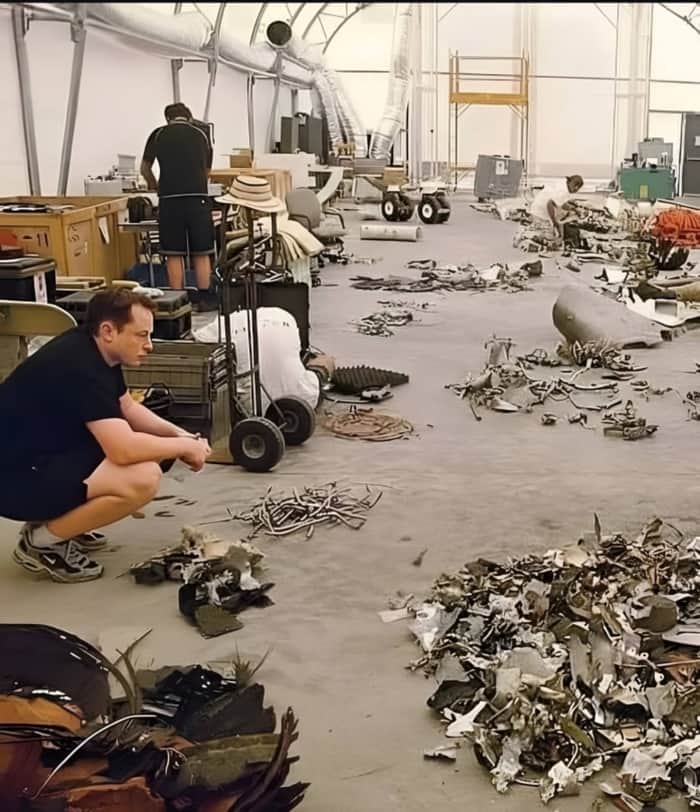
This isn’t chaos. This is tuition.
In the early days of SpaceX, Elon Musk burned nearly $100 million on failures.
Three rocket launches. Three explosions. Years of work reduced to debris.
Most people would’ve walked away. Most companies would’ve shut down.
Because this is what losing looks like in real life- Not dramatic speeches. Not applause.
Just silence. Scraps. And the weight of knowing one more mistake could end everything.
SpaceX was down to its last attempt. No backup funding. No safety net.
If the fourth launch failed, the company was finished.
But here’s the lesson most people miss:
That $100M wasn’t wasted. It was converted.
Converted into data. Converted into precision. Converted into understanding what doesn’t work.
Failure didn’t weaken the mission- It refined it.
The fourth launch succeeded. NASA contracts followed. History changed.
What you’re looking at isn’t destruction hmm... It’s iteration.
Every broken part taught something. Every loss removed uncertainty. Every failure bought clarity.
Business at the highest level isn’t about avoiding loss. It’s about surviving long enough to let loss teach you.
If you’re bleeding money, time, or energy right now- Ask yourself this:
Are you losing randomly? Or are you learning deliberately?
Because the people who win aren’t the ones who never fail. They’re the ones who can afford to fail and keep going.
Sometimes the difference between collapse and legacy Is the courage to attempt one more launch.
That’s exactly what I help amplify.
Sonic audio branding for builders who are still in the hard part.

I simply like the framing of “this isn’t chaos, it’s tuition” it lands. ~
However, one thing I’ve learned the hard way, is that failure only becomes tuition when you extract the lesson quickly. Or else, it is just costly hurt.
A brief exercise I practiced was conducting a weekly “loss review.” No emotion involved. Only.
Yes, of course.
Here's my take on why it didn't happen.
What I will change next week.
It transformed unpleasant weeks into valuable inputs for subsequent iterations rather than a downward spiral.
The question struck a chord too: Do you lose at random or learn on purpose? This is the true difference. Many founders continue their efforts without making the feedback loop more efficient.
I wonder how you differentiate between “I should keep going” and “I’m making the same mistake again.” It can be difficult to see that line at the time
One thing I always suggest to people who are close to quitting is to shrink their scope for a bit. Lower stakes. Quick cycles. It brings back feeling of achievement and discovery.
Thank you for sharing! While it may be easy to romanticize persistence, it’s the practical aspect all the learning from the messy parts of life that makes people persist.
probably the hardest of being a founder is to continue the business and still wonder if it will be worth it.. if you are the kind of guy that "this is the risk I am going to take" you already won the process. what are you working on?
Really needed this, Thanks alot.
thanks too! what are you working on?
I think a lot more people need to hear this. I've seen so many people stop at the first hurdle and just give up. Obviously it's not easy to persist, but I don't understand the mentality. Why fear failure? Even if things don't work out, you've learned valuable info that you can use to your advantage next time around.
always remember that what you are having right now isn't permanent. You can drastically change things by compounding work that is undervalued and underrated. what are you working on?
Failure is the cost of success 🙏
true! what are you working on?
needed this today tbh.
the "learning deliberately vs losing randomly" framing is something i wish i'd internalized earlier. spent way too long just... doing stuff without tracking what actually moved the needle.
one thing that's helping me now: writing down what i expect to happen before i try something, then comparing it to what actually happens. sounds obvious but it forces you to be honest about whether youre actually learning or just staying busy.
also — the loneliness of the hard part is real. knowing other people are going through the same thing makes it easier to keep showing up.
the most undeniable fact of entrepreneurs is that "to keep on going" even tho there are no results. keep going. What are you working on?/
"Are you losing randomly or learning deliberately?" - this is the key question.
What I've noticed from talking to successful indie founders: the ones who make it aren't the most talented. They're the ones who treat every failure as a data point and stay in the game long enough for things to compound.
For anyone in the hard part right now: listening to other founders' stories really helps. There's a French podcast called Public SaaS Builders with a lot of "I almost quit but..." stories. Sometimes just knowing others went through the same thing makes the next launch possible.
Keep iterating 🚀
yes! the most underrated and undervalued skill is compounding effort! what are you working on?