Innovators of the week
Sensat

This startup creates virtual twins of project sites. A virtual twin is a digital representation of a real-world physical system or product. In that case, the startup sends drones to capture all the data needed to make this digital copy of the construction site. The end result is kind of similar to a map in a video game. This helps infrastructure owners and their construction partners to deliver on time and on budget by optimizing and easing team collaboration, uncovering hidden risks, eliminating site visits, and acting as a centralized dashboard for an entire project.
Level

Apple stores in the U.S are now selling an exterior door lock that can be unlocked by a user’s Apple Watch or iPhone. When the $329 Level Lock+ is installed in a door, users can unlock and relock their homes using Apple Home Key. Users can text keys to their friends or automate when the door is locked. The Level Lock+ is the first Home Key-supported lock that’s been sold in Apple stores.
Aeler

This company is reinventing the container. The Unit One container is lighter, stronger, and more energy-efficient than others. Whereas conventional shipping containers have metal walls that are corrugated for strength, Unit One features flat, insulated walls made of a high-strength yet lightweight composite. Because it's so light, it's reportedly able to carry 15% more cargo than a regular container. Internet-connected sensors inside the container continuously monitor parameters such as temperature and humidity, impacts, luminosity, and also door openings, and GPS coordinates. This new kind of container could lower maritime shipping carbon emissions by 20%. Equivalent to the emissions of Belgium.
Laserweeder by Carbon Robotics

This robot uses lasers to kill weeds. Carbon Robotics laser-weeding technology has been proven to be effective and offers farmers many benefits, including healthier crops and soil thanks to a decrease in herbicide use. It also reduces labor costs. The new laser weeder features 30 industrial CO2 lasers and A I that instantly identify, target, and eliminate weeds using thermal energy while continuously rolling.
https://carbonrobotics.com/laserweeder
Orba
The Artiphon Orba 2 is a synth-like instrument in a small form factor that lets people who can't play instruments create beats, bops and bass lines. The company says Orba 2 allows people to do fun sampling and interact with it in the same way they would with a pen and sketchpad. The company rebuilt the Orba 2 from the ground up, adding more than 100 new sounds based on real instruments.
https://artiphon.com/products/orba
Harvard John A. Paulson School of Engineering and Applied Sciences

Taking inspiration from nature, Harvard researchers designed a new type of soft, robotic gripper that uses a collection of thin tentacles to entangle and ensnare objects, similar to how jellyfish collect stunned prey. Alone, individual tentacles are weak. But together, the collection of filaments can grasp and securely hold heavy and oddly shaped objects. The gripper relies on simple inflation to wrap around objects and doesn’t require sensing, planning, or feedback control. This could prove useful in fulfillment center to grasp fragile objects.
https://www.seas.harvard.edu/news/2022/10/tentacle-robot-can-gently-grasp-fragile-objects
Jasper
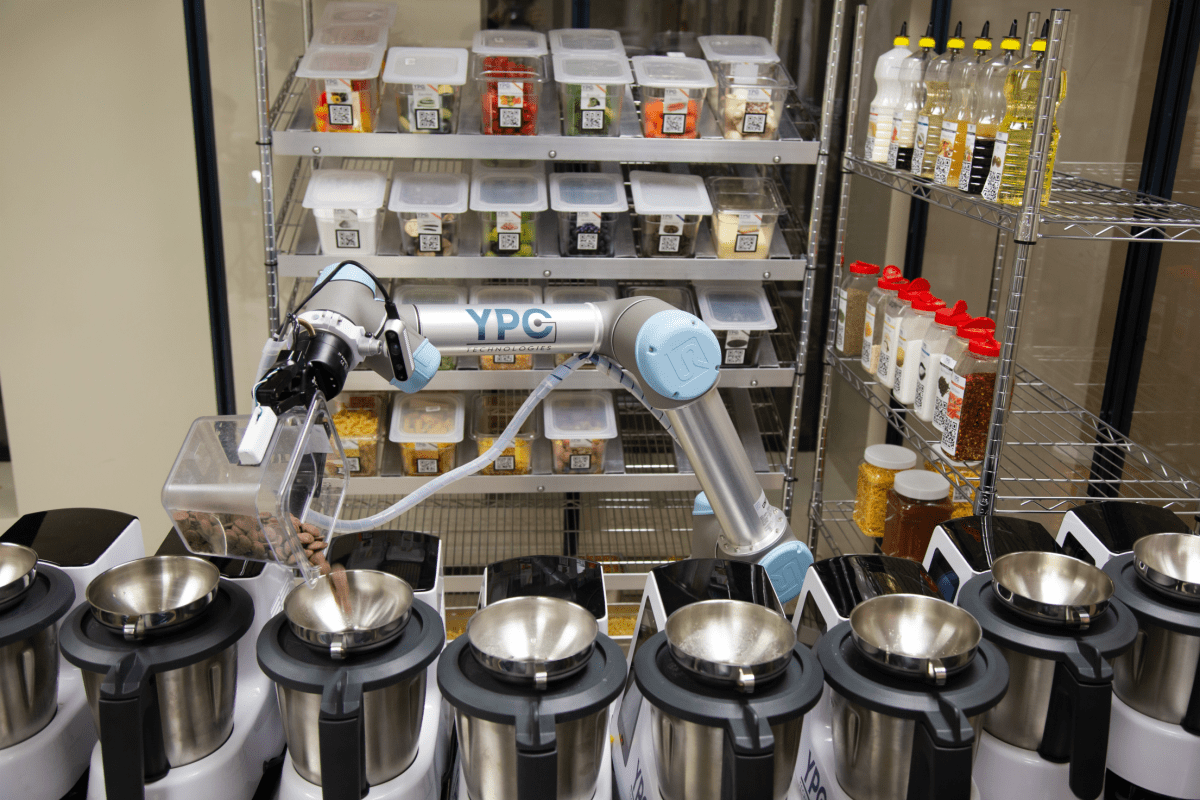
This robotic company created a model called “cooking as a service”. They run robotic kitchens in or next to residential high-rises, charging residents a subscription fee plus the cost of ingredients for meals. By having robotic kitchens so close to the end consummers, Jasper eliminates labor and delivery inefficiencies to offer residents freshly prepared gourmet meals at the cost of home cooking. They just launched in six apartment buildings over the past month.
