IoT(Internet of Things) Device Monitoring Best Practices & Top Tools
Before entering the IoT market or when you aim to gain more notoriety in this industry, getting familiar with what is happening on the market is essential. One of the things we want to discuss is the practice of monitoring IoT devices.
IoT, or the Internet of Things, represents the network of connected devices and the service that facilitates the communication between devices and from the devices to the cloud software. This technology keeps developing at a huge pace, showing the impact on businesses and economies. There are around seven billion IoT-connected devices worldwide, almost as many as the global population, which constantly increases the need for IoT monitoring platforms.
IoT investments are expected to reach $1.1 trillion by 2023, creating an excellent opportunity for developers to launch IoT monitoring products that will satisfy the market's demand.
In the article, we speak about IoT monitoring, why it exists, its benefits, how to choose the IoT monitoring platforms, and the list of the best tools we found. If you plan to start the internet of things software development or just want to know more about the existing solutions, the article will be helpful.
IoT Monitoring as a Part of IoT Fleet Management
IoT monitoring is the practice of continuous and automatic capture of data from IoT devices and sensors through special software. This type of software captures data to be used for various purposes such as identifying device problems, improving performance, evaluating security, and more. In general, IoT collects information regarding the functionality and performance of the devices connected to the networks and potential troubleshooting.
In general, IoT monitoring serves two purposes:
- It helps to monitor the state of IoT devices (it's also called an IoT fleet).
- It helps to monitor the condition of the equipment to which IoT devices are attached.
Transportation and delivery companies are the first in the queue of IoT users. IoT allows them to monitor all embedded sensors of the vehicle. It's called IoT fleet monitoring and it's a part of IoT fleet management. IoT fleet monitoring brings benefits such as preventing technical difficulties by alerting the manager ahead of time about potential malfunctions or required checkups.
Manufacturers are the second in the line of users since they have equipment that breaks from time to time. And it's much easier to monitor both equipment and IoT fleet since they both tend to breakage.
Aircraft and shipbuilders, smart car manufacturers, and smart cities -- any system that requires a large number of IoT devices has to deal with device breakdowns. And IoT monitoring can help here.
Why IoT Monitoring Is Important

IoT monitoring makes it possible to monitor all the devices within a system, and such a task would be very challenging to do manually.
Let's consider a case with drivers:
Without an IoT system, fleet management will be more tedious as each driver will have to pay attention to potential malfunctions of the vehicle or equipment, needed maintenance and tracking information, or fuel consumption. This information will then have to be reported to the fleet manager, which will take more time, considering that an IoT system does everything in real time.
IoT monitoring can help managers make data-centered decisions faster and accurately by measuring functionality, performance and maintenance of the devices connected to the monitoring network and delivering this information to the user in real time. It reduces and even eliminates manual labor, such as manual inspections of the devices which helps the company save money and time on analyzing its fleet.
This paragraph implies that you already know why IoT matters and we don't need to explain it. Read the linked article if it's not your case.
How IoT Device Monitoring Looks Like: an IoT Dashboard
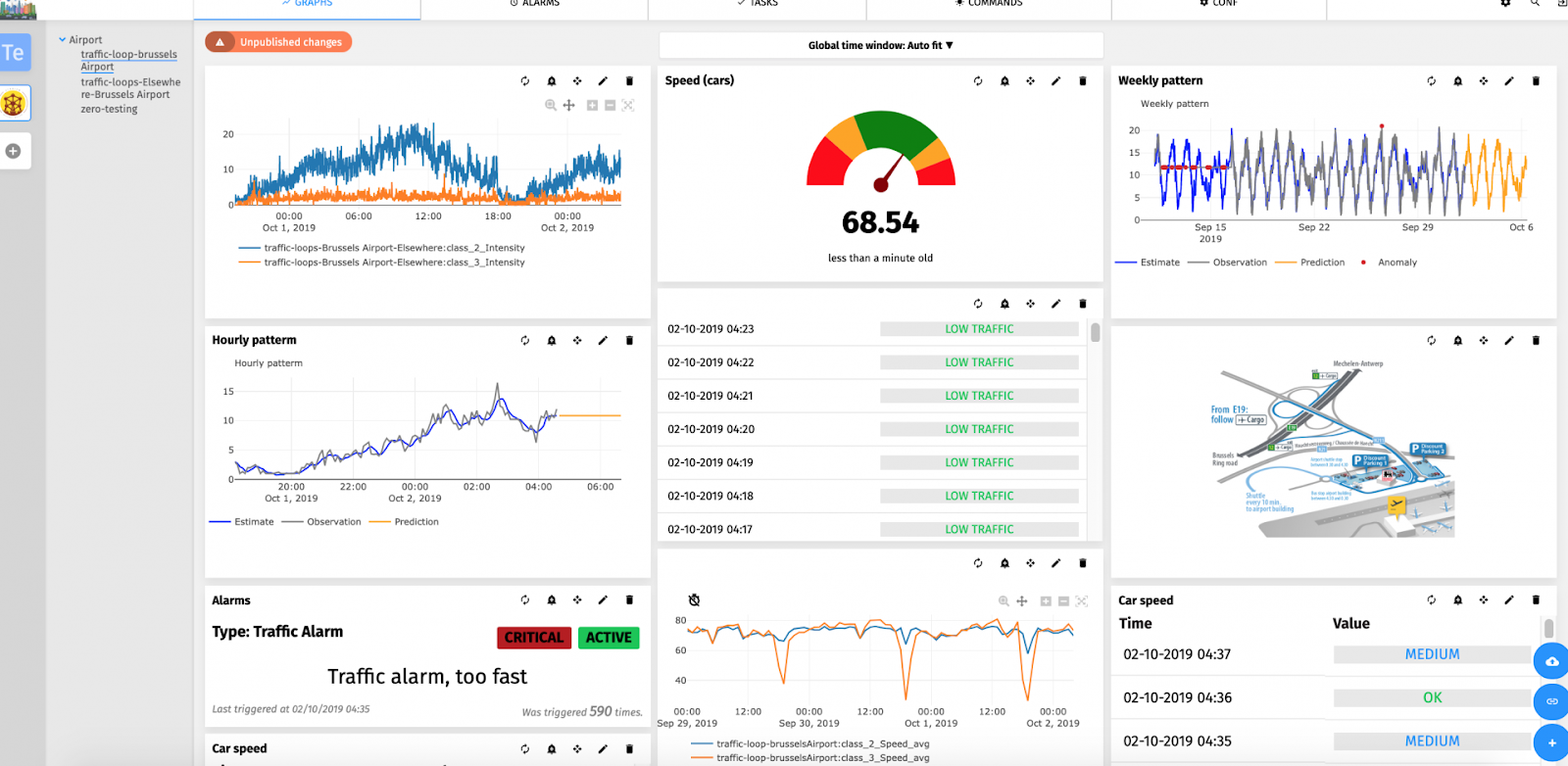
*Source: *Waylay Dashboard
Managers monitor IoT networks through a dashboard that includes all the data extracted from the devices in the IoT infrastructure. An IoT dashboard is a tool for IoT data visualization that contains data in charts, graphs, and UI elements like a map. IoT monitoring dashboards display metrics such as the status of the devices, activity metrics, tracking metrics or network traffic, and equipment vulnerabilities.
An IoT monitoring dashboard is essential for IoT monitoring as it offers a large amount of data from numerous devices at one glance. Through the IoT dashboard, the user can interact and monitor the devices connected to it and get alerts regarding maintenance needs or technical malfunctions that need to be addressed.
Users can customize the IoT dashboard to suit their needs better and send data from the dashboard to their devices. By customizing the dashboard, users can get just the type of information they are interested in or regarding only some network gadgets.
You can find a video of an IoT monitoring tool in the link
Benefits of IoT Monitoring
-
Monitoring of Performance and Availability of the IoT Fleet. Using IoT to monitor your fleet is primordial for well-functioning vehicles. Since you will get maintenance notifications, you can avoid potential vehicle problems and reduce repair costs.
-
Alerting in case of Emergencies. Getting alerts in real-time will help you address a problem as soon as it appears. Thanks to these alerts, you can reduce delays and keep your devices functioning at the highest parameters.
-
Convenient Display of Aggregated Data. You have access to all the data from as many devices as are part of the IoT network. This gives you a detailed overall image of your system and saves time researching the necessary information. IoT networks contain thousands and millions of devices, which would be impossible to manage manually.
-
Equipment performance analysis. IoT monitoring helps companies analyze their assets' performance, functionality, and maintenance. This benefit can be crucial in a factory, where one malfunctioning device could affect the entire production.
-
Reduced manual labor. Manual labor, such as inspections takes both time and expenses since the inspector will have to go to the location of the equipment to perform all the checking. But IoT monitoring platforms reduce and even eliminate this type of labor since all the information regarding the equipment will be displayed in the dashboard.
What to Look For in IoT Device Monitoring Software
The number of IoT platforms is constantly growing, from 260 platforms in 2015 to over 426 in 2021. When you are looking for IoT tools, the following criteria will help you choose the best ones on the market:
- A network device finding feature that works automatically
- Monitoring of device status
- Network security
- Remote supervision for centralized administration
- Security of IoT devices
- A demo system or free trial for a cost-free evaluation chance
- Value for money from a tool that can track scattered devices over numerous places and is provided for a fair fee.
Top 10 Tools for IoT Device Monitoring
1\. Oracle IoT
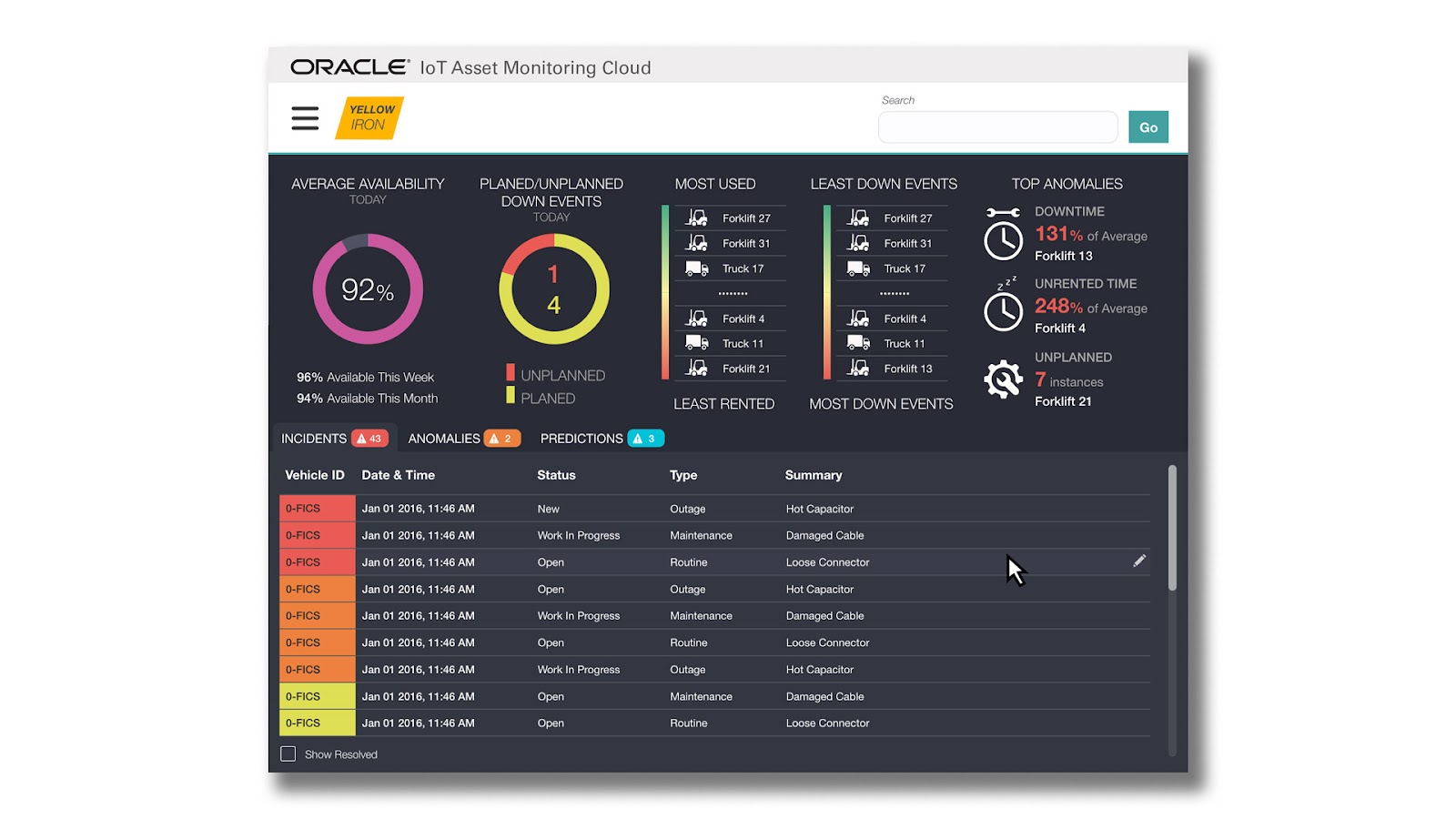
Oracle creates Oracle IoT, which is ideal for businesses of all sizes. It connects assets, logistics, transportation means, and intelligent manufacturing. Titan International uses smart manufacturing IoT from Oracle to manage inventory, shipping, data collection, and customer support.
Website: https://www.oracle.com/internet-of-things/
Features of Oracle IoT:
- Worn-in-progress monitoring
- Connected logistics
- Service monitoring, tracking, and shipping monitoring
- Inventory management
- Workplace safety through connected and monitored workplaces
Advantages:
- Oracle IoT integrates with Oracle apps and other applications and supports ERP, CRM, H.R., and chain supply in one platform.
- Oracle Corporation was launched in 1977, making it one of the market's oldest and most reliable companies.
2\. Particle
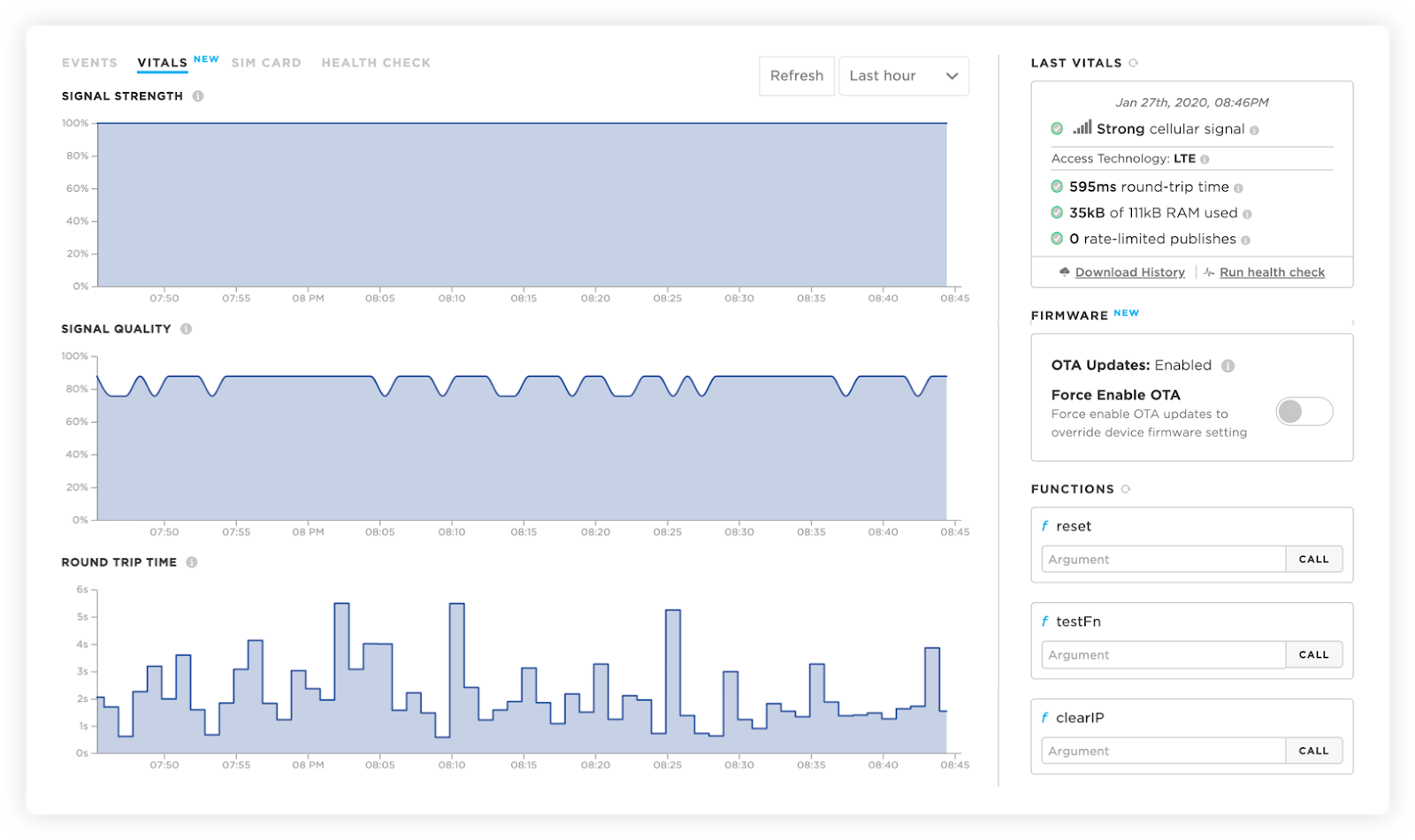
This IoT monitoring addresses enterprises that need to monitor their hardware apps, software, or devices in one platform. It can be used to increase energy efficiency through connecting energy assets or for industrial monitoring of the equipment in factories and production places. Qube uses Particle cellular IoT to monitor emissions and leak sources so they can be fixed before more significant problems emerge. Particle IoT is used by big companies such as Watsco, Wonder, Champions, Zoomo, or Jacuzzi. Opti also uses it in its weather predictions.
Website: https://www.particle.io/
Features of Particle IoT:
- Customizable IoT monitoring platform
- Cellular IoT, which connects devices through cellular networks like those networks used for smartphones
- Firewall protection for the cloud
- Integrates with any app that uses REST API
Advantages:
- Particle IoT offers one solution for hardware and software connectivity,
- It comes with practical community support that users can access in case they have issues with the platform.
3\. ThingWorx
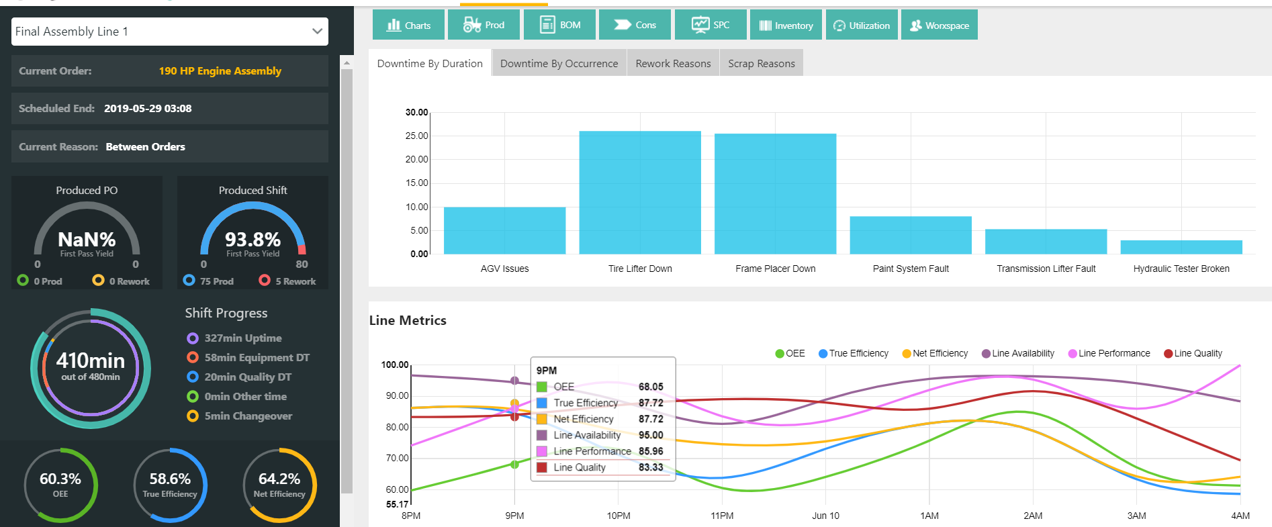
ThingWorx is an Industrial Internet of Things produced by PTC. It allows users to create their own IoT platform for the industry they need. This solution is perfect for large enterprises that monitor millions of devices simultaneously. The primary industries that use ThingWorx are Information Technology and Services, Machinery, and IT Regeneron Pharmaceuticals Inc. It is one of the essential companies using ThingWorx.
Website: https://www.ptc.com/en/products/thingworx
Features of ThingWorx:
- Execute bi-directional file transfers
- Create, edit, and manage business processes associated with connected devices
- Extendable model so new elements and services can be easily added
- Standard integration framework for creating and implementing reusable system connectors
- Remote access to all monitored devices
Advantages:
- ThingWorx helps automate thousands and even millions of devices, reducing the time spent monitoring and managing mass production.
4\. IBM Watson IoT

IBM Watson IoT is one of the best platforms for monitoring devices in terms of connectivity, functionality, and visibility, and users can add or remove any devices as they please. Airbus, BNP Paribas Wealth Management Private Banking, and Bragi Gmbh are some of the most known customers of the IBM IoT platform.
Website: https://www.ibm.com/cloud/internet-of-things
Features of IBM Watson IoT:
- A.I. and Data analytics features
- Design real estate space
- Cognitive computing features for improved in-vehicle experience and fleet maintenance
- Compatible with IBM cloud apps
- Maintain visibility and control of intelligent assets
Advantages:
- It allows users to remotely reboot or install updates on the firm devices by accessing the IoT IBM monitoring dashboard.
5\. Amazon AWS IoT Core
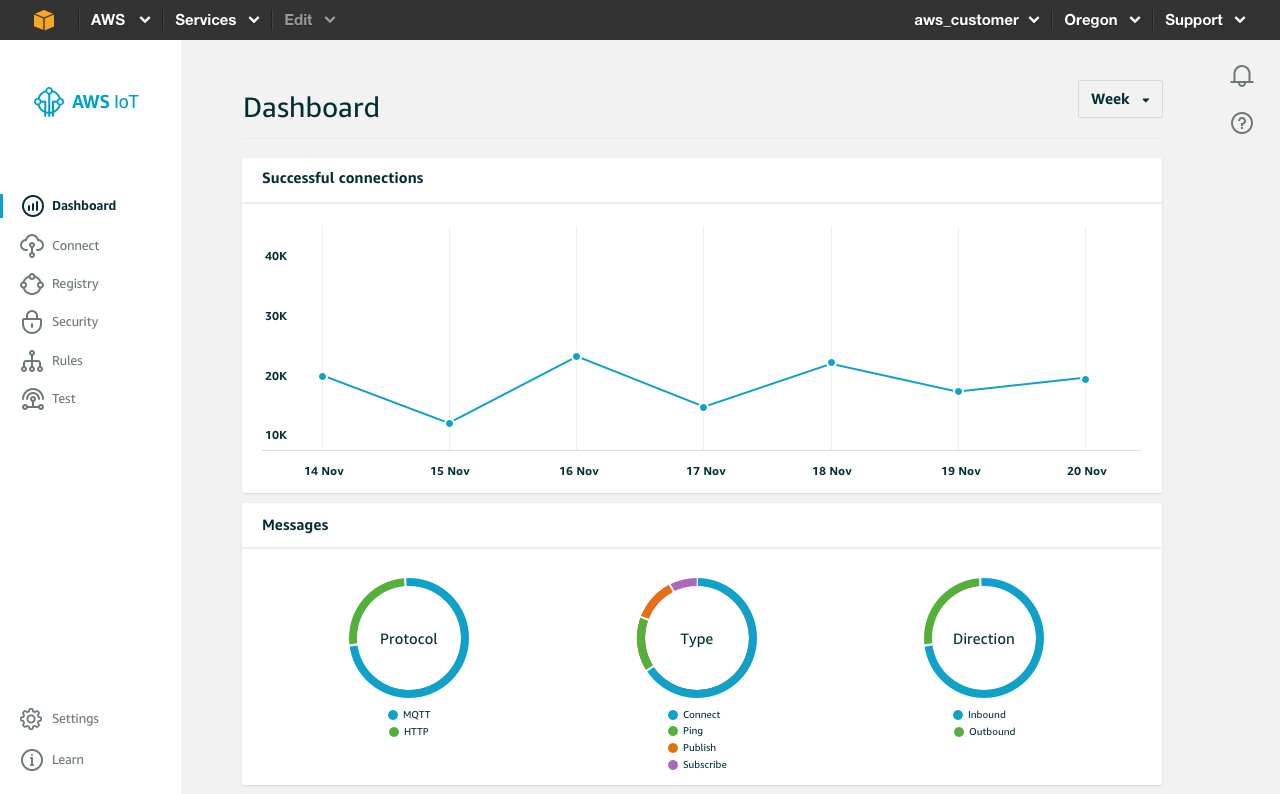
Amazon AWS IoT Core connects billions of devices to the cloud instantly. It is a platform that addresses small companies and well-established enterprises such as Volkswagen, Carrier, Traeger, and United Airlines. United Airlines, for instance, uses Amazon AWS IoT to reduce emissions and support operational efficiency.
Website: https://aws.amazon.com/iot-core/
Features of Amazon AWS IoT Core:
- It supports billions of connected devices and messages
- AWS IoT Device SDK to connect mobile apps of hardware devices to AWS IoT Core via WebSockets, HTTP or MQTT protocols
- Device Advisor cloud-based test for validation of new IoT devices added to the AWS IoT Core and sustain the security of the network
- Users of Amazon AWS IoT also have access to Amazon QuickSight, Amazon Kinesis, and AWS Lambda.
Advantages:
- Amazon AWS IoT is the most impressive IoT monitoring platform regarding the volume of devices and connections it can support, which can be in the billions.
- The free tier version of this IoT monitoring platform offers up to 2.25 million connections in one minute and 500,000 messages in one month.
6\. Microsoft Azure IoT Suite
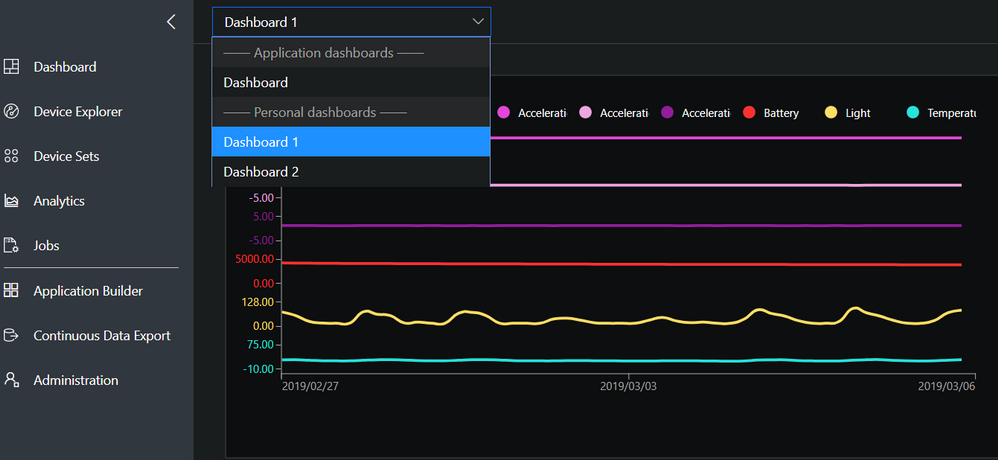
Azure IoT, created by Microsoft, is a tool that companies from all industries can use. Businesses can use the Azure IoT Hub and the Azure Digital Twins to create the best IoT solution for their interests. Lenovo Group Ltd, Blackfriars Group, and Blue Cross Blue Shield are some most notable companies using Azure IoT.
Website: https://azure.microsoft.com/en-gb/products/iot-hub/
Features of Microsoft Azure IoT Suite:
- Edge-to-control IoT monitoring
- You can create customized metrics
- Integrates fully with Azure Event Grid
- bidirectional communication with billions of IoT devices
Advantages:
- Microsoft Azure is the only edge-to-cloud intelligent IoT monitoring technology.
7\. Altair SmartWorks
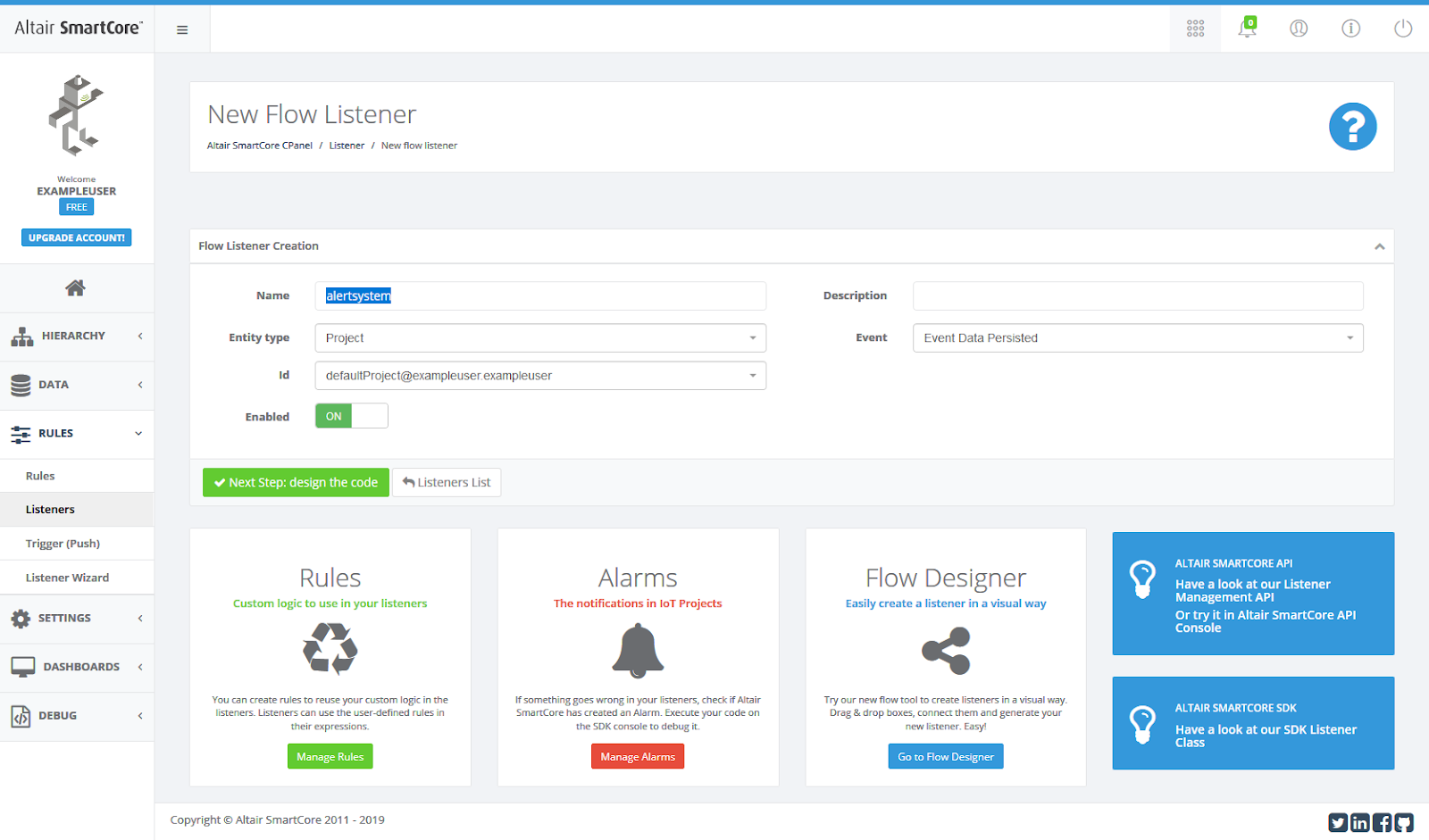
SmartWorks from Altair is an IoT platform that integrates with Altair HyperWorks, which is a great living simulation platform but also with the computing cloud technology of Altair PBS Works. The automotive company Mahindra & Mahindra and the manufacturing company SOCOMEC Group S.A. are only two of the customers of SmartWorks. This IoT platform addresses small, medium, and large companies that need to control and manage devices and use data to improve any aspect of their business.
Website: https://www.altair.com/smartworks
Features of Altair SmartWorks:
- The open architecture facilitates complete customization of the IoT monitoring platform
- Integrates with Altair HyperWorks and Altair PBS
- Process augmentation in the cloud or at the edge
- Deployment models including hosted on-premises, cloud, or a hybrid solution.
Advantages:
- Integrates with all the other Altair tools.
8\. Salesforce IoT Cloud
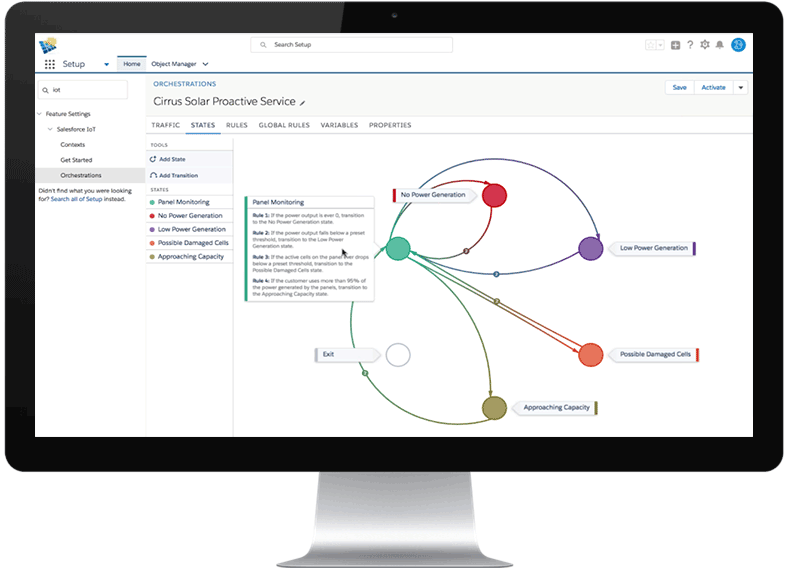
Salesforce IoT Cloud is ideal for any sales company, regardless of size. This IoT platform gathers data from customers, devices, and potential partners that businesses can use to adjust their activity and gain more clients. Thanks to RESTful and API technology, Salesforce IoT allows companies to input data from any source. Some companies that use Salesforce IoT Cloud are the Town of Cary, USA National Institute of Standards and Technology, and Caesars Entertainment, Inc.
Website: https://www.salesforce.com/products/field-service/overview/
Features of Salesforce IoT Cloud:
- Real-time data about products production, performance, and sales
- Prioritizing jobs and crews scheduling features
- Insights into contracts, plans, and maintenance
- Create apps designed for mobile employees
- Traffic view features
Advantages:
- It is a great platform for testing business ideas as it can predict the impact of such ideas on sales and customers behavior.
9\. Metric Fire

Metric Fire is an all-in-one IoT monitoring platform fully customizable to the user's needs. This platform works with Hosted Prometheus and Graphite to generate real-time metrics. Businesses of all sizes can use metric Fire, and thanks to its flexibility, it can adjust to the needs of any industry. One of its most notorious customers is MoneySuperMarket.
Website: https://www.metricfire.com/
Features of Metric Fire:
- Alerts via VictorOps, PagerDuty, email, Webhooks
- Automation features through built-in API technology
- Both on-premise and cloud-based monitoring
- Uses Hosted Graphite Agent to collect data
- Data visualization through Grafana dashboards
Advantages:
- Metric Fire is one of the most user-friendly platforms, and it offers the possibility to modify the dashboard according to the client's needs.
10\. Senseye PdM
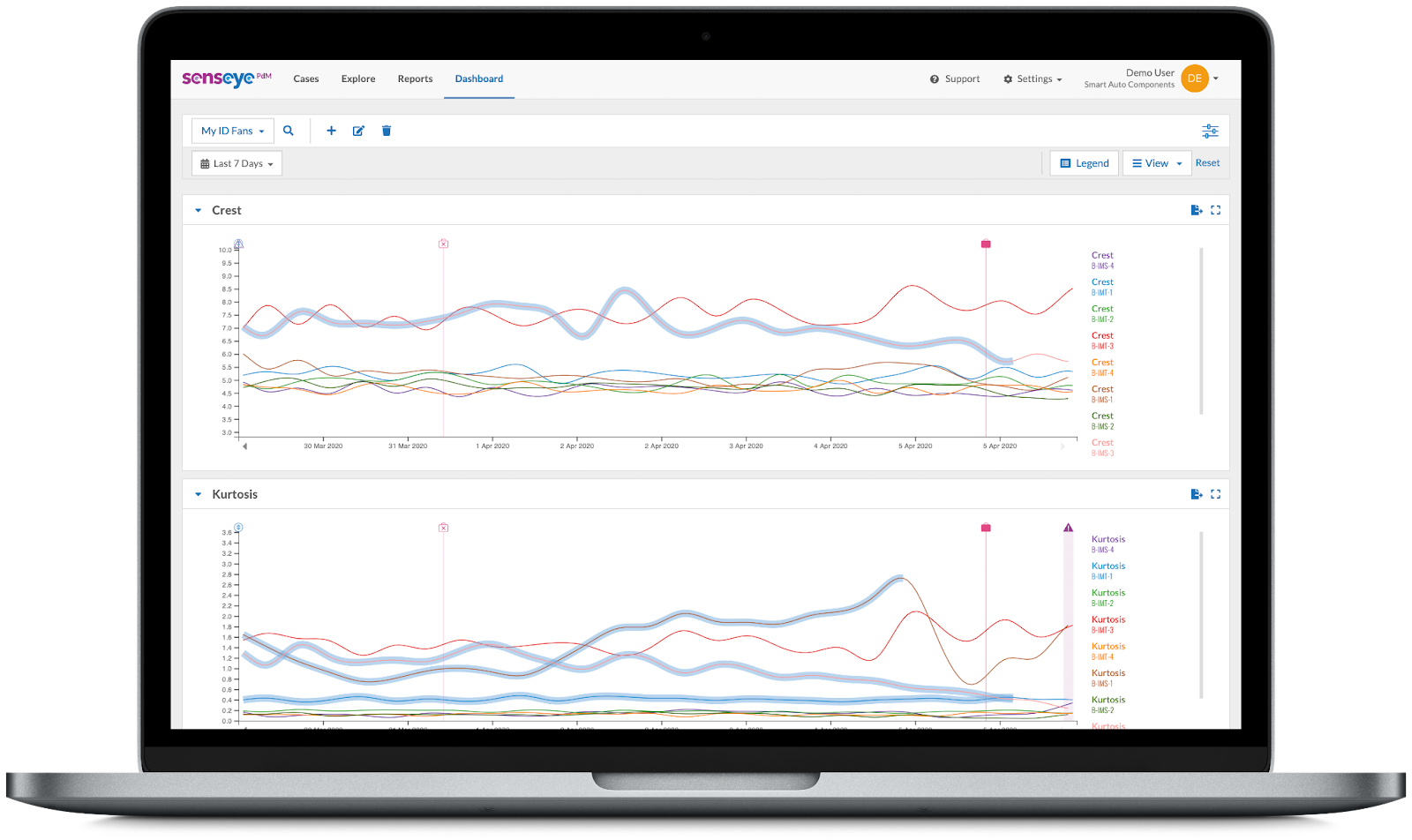
Senseye PdM (Predictive Maintenance) is targeting the monitoring of industrial equipment. It is cloud-based, making it easy to access remotely, so managers can monitor their machines from any location. The IoT platform gathers data from all the devices connected to the network and uses it to predict potential failures so that they can be avoided. The platform integrates with other IoT platforms, such as Microsoft Azure, and has clients like BlueScope, Sony, and Nissan.
Website: https://www.senseye.io/
Features of Metric Fire:
- Valid predictions regarding potential failures of the machines that are monitored
- Calculates lifespan and health of the machines
- Alerts and insights regarding the functioning parameters of the monitored equipment
- Senseye PdM can be integrated with your current maintenance management systems and is fully automated.
Advantages:
- Senseye PdM reduces maintenance expenses by 40% and eliminates the need for manual inspections.
Or You Can Build a Custom IoT monitoring Solution with SumatoSoft
SumatoSoft has been building IoT solutions since 2012, delivering custom enterprise software and developing MVPs to startups gain a competitive advantage and improve their efficiency, effectiveness, and profit through business digitalization.
SumatoSoft offers industry-focused IoT solutions for healthcare, retail, manufacturing, smart homes & cities, and automotive domains. Every solution SumatoSoft builds comes with excellent security and scalability for future changes in terms of new features, fleet expansion, new users, and increased workload.
The SumatoSoft team has built 150 custom software solutions for 27 countries for 11 industries. After more than 10 years on the market, the company became a reliable technical partner to its clients, demonstrating a 98% client satisfaction rate with the quality of services they provide.
Contact us to get a free quote for your project.
Best Practices in IoT Device Monitoring

Data visualization converts information into charts, tables, graphics, and infographics, making it easier to visualize. Through a graphic image of the data, managers can establish patterns and trends, and the larger the amount of data is, the more important its visualization becomes. Regarding IoT data visualization, certain practices will increase the accuracy with which you make the most out of your dashboard!
Adjust the dashboard to your needs
IoT monitoring platforms are customizable so that you can tailor them to your needs fairly easily. Select the widgets you want to display on the dashboard. By doing so, you will get only the information you are interested in and in a visual manner that you will find easy to assimilate.
Use filters to sort out the information
IoT monitoring dashboards can contain overwhelming amounts of information and you might not need to see all that at a glance. When dealing with data, formatting is necessary, such as scaling, filtering, sorting, and data exporting.
Highlight important data
Not all data matters in the same way. When you glance at your IoT monitoring dashboard, you want to see all the important data. If you identify the information out of interest, change the dashboard settings and eliminate it from the display. You can set up your dashboard to highlight certain data in different colors according to their importance.
Have an efficient notification strategy
The notifications you receive from your IoT monitoring platform should help you improve the activity of your company as soon as you are alerted regarding a problem. They have to be clear and on point, so everyone who glances at them understands that actions are needed for a particular issue. For instance, set the color of your notifications to match the color of the area they notify you about. Choose how you want the notifications delivered so you don't miss them.
Use the Question perspective when you build your dashboard
The question perspective refers to the objectives you want to accomplish after analyzing the data on your IoT monitoring dashboard. You should be able to use your dashboard to identify answers to your questions and solutions to your potential problems. You want to create your data visualization as a map that leads you to the best solution to a problem or the best outcome of a situation.
Label your data visualization correctly
When you look at your dashboard, you will find charts, graphs, tables, or other visualization forms. But you don't want to remember what each chart represents. So you will have to label them correctly so everyone who looks at your data visualization understands it.
Conclusion
As you can see, IoT monitoring became an indispensable part of IoT fleet management.
We see it as natural since the number of IoT devices in one system may be surprising and counts millions.
The list of benefits of introducing IoT monitoring in your business is as follows
- Monitoring of Performance and Availability of the IoT Fleet.
- Alerting in case of Emergencies.
- Convenient Display of Aggregated Data.
- Equipment performance analysis.
- Reduced manual labor.
IoT monitoring can improve your company's performance, reduce manual work costs and improve team collaboration through one detailed dashboard. SumatoSoft can be your solution to creating the best IoT platform entirely tailored to your needs. Get in touch and get a free consultation on your project!
