IPTV App: Complete Guide to Choosing the Right Streaming App in 2026
Choosing the right IPTV app can make a big difference in how you watch internet-based television. A good app should be simple to navigate, work smoothly on your device, support your playlist or service, and give you useful features without making the setup confusing.
With so many players available for smart TVs, Fire TV devices, Android phones, Apple devices, and computers, beginners often struggle to know which option fits their needs.
This guide explains what an IPTV app does, which features matter, how to choose one, how setup usually works, and what you should check before using a service.
« 🎉 Get Instant IPTV Access Now 🎉 »
« 📖 Read Expert IPTV Reviews📖 »
« 🌟 Discover Top IPTV Picks🌟 »
What Is an IPTV App?
An IPTV app is a media player designed to play television channels and other video content delivered through an internet connection.
Unlike traditional cable television, the application itself usually does not provide the channels. Instead, it acts as the player that connects to a compatible source, such as an M3U playlist, Xtream Codes login, or another supported streaming format.
This distinction is important.
An app and an IPTV provider are not necessarily the same thing. The application is the software you use to access compatible content, while the provider or content owner supplies the streams.
Some apps are completely free, while others may charge for premium features.
How Does an IPTV App Work?
The basic process is fairly simple.
You install a compatible player on your device and then add the login information or playlist supplied by your content provider. The player reads that information and organizes available streams into categories.
Depending on the software, you may see sections such as:
Live TV
Movies
TV shows
Sports
Favorites
Electronic Program Guide
Recently watched content
The exact interface depends on the application and the source you connect to.
Your internet connection also plays an important role. Even a well-designed player cannot fix an unstable connection or a stream that is unavailable at the source.
Key Features to Look For
Not every streaming player offers the same experience. Before installing one, focus on features that will actually make everyday viewing easier.
1. Clean and Simple Interface
A complicated interface can make browsing frustrating, especially on a television controlled with a remote.
Look for an app with clear menus, readable text, logical categories, and responsive navigation.
A good design should let you find a channel or video without going through several unnecessary screens.
2. Electronic Program Guide
An Electronic Program Guide, commonly called an EPG, displays program information in a schedule-style format.
If your source provides compatible guide data, an app may show information such as:
Current programs
Upcoming shows
Program descriptions
Channel schedules
Start and end times
EPG support is especially useful for people who watch live television regularly.
However, having an EPG feature does not automatically mean every channel will display program information. The source must provide suitable guide data.
3. Multiple Playlist Formats
Compatibility is another major consideration.
Depending on the application, you may be able to use formats such as:
M3U playlists
Xtream Codes API
Portal-based systems
Other supported login methods
Before subscribing to anything, check which format your chosen player supports.
This simple step can prevent unnecessary setup problems.
4. Favorites
A favorites feature allows you to save frequently watched channels or content.
Instead of scrolling through hundreds or thousands of entries, you can create a smaller personal list.
For families, this can make the application much easier to use.
5. Search
A strong search function becomes more useful when your playlist contains a large amount of content.
Rather than manually browsing every category, you can search for a channel, movie, show, or other available item.
Look for search functionality that responds quickly and works consistently with your content source.
6. Multi-Device Support
If you watch television in the living room but also use a phone or tablet while traveling, device compatibility matters.
Some applications are designed for one platform, while others support several operating systems.
Before choosing an app, check whether it works with your:
Smart TV
Android phone or tablet
Fire TV device
Apple device
Windows computer
Other supported streaming hardware
Compatibility can vary between versions, so always check the application's current requirements.
« 🎁 Claim Your Free IPTV Trial🎁 »
Best IPTV App for Smart TVs
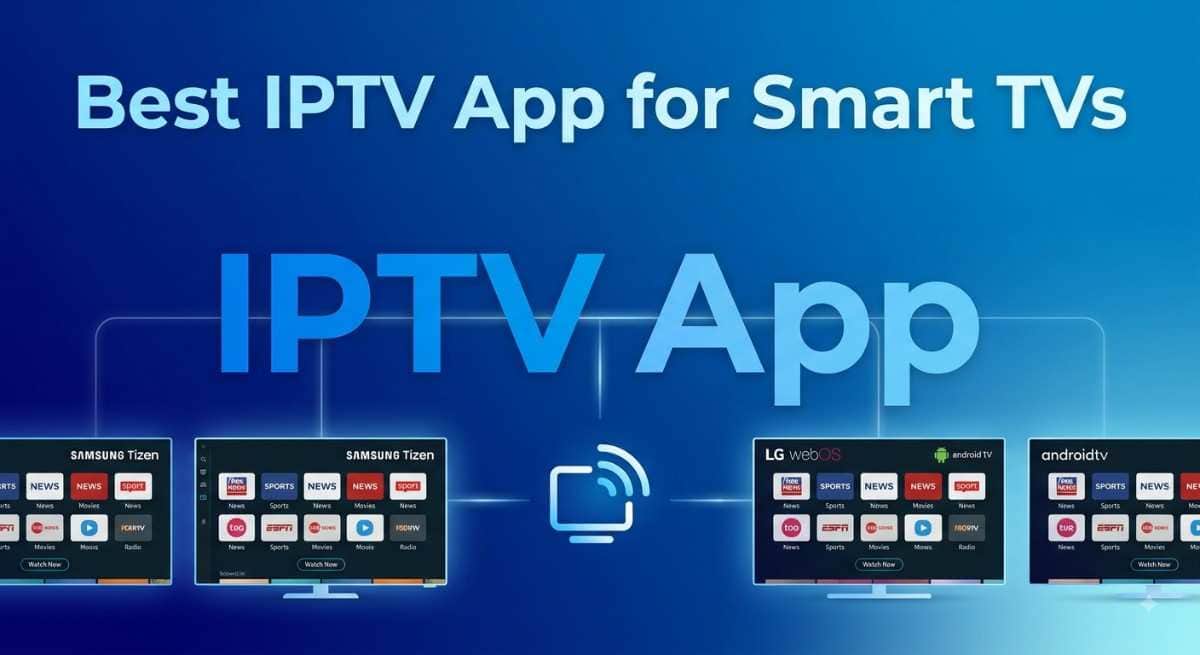
Smart TVs are one of the most common ways people watch internet-based television.
A television-focused player should be optimized for remote control rather than touch navigation.
Pay attention to:
Large, readable menus
Fast channel switching
Remote-friendly controls
Stable playback
EPG support
Favorites
Search
Playlist compatibility
Samsung, LG, Android TV, and Google TV devices may use different app stores and operating systems. Therefore, an application available on one television may not necessarily be available on another.
Always check compatibility before installing.
IPTV Apps for Fire TV and Streaming Devices
Fire TV and similar streaming devices are popular because they can turn a compatible television into a flexible streaming setup.
When selecting a player for a streaming stick or box, consider how well it handles remote navigation.
You should also check:
Whether the application is officially available for your device.
Whether your playlist format is supported.
Whether the app receives regular updates.
Whether playback controls are easy to use.
Whether the interface performs well on your hardware.
Avoid assuming that every Android-based application will provide the same experience on a television.
A mobile interface can feel awkward when controlled entirely with a remote.
IPTV Apps for Android Phones and Tablets
Android gives users many choices, but that does not mean every application is equally reliable.
For mobile use, look for an app with a responsive interface, proper playback controls, and support for the formats you need.
A useful mobile player should also make it easy to switch between portrait and landscape viewing when supported.
Keep in mind that mobile streaming can consume significant amounts of data. If you use cellular data instead of Wi-Fi, check your data allowance before watching for long periods.
IPTV Apps for Apple Devices
Apple users should pay close attention to App Store availability and device compatibility.
An application designed for iPhone may have different features from its version for Apple TV or other Apple hardware.
Before installing a player, check:
Supported Apple devices
Current operating-system requirements
Playlist compatibility
Subscription requirements
Playback features
Developer update history
The safest approach is to use applications distributed through official app stores whenever possible.
«🌍 Watch Live TV Anywhere on Any Device🌍»
How to Choose the Right IPTV App
Instead of choosing an application simply because it has a long feature list, think about how you actually watch television.
Step 1: Identify Your Device
Start with the device you plan to use most often.
If you mainly watch on a smart TV, prioritize remote-friendly navigation. If you watch on a phone, focus more on mobile controls and portability.
Step 2: Check Your Content Format
Find out whether your source uses an M3U playlist, Xtream Codes, or another format.
Then choose a player that supports it.
This is one of the most important compatibility checks.
Step 3: Consider the Interface
A player can have dozens of features and still be unpleasant to use.
Open the menus and ask yourself:
Can I find channels quickly?
Is the text easy to read?
Can I create favorites?
Is search available?
Are settings easy to understand?
A simple interface often beats an overloaded one.
Step 4: Check Performance
Playback quality depends on several factors, including your internet connection, device hardware, server performance, and stream quality.
A good application should provide smooth controls and stable playback when the source itself is working properly.
If streams constantly buffer, don't immediately blame the player.
Test your connection and check whether the same stream has problems on another compatible device.
Step 5: Review Privacy and Permissions
Before installing any application, review the permissions it requests.
Be cautious if a television player asks for access that seems unrelated to its basic purpose.
Also check the developer information, privacy policy, update history, and official distribution channel.
These small checks can help you avoid questionable software.
« ✨ Unlock Your IPTV Experience ✨ »
Internet Speed for Smooth Streaming
The application is only one part of the viewing experience.
Your connection needs enough capacity to handle the video quality being streamed. Requirements vary depending on compression, resolution, network conditions, and the service delivering the content.
As a general starting point, higher-resolution video requires more bandwidth than standard-definition video.
For better results:
Use a stable broadband connection.
Connect your TV or streaming device to a strong Wi-Fi network.
Use Ethernet when practical.
Avoid heavy downloads while watching.
Restart network equipment if connection problems persist.
Test your connection when buffering occurs.
Remember that speed alone does not guarantee smooth playback. Latency, Wi-Fi interference, congestion, and source-side problems can also affect streaming.
Common IPTV App Problems
Even a well-designed player can encounter problems.
Buffering
Buffering may result from weak Wi-Fi, network congestion, insufficient bandwidth, device limitations, or problems at the streaming source.
Try another channel first. If only one stream has trouble, the issue may not be your device.
Playlist Not Loading
Check whether you entered the playlist address or login details correctly.
Also confirm that the playlist has not expired and that the application supports its format.
EPG Not Showing
EPG information usually depends on the source providing compatible guide data.
If channels play correctly but program information is missing, check the EPG settings and source configuration.
App Crashing
Update the application and your device software where appropriate.
You can also restart the device and clear temporary application data if your platform supports that option.
If problems continue, the app may not be optimized for your particular device or operating-system version.
« ▶ Start Watching in Minutes ▶ »
Is an IPTV App Legal?
The legality of using an IPTV application depends largely on the content being accessed and the rights associated with it.
The technology itself is not automatically illegal. Streaming television through the internet is a legitimate technology used by many established broadcasters and streaming platforms.
The important question is whether the content provider has the necessary rights to distribute the channels or programs.
Before using a service, look for clear information about:
Content licensing
Provider identity
Terms of service
Privacy policy
Contact information
Refund policies
Avoid services that make unrealistic promises about access to large amounts of premium content without explaining their licensing arrangements.
Free vs Paid IPTV Apps
You do not always need to pay for a player.
Free applications can be suitable if you only need basic playback and playlist support.
Paid applications may offer additional features, such as better organization, advanced playback controls, enhanced guide support, or an ad-free experience.
However, price should not be your only deciding factor.
A free application from a reputable source may be a better choice than a paid application with poor compatibility or limited updates.
« ⚡ Start Your IPTV Journey ⚡ »
Safety Tips Before Installing an App
A few basic precautions can reduce unnecessary risk.
Use official app stores when available.
They provide a safer distribution route than unknown download websites.Check the developer.
Look for consistent developer information and a credible update history.Read permissions carefully.
The requested access should make sense for the application's purpose.Avoid suspicious modified apps.
Unofficial versions can introduce security and privacy concerns.Keep your device updated.
Operating-system and application updates often include important security fixes.Protect your account details.
Don't share login credentials publicly or enter them into untrusted applications.
Tips for a Better Viewing Experience
Once your player is installed, a few simple adjustments can make everyday use easier.
Create a favorites list containing the channels you watch most often. This reduces scrolling and makes remote navigation faster.
If your app supports categories, organize your content logically.
For example, you might keep frequently used live channels separate from movies and other on-demand content.
You should also remove outdated playlists and unused accounts. Keeping unnecessary entries can make a large library harder to manage.
If playback becomes unstable, test the same stream at another time and on another device. This helps identify whether the issue comes from your network, device, application, or content source.
« 👉 Get Instant IPTV Access Now 👈 »
IPTV App vs Traditional TV
The biggest difference is how content reaches your screen.
Traditional cable or satellite television relies on dedicated broadcast infrastructure, while internet television uses a network connection to deliver streams.
An internet-based player can provide a flexible interface and work across several supported devices. It can also organize different content sources in one place.
However, this flexibility comes with additional responsibilities. You need a suitable internet connection, compatible software, and a legitimate content source.
There is no single setup that is perfect for every viewer.
What Makes a Good IPTV App in 2026?
A strong player does not need hundreds of features.
The most useful combination is usually:
Reliable playback
Simple navigation
Broad device compatibility
Playlist support
EPG compatibility
Search
Favorites
Regular software updates
Clear privacy information
Good remote-control support
The best choice depends on your device and viewing habits rather than a generic ranking.
A person who watches on a smart TV may value remote navigation more than advanced mobile features. Someone who watches mostly on a phone may prioritize portability and simple controls.
Final Thoughts
Choosing an IPTV app becomes much easier when you focus on compatibility rather than hype.
Start with your device, identify the content format you need, and then compare practical features such as navigation, EPG support, search, favorites, playback controls, and software updates.
Most importantly, remember that the player is only one part of the setup. Your internet connection, device, and content source all influence the final viewing experience.
Frequently Asked Questions
What is an IPTV app used for?
It is a media player that can display compatible television and video streams delivered over the internet. The application normally does not provide the content itself.
Do I need an IPTV subscription to use a player?
That depends on the application. Some players can work with your own playlists or other legitimate content sources without selling channels themselves.
Can I use the same app on multiple devices?
Some applications support multiple platforms, while others are limited to specific operating systems. Always check the current compatibility information before installing.
Why does my stream keep buffering?
Buffering can be caused by your internet connection, Wi-Fi quality, device performance, network congestion, or problems with the content source. Testing another stream can help identify the cause.
Does an IPTV app include channels?
Usually, no. The player and content source are separate. You need a compatible and legitimate source for the channels or video streams you want to watch.
Is an IPTV player safe?
A reputable application downloaded from an official source is generally a better choice than an unknown modified APK or unofficial download. Review permissions, developer information, and privacy policies before installation.
Which IPTV app is best?
There is no universal winner. The right choice depends on your device, supported playlist format, desired features, interface preferences, and the content source you plan to use.

