IPTV Encoder Guide 2026: Features, Setup & Best Solutions
Learn everything about IPTV encoders, including features, setup, benefits, pricing factors, and best IPTV encoding solutions for high-quality streaming.
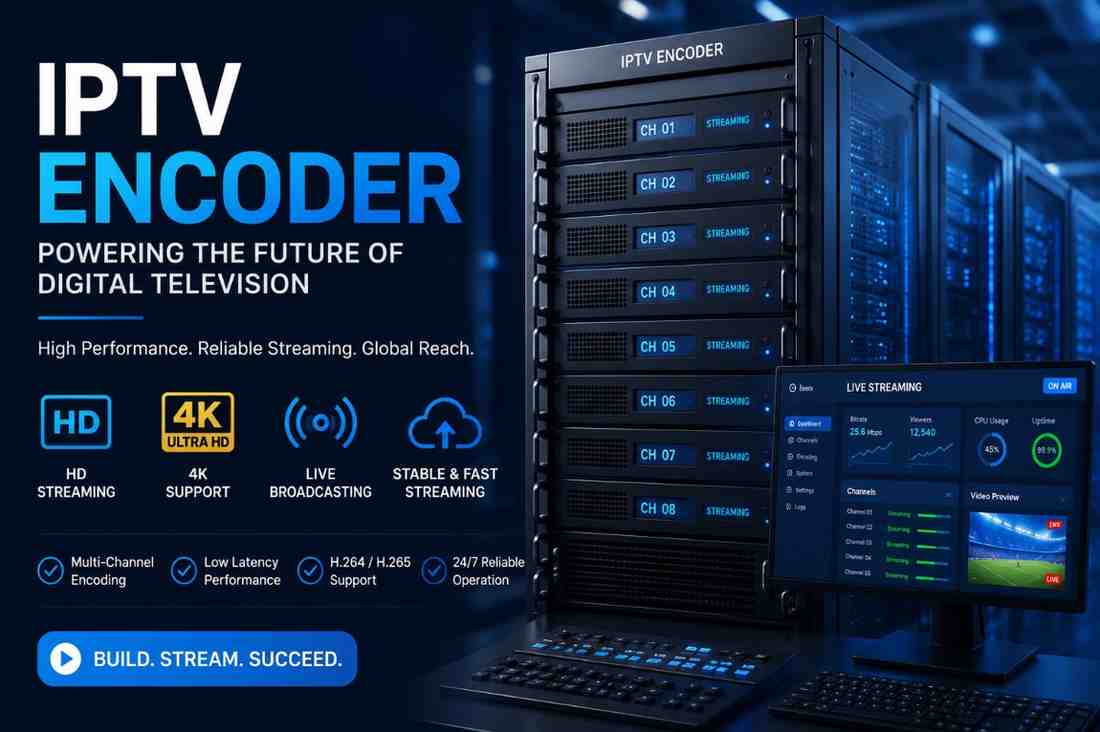
IPTV Encoder: Complete Guide for IPTV Streaming in 2026
The IPTV industry continues to expand rapidly as broadcasters, content creators, cable operators, and streaming providers transition from traditional broadcasting systems to internet-based television delivery. At the center of this transformation is the IPTV encoder.
👉Start Your FREE 24-Hour IPTV Trial Now
An IPTV encoder is a critical component in modern IPTV infrastructure. It converts video and audio signals into digital formats that can be streamed efficiently across IP networks. Without an IPTV encoder, live television channels, sports broadcasts, video-on-demand content, and IPTV services would not function properly.
Whether you're launching an IPTV service, managing a streaming platform, or simply exploring IPTV technology, understanding IPTV encoders is essential.
This guide explains everything you need to know about IPTV encoders, including how they work, key features, setup procedures, benefits, and industry best practices.
What Is an IPTV Encoder?
An IPTV encoder is a hardware or software device that converts video signals from cameras, satellite receivers, cable boxes, or other media sources into digital IP streams.
The encoder compresses raw video data into streaming-friendly formats such as:
H.264
H.265 (HEVC)
MPEG-4
AAC Audio
MPEG-TS
These compressed streams can then be delivered through IPTV platforms to viewers on various devices.
How IPTV Encoding Works
The IPTV encoding process consists of several stages:
Video Capture
The encoder receives source content from:
Satellite receivers
Cameras
HDMI sources
SDI sources
Broadcast feeds
Compression
Raw video files are extremely large. Encoders compress content using codecs to reduce bandwidth usage while maintaining quality.
Stream Packaging
The encoded stream is packaged into IPTV-compatible formats.
Common protocols include:
RTMP
HLS
UDP
RTP
SRT
MPEG-TS
Distribution
The stream is transmitted to IPTV servers, CDNs, or streaming platforms for viewer access.
👉Start Your FREE 24-Hour IPTV Trial Now
Why IPTV Encoders Are Important
IPTV encoders provide several critical functions:
Bandwidth Optimization
Compressed video uses significantly less bandwidth.
Improved Streaming Quality
Modern codecs deliver better quality at lower bitrates.
Multi-Device Compatibility
Encoded streams can be viewed on:
Smart TVs
Firestick
Android TV
Smartphones
Tablets
PCs
Scalability
IPTV providers can distribute content to thousands of viewers simultaneously.
Key Features of an IPTV Encoder
H.264 and H.265 Support
These codecs provide excellent video quality while reducing bandwidth consumption.
Multi-Channel Encoding
Allows simultaneous encoding of multiple video sources.
Low Latency Streaming
Important for:
Sports
Live events
Gaming streams
Network Management
Advanced encoders offer monitoring and remote administration.
Adaptive Bitrate Streaming
Automatically adjusts quality based on viewer internet speed.
IPTV Encoder Types
Hardware IPTV Encoders
Dedicated physical devices designed specifically for encoding.
Advantages:
High reliability
Better performance
Professional-grade quality
Software IPTV Encoders
Applications installed on servers or computers.
Advantages:
Lower cost
Greater flexibility
Easier updates
IPTV Encoder vs IPTV Transcoder
FeatureIPTV EncoderIPTV TranscoderInputRaw VideoExisting StreamPurposeCreate StreamModify StreamCompressionYesRe-encodeLive SourcesYesLimitedIPTV DeliveryDirectIndirect
Benefits of Using an IPTV Encoder
Higher Quality Streaming
Professional encoders maintain excellent video quality.
Reduced Bandwidth Costs
Efficient compression lowers operational expenses.
Better Viewer Experience
Users experience:
Fewer interruptions
Improved quality
Faster loading
Scalability
Ideal for IPTV providers of all sizes.
👉Start Your FREE 24-Hour IPTV Trial Now
IPTV Encoder Applications
Common use cases include:
IPTV Providers
Delivering live TV channels.
Sports Broadcasting
Streaming live sporting events.
Corporate Streaming
Internal training and communication.
Educational Platforms
Distance learning and virtual classrooms.
Religious Broadcasting
Live worship and event streaming.
IPTV Encoder Setup Guide
Step 1: Connect Video Source
Attach HDMI, SDI, or satellite receiver input.
Step 2: Configure Network Settings
Assign:
IP address
Gateway
DNS
Step 3: Select Codec
Choose:
H.264
H.265
Step 4: Configure Bitrate
Typical settings:
ResolutionBitrate720p2-4 Mbps1080p4-8 Mbps4K15-25 Mbps
Step 5: Select Streaming Protocol
Options include:
HLS
RTMP
UDP
SRT
Step 6: Test Stream
Verify quality before deployment.
IPTV Encoder Comparison Table
FeatureBasic EncoderProfessional EncoderH.264YesYesH.265LimitedYes4K SupportLimitedYesMulti-ChannelNoYesRemote ManagementBasicAdvancedLow LatencyModerateExcellentScalabilitySmallEnterprise
Pros and Cons
Pros
ProsBetter streaming qualityReduced bandwidth usageMulti-device compatibilityProfessional broadcastingSupports live streaming
Cons
ConsHardware costsTechnical configurationOngoing maintenanceRequires networking knowledge
Best IPTV Encoder Alternatives
Popular alternatives include:
FFmpeg
OBS Studio
Wirecast
vMix
Wowza Streaming Engine
Nimble Streamer
Each solution offers unique features depending on business requirements.
👉Start Your FREE 24-Hour IPTV Trial Now
IPTV Encoder Best Practices
Use H.265 whenever supported.
Monitor network performance.
Maintain backup encoders.
Regularly update firmware.
Optimize bitrate settings.
Implement redundant streaming paths.
Future of IPTV Encoding
Emerging technologies include:
AI-powered encoding
AV1 codec adoption
Cloud encoding
8K streaming support
Ultra-low latency delivery
These innovations will continue improving IPTV quality and efficiency.
FAQ
What is an IPTV encoder?
An IPTV encoder converts video signals into digital streams suitable for IPTV delivery.
Why is an IPTV encoder important?
It compresses and prepares content for internet-based television streaming.
Which codec is best for IPTV?
H.265 offers superior compression efficiency, while H.264 provides broader compatibility.
Can IPTV encoders support 4K streaming?
Yes. Many modern IPTV encoders support native 4K content.
What is the difference between an encoder and a transcoder?
An encoder creates streams from source video, while a transcoder modifies existing streams.
Do IPTV providers need encoders?
Yes. Encoders are essential for converting broadcast content into IPTV streams.
Conclusion
An IPTV encoder is one of the most important components of any IPTV ecosystem. From live television channels to large-scale streaming networks, encoders ensure content is efficiently converted, compressed, and delivered to viewers worldwide. Choosing the right IPTV encoder can significantly improve stream quality, reduce bandwidth consumption, and enhance the overall viewing experience.

