IPTV Free Trial: What to Know Before You Sign Up
Thinking about an IPTV free trial? Learn what to test, what to watch out for, and how to pick a reliable IPTV service before you commit to a plan.
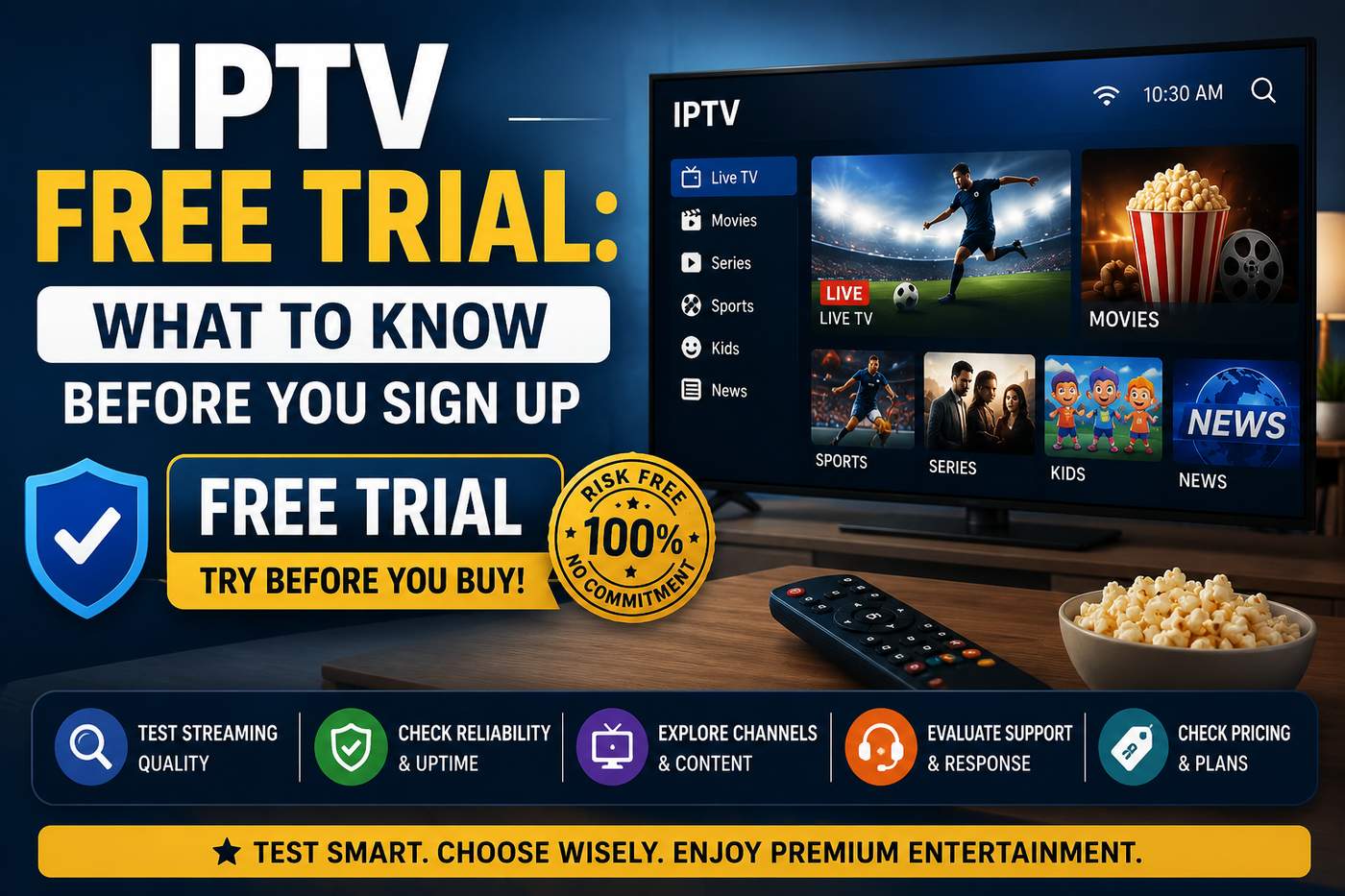
Cutting the cord sounds simple until you actually start comparing providers. Every IPTV free trial ad promises thousands of channels, flawless streaming, and next to no cost—and it's genuinely hard to tell which offers are worth your time and which ones are going to waste it.
This guide walks through exactly what a free trial should let you test, how to spot the difference between a legitimate offer and a risky one, and what to look for so you don't end up locked into a subscription that disappoints you. If you're comparing IPTV services USA-wide, a good trial period is one of the most useful tools you have—it lets you check real-world performance before any money changes hands. For additional IPTV guides, comparisons, and streaming insights, nigma.tv can be a helpful resource during your research.
By the time you finish reading, you'll know how to use a trial period the right way, what questions to ask before signing up, and how to walk away from a provider that isn't a good fit.
What Is an IPTV Free Trial?
An IPTV free trial is a short period — usually anywhere from 24 hours to a few days — during which a provider lets you test its service before committing to a paid plan. The idea is straightforward: instead of trusting a sales page, you get to see the actual channel lineup, streaming quality, and app experience for yourself.
Legitimate streaming providers like Hulu + Live TV, YouTube TV, and Fubo have used trial periods for years precisely because a live product demo builds more trust than marketing copy ever could. The same logic applies to IPTV. A provider confident in what it offers has every reason to let you try before you buy.
The length and terms of an IPTV free trial vary. Some providers ask for payment information up front and simply don't charge you until the trial ends, similar to how many streaming apps operate. Others offer a no-card-required trial with slightly limited access. Neither approach is inherently better—what matters is transparency about what happens when the trial ends. If you're searching for the best IPTV USA providers, choose one that clearly explains its trial terms, billing policy, and cancellation process before you sign up.
Why IPTV Free Trials Matter So Much
A free trial isn't just a nice bonus. It's genuinely one of the best tools for protecting yourself as a subscriber.
You can verify streaming quality firsthand. Marketing pages love the phrase "buffer-free 4K streaming." A trial lets you check that claim during a live sports broadcast or prime-time show, when server load is highest and problems are most likely to show up.
You can confirm the channel list is accurate. It's common for provider websites to advertise a huge channel count that doesn't match what you actually get after signing up. A trial period lets you check for your specific must-have channels before paying anything.
You can test device compatibility. If you're planning to watch on a Roku, Fire Stick, Smart TV, or tablet, a trial confirms the app actually works smoothly on your setup instead of just claiming to.
You get a feel for customer support. Reach out with a question during your trial. How quickly and clearly a provider responds tells you a lot about what to expect if something goes wrong after you're a paying customer.
You reduce financial risk. Simply put, a trial means you're not gambling a month's subscription fee on a service you've never actually seen in action.
Key Features to Test During Your Trial
Streaming Stability and Picture Quality
Watch during peak hours — typically evenings and weekend sports windows — not just late at night. Pay attention to buffering, pixelation, and how quickly channels load when you switch.
Channel Lineup Accuracy
Cross-check the trial's actual channel guide against what the provider advertises. Look specifically for local news affiliates, regional sports networks, and any international channels you care about.
App Experience Across Devices
Install the app on every device you plan to use regularly. A service that runs beautifully on a phone but stutters on a Smart TV isn't going to serve your household well long-term.
On-Demand Library
If VOD content matters to you, spend some of the trial browsing the on-demand library rather than only live channels. Check how often it appears to be updated.
Support Responsiveness
Send a support message or start a live chat during the trial. A same-day or same-hour response is a good sign; silence is a red flag.
How to Spot a Trustworthy IPTV Free Trial
Not every "free trial" is what it claims to be, so a little scrutiny goes a long way.
Check for licensing transparency. A trustworthy provider should be reasonably clear about the networks and content partners it works with. If a company is vague about where its content actually comes from, or the pricing seems dramatically lower than any licensed competitor, that's worth taking seriously — it usually points to unlicensed content, which creates real risk for subscribers, not just the company.
Read the fine print on billing. If the trial requires a card, understand exactly when the trial ends and how to cancel before you're charged. Set a personal reminder a day or two before the trial expires.
Look for independent reviews. Testimonials on a provider's own website are marketing, not proof. Search for the company name on third-party forums and app store reviews to see what real subscribers say.
Confirm a real cancellation process exists. Reputable providers make cancellation simple — through an account dashboard or a clear support process. If cancellation instructions are hidden or contradictory, treat that as a warning sign.
Watch for pressure tactics. Countdown timers, "only 3 spots left" messaging, or aggressive upsells during a trial are more common with providers trying to rush you past due diligence.
Pros and Cons of Signing Up for an IPTV Free Trial
Pros:
Lets you verify real streaming quality before paying
Confirms your must-have channels are actually included
Gives you a chance to test the app on your specific devices
Reveals how responsive customer support really is
Low financial risk if you cancel before the trial ends
Cons:
Some trials require card details, which can lead to accidental charges if you forget to cancel
A short trial window may not capture performance during a major live event
Not every provider offering a "free trial" is operating with proper content licensing
Trial-only performance can differ slightly from long-term account performance
Comparing multiple trials at once can get confusing to track
How to Choose the Right IPTV Service After Your Trial
Once your trial period ends, you'll have real data to work with instead of guesswork. A few things to weigh before committing:
1. Match the channel list to your actual habits, not the total number advertised. Ten channels you actually watch matter more than ten thousand you don't.
2. Compare pricing to other licensed providers. If one option is priced far below every comparable service, ask why before assuming it's simply a better deal.
3. Revisit your support experience. If you had a good interaction during the trial, that's a strong sign of what ongoing service will look like.
4. Check contract terms. Favor month-to-month plans, especially early on, so you're not locked in if your needs change.
5. Confirm the service works on every device in your household, not just the one you tested first.
Is It Worth Signing Up for an IPTV Free Trial?
Yes — a free trial is one of the lowest-risk ways to evaluate a streaming service before spending money, as long as you actually use it to test the service critically rather than treating it as a formality. The households that end up disappointed with IPTV are usually the ones that skipped the trial altogether or signed up without checking channel accuracy, device compatibility, and licensing transparency first.
If a provider doesn't offer any kind of trial or money-back guarantee at all, that alone is worth pausing on. Confidence in a good product usually shows up as a willingness to let you test it.
Common Mistakes People Make With IPTV Trials
Even with the right intentions, it's easy to waste a trial period. A few patterns show up again and again.
Testing only during quiet hours. Streaming quality at 2 a.m. on a Tuesday tells you very little. Load your test into the evening or a weekend sports window, when servers are under real pressure.
Signing up for several trials at once. Juggling three or four trial periods at the same time often means none of them get a fair, focused test. It's usually more useful to test one provider thoroughly, decide, and move on rather than spreading attention thin.
Skipping the fine print. It's tempting to click through terms and conditions quickly, but the cancellation window and billing trigger date are exactly the details that matter most if you decide the service isn't right for you.
Ignoring the on-demand library. Live channels tend to get all the attention during a trial, but if your household also watches a lot of movies or older TV series, the VOD library deserves just as much scrutiny.
Assuming a bigger channel count means a better service. A shorter, well-curated lineup that includes the channels you actually watch is far more valuable than an inflated number padded with duplicate or low-quality feeds.
Frequently Asked Questions
1. What is an IPTV free trial?
It's a short period, typically 24 hours to a few days, during which you can test an IPTV provider's channels, streaming quality, and app before committing to a paid subscription.
2. Do IPTV free trials require a credit card?
It depends on the provider. Some require card details and simply don't charge until the trial ends, while others offer no-card trials with slightly limited access.
3. How long do IPTV trials usually last?
Most trials run between 24 hours and 7 days, though the exact length varies by provider.
4. What should I test during an IPTV free trial?
Focus on streaming quality during peak hours, whether your must-have channels are actually included, app performance on your specific devices, and how responsive customer support is.
5. Can I cancel an IPTV free trial anytime?
Reputable providers make cancellation straightforward through an account dashboard or clear support process. Always confirm the exact cancellation steps before signing up.
6. Are all IPTV free trials legitimate?
No. Some trials are attached to providers that don't disclose proper content licensing, which carries legal and security risks. Checking for licensing transparency and independent reviews helps separate legitimate offers from risky ones.
7. Will I get charged automatically after the trial ends?
If you provided payment details, most providers will begin billing automatically once the trial period ends, unless you cancel beforehand. Always check the specific terms.
8. Can I test IPTV on my Smart TV during the trial?
Yes, as long as the provider offers an app compatible with your TV's operating system. Confirming this during the trial is one of the most useful things you can do.
9. Is a free trial enough to judge a service long-term?
It's a strong indicator, especially for streaming quality and app usability, but try to test during at least one peak-usage window, like a weekend evening, to get a realistic picture.
✅ Pick Your Plan & Watch on Any Device
Final Thoughts
An IPTV free trial gives you something marketing pages never can: a firsthand look at what you're actually paying for. Use it deliberately — check streaming quality during busy hours, confirm your channels are really there, test your devices, and reach out to support with a real question.
The providers worth sticking with are the ones that welcome that scrutiny rather than rushing you past it.

