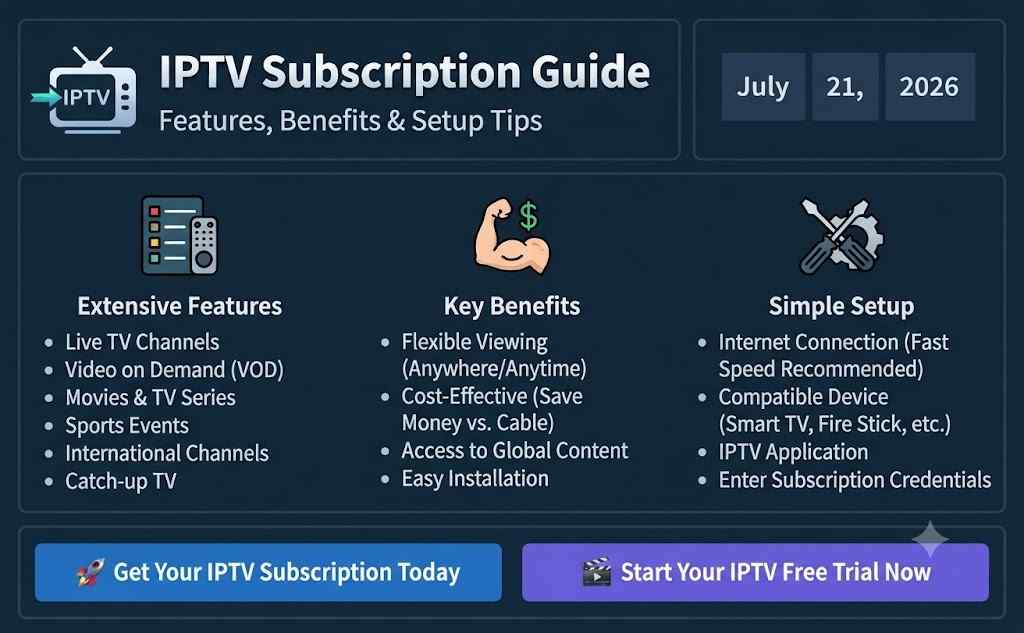
IPTV Subscription Guide: Features, Benefits & Setup Tips
Discover everything about IPTV subscription, its benefits, features, setup process, pricing, and tips to choose the best IPTV service for your needs.
🚀 Get Your IPTV Subscription Today
🎬 Start Your IPTV Free Trial Now
The way people watch television has changed dramatically over the past few years. Traditional cable and satellite TV services are no longer the only options for accessing live channels, movies, sports, and on-demand content. Instead, many users are switching to an IPTV subscription for greater flexibility, affordability, and convenience.
An IPTV subscription allows viewers to stream television content using an internet connection instead of traditional broadcasting methods. Whether you enjoy watching live sports, international channels, blockbuster movies, TV series, or documentaries, IPTV provides access to a wide variety of entertainment from multiple devices.
As internet speeds continue to improve worldwide, IPTV has become a popular solution for households looking to reduce costs while enjoying premium entertainment. However, not all IPTV providers offer the same quality, reliability, or customer support. Understanding how IPTV works and what features to look for can help you choose the right subscription for your viewing needs.
In this comprehensive guide, you'll learn everything you need to know about IPTV subscriptions, including how they work, their benefits, key features, supported devices, and important considerations before purchasing a plan.
What Is an IPTV Subscription?
An IPTV subscription is a service that delivers television programming through Internet Protocol (IP) networks instead of cable, satellite, or terrestrial signals. Rather than receiving TV broadcasts through physical infrastructure like coaxial cables or satellite dishes, users stream content directly over the internet.
IPTV services typically offer a combination of:
Live television channels
Video on Demand (VOD)
Movies
TV shows
Sports events
International channels
Kids' programming
News channels
Catch-up TV (where available)
Once subscribed, users receive login credentials or a playlist URL that can be added to compatible IPTV applications on various devices.
Unlike traditional television, IPTV allows users to watch content whenever and wherever they have a stable internet connection, making it an ideal solution for modern lifestyles.
How Does an IPTV Subscription Work?
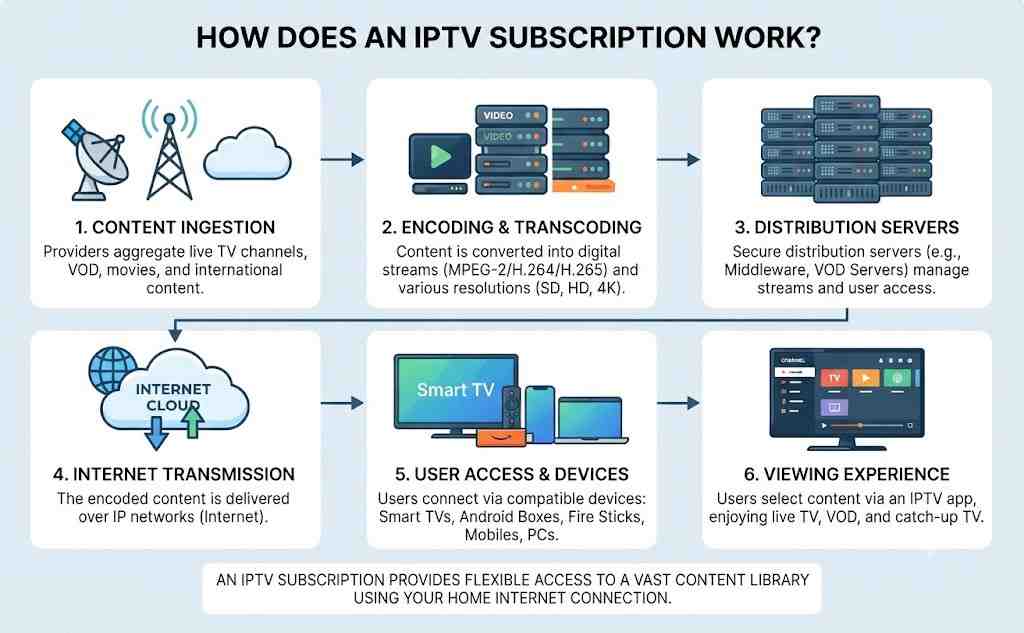
Understanding how IPTV works is relatively simple. Instead of broadcasting television signals to every household simultaneously, IPTV sends digital video content over internet networks directly to your device.
Here's how the process works:
A content provider gathers TV channels and on-demand content.
The content is encoded into digital streaming formats.
The IPTV server distributes the streams through the internet.
Users access the service using an IPTV player or compatible application.
The content plays instantly on supported devices.
Because IPTV relies on internet connectivity, the quality of your viewing experience depends largely on your broadband speed and network stability.
Why IPTV Subscriptions Are Becoming So Popular
The growing popularity of IPTV subscriptions is driven by changing consumer preferences. People want entertainment that fits their schedules rather than being tied to fixed broadcasting times.
Modern viewers appreciate the ability to stream content across multiple devices without requiring expensive cable installations. IPTV offers this flexibility while often providing access to a broader selection of international content.
Another major advantage is cost efficiency. Many households find IPTV subscriptions to be more affordable than traditional television packages, especially when they only want internet-based entertainment.
In addition, IPTV services frequently update their content libraries, allowing subscribers to discover new movies, TV shows, and channels without additional hardware upgrades.
Key Features of a Quality IPTV Subscription
When comparing IPTV services, several important features distinguish high-quality providers from average ones.
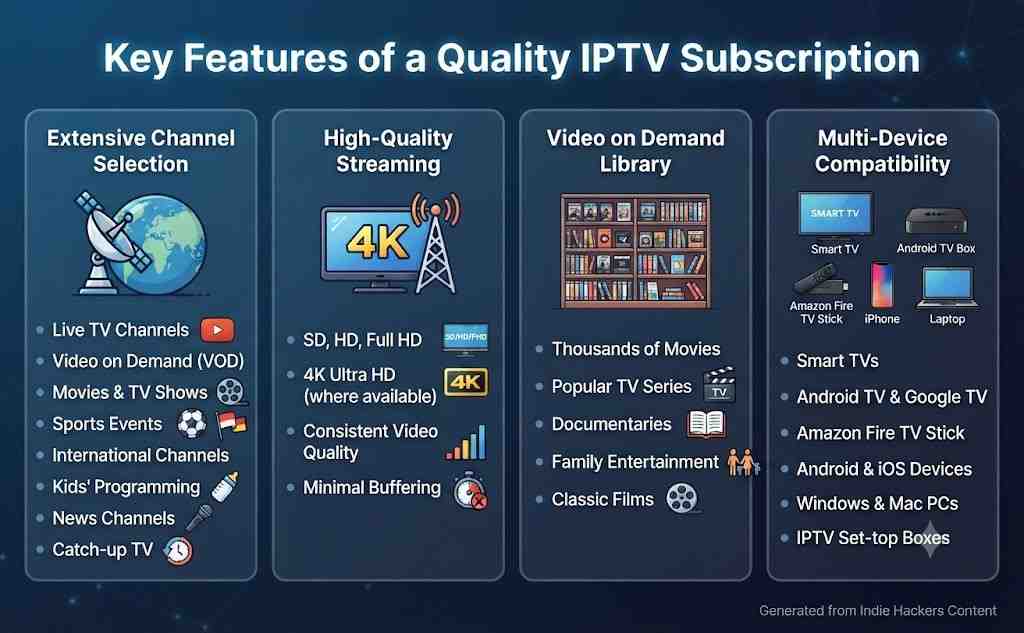
Extensive Channel Selection
A good IPTV subscription should include a wide range of channels covering:
Entertainment
Sports
Movies
Kids
News
Music
Lifestyle
International programming
Regional channels
Having diverse content ensures every member of the household has something enjoyable to watch.
High-Quality Streaming
Streaming quality significantly impacts the viewing experience.
Many premium IPTV providers support:
SD
HD
Full HD
4K Ultra HD (where available)
Consistent video quality with minimal buffering is one of the hallmarks of a reliable IPTV service.
Video on Demand Library
Beyond live television, many IPTV subscriptions include extensive Video on Demand libraries.
Users can browse thousands of:
Movies
TV series
Documentaries
Family entertainment
Classic films
Trending releases
This gives subscribers greater control over what they watch and when.
Multi-Device Compatibility
Modern IPTV subscriptions work across numerous devices, making entertainment more accessible than ever.
Common supported devices include:
Smart TVs
Android TV
Google TV
Amazon Fire TV Stick
Android smartphones
iPhones
Tablets
Windows PCs
Mac computers
IPTV set-top boxes
This flexibility allows users to continue watching whether they're at home or traveling.
Benefits of Choosing an IPTV Subscription
An IPTV subscription offers several advantages that appeal to both casual viewers and entertainment enthusiasts.
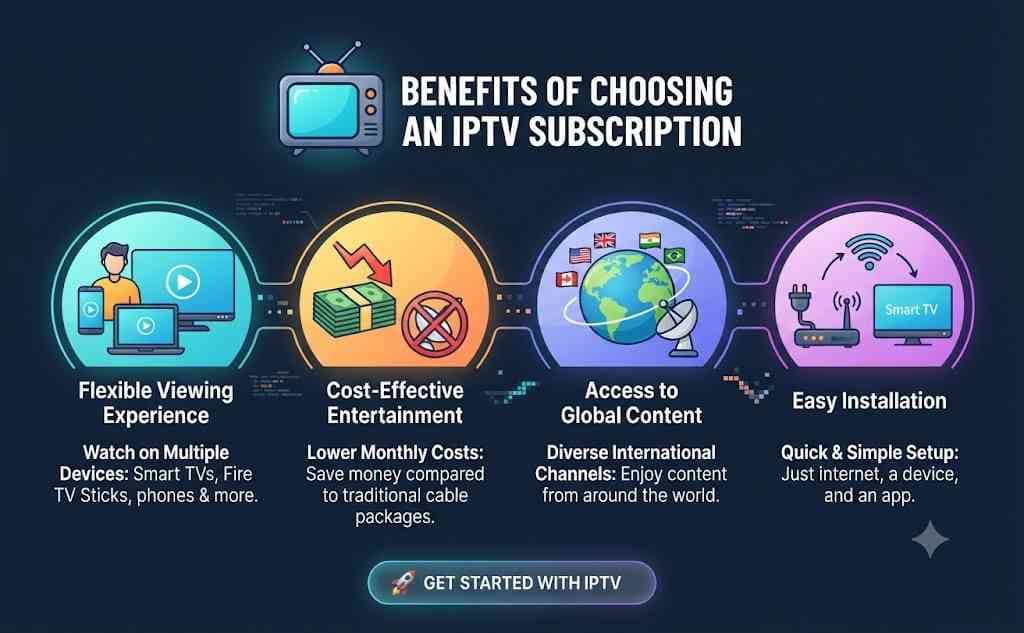
Flexible Viewing Experience
Unlike traditional TV services, IPTV isn't restricted to one television in your home.
You can watch your favorite programs on different devices depending on your lifestyle.
Whether relaxing in the living room or commuting with your smartphone, IPTV keeps your entertainment accessible.
Cost-Effective Entertainment
One of the primary reasons people switch to IPTV is affordability.
Instead of paying for expensive cable bundles filled with unwanted channels, IPTV subscriptions often provide broader content libraries at competitive prices.
This makes IPTV attractive for families, students, and anyone looking to reduce monthly entertainment expenses.
Access to Global Content
Many IPTV subscriptions include channels from multiple countries.
International viewers can enjoy programming in different languages while staying connected with news, sports, and entertainment from around the world.
This global accessibility is particularly valuable for multicultural households and expatriates.
Easy Installation
Traditional television services often require technicians, satellite dishes, or complex installations.
Most IPTV subscriptions only require:
Internet connection
Compatible device
IPTV application
Subscription credentials
The setup process is usually quick and straightforward.
Devices That Support IPTV Subscription Services
One of IPTV's greatest strengths is its compatibility with a wide variety of devices.
Popular supported devices include:
Android TV Boxes
Amazon Fire TV Stick
Smart TVs
Samsung Smart TVs
LG Smart TVs
Android smartphones
iPhones
iPads
Windows laptops
Desktop computers
MacBooks
Android tablets
Streaming devices
IPTV receivers
Many households enjoy using the same IPTV subscription across multiple compatible devices, depending on the provider's connection policy.
Internet Speed Requirements for IPTV
A stable internet connection is essential for smooth streaming performance.
While exact requirements vary by provider and streaming quality, these general recommendations are useful:
5 Mbps – Standard Definition (SD)
10 Mbps – High Definition (HD)
25 Mbps – Full HD or multiple users
50 Mbps or higher – 4K Ultra HD streaming
Using a wired Ethernet connection instead of Wi-Fi can further improve streaming stability and reduce buffering.
Important Factors to Consider Before Buying an IPTV Subscription
Choosing the right IPTV subscription requires more than simply comparing prices. Taking the time to evaluate key aspects of a service can help ensure a better viewing experience and long-term satisfaction.
Content Library
A quality IPTV service should provide a diverse selection of live channels and on-demand content that matches your interests. Whether you enjoy sports, movies, international programming, or family entertainment, make sure the provider offers the categories you watch most often.
Streaming Performance
Reliable performance is essential for uninterrupted viewing. Look for services known for stable streaming, fast channel loading, and minimal buffering. Consistent uptime is often a sign of a well-maintained IPTV platform.
Device Compatibility
Before subscribing, verify that the IPTV service supports the devices you plan to use. Compatibility with Smart TVs, streaming devices, smartphones, tablets, and computers ensures you can enjoy your subscription wherever it's most convenient.
Customer Support
Responsive customer support can make a significant difference if you encounter setup questions or technical issues. Providers that offer timely assistance through live chat, email, or ticket systems are generally better equipped to help subscribers maintain a smooth viewing experience.
Common IPTV Subscription Plans
Most IPTV providers offer multiple subscription plans to accommodate different budgets and viewing preferences. While the exact pricing and features vary, subscribers can usually choose between short-term and long-term plans.
Monthly subscriptions are ideal for users who want to test the service before making a larger commitment. Quarterly and semi-annual plans often provide better value while still offering flexibility. Annual subscriptions are generally the most cost-effective option for users who have found a reliable provider and plan to use the service for an extended period.
Before selecting a plan, compare the included features rather than focusing only on price. Factors such as channel availability, streaming quality, simultaneous connections, customer support, and device compatibility often provide more value than simply choosing the cheapest option.
IPTV Subscription vs Traditional Cable TV
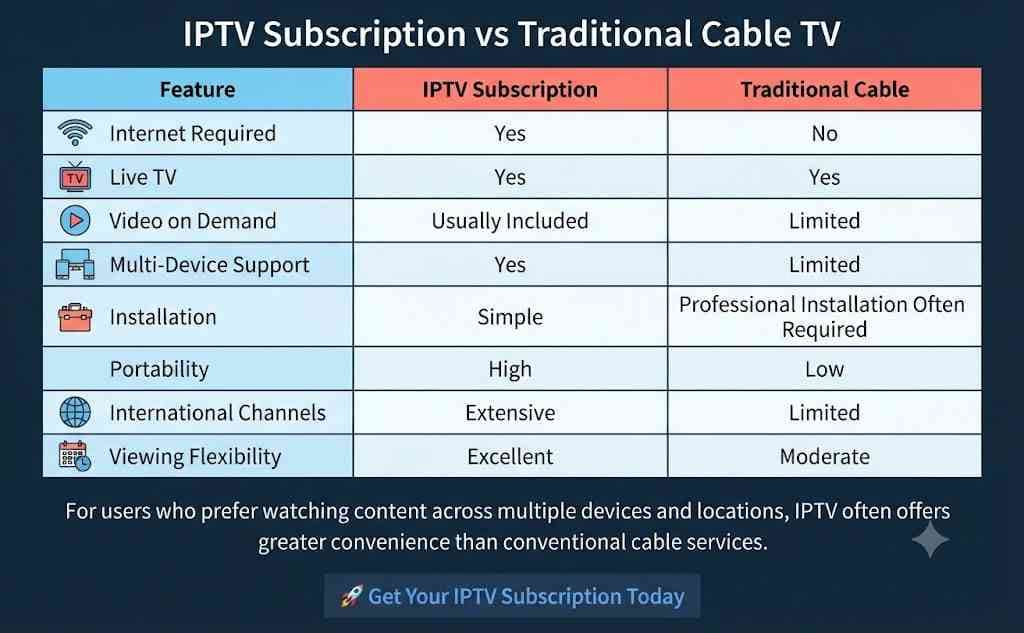
Many people considering an IPTV subscription want to understand how it compares with traditional cable television. While both deliver entertainment, they differ significantly in terms of flexibility, accessibility, and overall user experience.
FeatureIPTV SubscriptionTraditional CableInternet RequiredYesNoLive TVYesYesVideo on DemandUsually IncludedLimitedMulti-Device SupportYesLimitedInstallationSimpleProfessional Installation Often RequiredPortabilityHighLowInternational ChannelsExtensiveLimitedViewing FlexibilityExcellentModerate
For users who prefer watching content across multiple devices and locations, IPTV often offers greater convenience than conventional cable services.
How to Set Up an IPTV Subscription
Setting up an IPTV subscription is generally a straightforward process. Most providers supply clear instructions that can be completed in just a few minutes.
The typical setup process includes:
Purchase an IPTV subscription from a trusted provider.
Receive your login credentials or playlist details.
Install a compatible IPTV player on your preferred device.
Enter the provided credentials or import the playlist.
Allow the application to load channels and content.
Start browsing and streaming available programming.
Some providers also offer setup guides tailored to Smart TVs, Android devices, streaming sticks, and computers, making the installation process even easier for beginners.
Tips for Choosing the Best IPTV Subscription
With many IPTV providers available, selecting the right one requires careful evaluation. Rather than making a decision based solely on promotional offers, consider the overall quality of the service.
Here are several important factors to keep in mind:
Look for stable and reliable streaming performance.
Choose providers with a broad selection of channels and on-demand content.
Verify compatibility with your preferred devices.
Review customer feedback and service reputation.
Check whether technical support is responsive.
Consider subscription flexibility and renewal options.
Ensure the provider regularly updates its content library.
Compare features before comparing prices.
Taking these factors into account can help you select a subscription that offers long-term value and a better viewing experience.
Best Practices for a Smooth IPTV Experience
Even the best IPTV subscription performs better when paired with a reliable home network and proper device setup.
To improve streaming quality:
Use a high-speed internet connection.
Connect through Ethernet whenever possible.
Keep your IPTV application updated.
Restart your router periodically.
Close unnecessary background applications.
Ensure your streaming device has sufficient storage.
Maintain updated firmware on Smart TVs and streaming devices.
These simple practices can help reduce buffering and improve overall performance.
Frequently Asked Questions About IPTV Subscription
Is an IPTV subscription suitable for families?
Yes. Many IPTV services provide content for all age groups, including kids' programming, movies, documentaries, sports, and educational channels. Families can enjoy a wide variety of entertainment from a single subscription, depending on the provider's offerings.
Can I watch IPTV on multiple devices?
Many providers support multiple devices, although the number of simultaneous streams varies by subscription plan. Always check the provider's device and connection policy before purchasing.
Does IPTV require fast internet?
A stable broadband connection is important for uninterrupted streaming. Higher video resolutions such as Full HD and 4K generally require faster internet speeds than standard-definition content.
Can I travel with my IPTV subscription?
Many IPTV services can be accessed from different locations using compatible devices and an internet connection. Availability may depend on the provider's terms of service and regional restrictions.
How often is content updated?
Content updates vary by provider. Many services regularly add new channels, movies, and TV shows to keep their libraries current and engaging.
Mistakes to Avoid When Buying an IPTV Subscription
Choosing the wrong IPTV subscription can lead to a disappointing experience. Avoid these common mistakes:
Selecting a provider based only on the lowest price.
Ignoring device compatibility before subscribing.
Overlooking customer support availability.
Not checking streaming quality or reliability.
Failing to review subscription terms and renewal policies.
Assuming all IPTV providers offer the same features.
Skipping research into the provider's reputation.
Spending a little extra time researching your options can help you avoid unnecessary frustration later.
The Future of IPTV Subscription Services
The IPTV industry continues to evolve as internet technology advances and consumer preferences shift toward on-demand entertainment. Faster broadband connections, improved streaming technologies, and the widespread adoption of Smart TVs are contributing to the growth of IPTV services worldwide.
Future IPTV platforms are expected to introduce more personalized recommendations, improved user interfaces, enhanced streaming quality, and greater integration with cloud-based technologies. Artificial intelligence may also play a larger role in helping users discover relevant content based on their viewing habits.
As more households transition away from traditional television services, IPTV subscriptions are likely to become an increasingly popular choice for accessing live channels and digital entertainment.
Why More Users Are Choosing IPTV Subscription Services
Modern viewers value flexibility more than ever before. Instead of being tied to fixed schedules or specific viewing locations, IPTV allows users to enjoy entertainment on their own terms.
An IPTV subscription offers access to live television, movies, series, sports, and international programming across multiple compatible devices. Combined with simple installation, broad content availability, and flexible subscription plans, IPTV has become an appealing option for individuals and families alike.
By selecting a reputable provider, maintaining a stable internet connection, and choosing a subscription that fits your entertainment needs, you can enjoy a convenient and enjoyable streaming experience.
Conclusion
An IPTV subscription has transformed the way people consume television by delivering live channels and on-demand content through the internet. Its flexibility, device compatibility, diverse content options, and user-friendly setup make it an attractive alternative to traditional television services.
Whether you're interested in movies, sports, news, international channels, or family entertainment, choosing the right IPTV subscription starts with understanding your viewing preferences and comparing providers based on quality, reliability, and support rather than price alone.
As streaming technology continues to advance, IPTV is well-positioned to remain a leading choice for modern home entertainment. By making an informed decision and selecting a trusted provider, you can enjoy a seamless and engaging viewing experience tailored to your lifestyle.
FAQs
1. What is an IPTV subscription?
An IPTV subscription is a service that delivers live TV channels and on-demand content over an internet connection instead of traditional cable or satellite networks.
2. What devices can I use with an IPTV subscription?
Most IPTV services support Smart TVs, Android TV, Fire TV Stick, smartphones, tablets, Windows PCs, Mac computers, and other compatible streaming devices.
3. What internet speed is recommended for IPTV?
A stable connection of at least 10 Mbps is recommended for HD streaming, while 25 Mbps or higher is ideal for Full HD or 4K content.
4. Can I use one IPTV subscription on multiple devices?
Many providers allow multiple device connections, but the number of simultaneous streams depends on the subscription plan.
5. How do I choose the best IPTV subscription?
Look for reliable streaming, extensive content, device compatibility, responsive customer support, positive user reviews, and flexible subscription options.

