IPv4 Leasing: A Complete Guide to Renting IPv4 Addresses
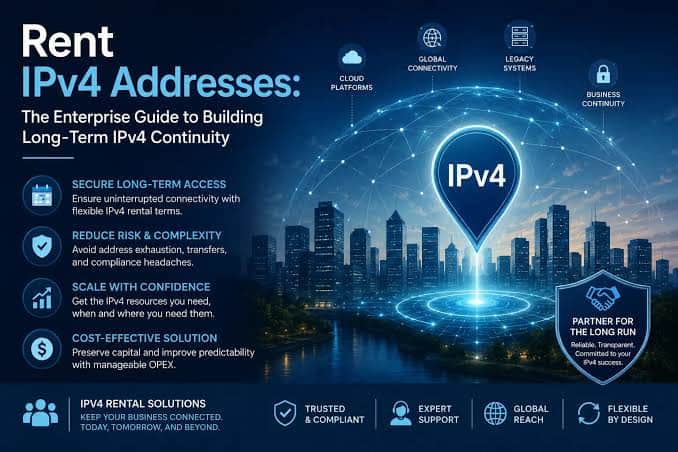
The demand for internet-connected devices, cloud infrastructure, servers, and online services continues to grow, while the supply of available IPv4 addresses remains limited. Because of this shortage, organizations often need alternatives to purchasing IPv4 address space outright. IPv4 leasing has become a practical solution for businesses that need additional addresses without making a large upfront investment.
Whether you operate a hosting company, manage cloud infrastructure, run a data center, or need IP addresses for business applications, leasing can provide access to IPv4 resources for a defined period. This guide explains what IPv4 leasing is, how it works, its benefits, and the key factors businesses should consider before entering a lease agreement.
What Is IPv4 Leasing?
IPv4 leasing is an arrangement in which an organization rents IPv4 address space from an address holder or specialized IPv4 provider for a specific period. Instead of purchasing the addresses permanently, the lessee pays a recurring fee to use them according to the terms of the agreement.
An IPv4 address is a numerical identifier used to identify devices and network interfaces on an IPv4 network. The traditional IPv4 system provides approximately 4.3 billion addresses, but many of these addresses have already been allocated. As internet usage expanded, regional internet registries reached the limits of their available IPv4 pools.
Leasing allows businesses with unused IPv4 resources to make them available to organizations that need additional addresses. It can therefore create a more flexible way to access IPv4 resources while helping businesses manage infrastructure costs.
How Does IPv4 Leasing Work?
The process is generally straightforward, although the exact procedure depends on the provider and the regional internet registry involved.
First, a business determines how much IPv4 space it needs. The requirement might be a small block for a specific application or a larger allocation for servers, hosting infrastructure, or network expansion.
The business then chooses an IPv4 leasing provider and reviews available address blocks. The provider may perform due diligence on both the address space and the prospective customer.
After selecting an appropriate allocation, both parties agree on important terms such as:
● Number of IPv4 addresses
● Lease duration
● Monthly or annual price
● Intended use
● Routing arrangements
● Abuse-handling procedures
● Renewal conditions
● Termination requirements
Once the agreement is completed, the IPv4 addresses can be routed to the customer's infrastructure. The customer can then use the leased address space during the agreed lease period.
Why Is IPv4 Leasing Important?
The primary reason IPv4 leasing has become important is the limited availability of IPv4 addresses.
Businesses still depend heavily on IPv4-compatible infrastructure. Although IPv6 provides a vastly larger address space, organizations cannot always move immediately to an IPv6-only environment. Many applications, customers, networks, and legacy systems continue to require IPv4 connectivity.
Buying IPv4 addresses can require significant capital, particularly when a business needs a large allocation. Leasing offers an alternative that converts the requirement into an operating expense.
For companies that need addresses temporarily or want to avoid a large upfront purchase, this flexibility can be particularly useful.
Benefits of IPv4 Leasing
Lower Initial Investment
Purchasing IPv4 address space can require substantial capital. Leasing generally allows an organization to obtain the required addresses without paying the full acquisition cost upfront.
This can be useful for startups, growing companies, and organizations testing new infrastructure.
Flexible Infrastructure Expansion
Businesses do not always know exactly how many IP addresses they will need several years from now. Leasing can make it easier to increase or decrease IPv4 resources as requirements change, subject to provider availability and contract terms.
Faster Access to IPv4 Resources
Obtaining IPv4 space through traditional allocation processes may not be practical for every organization. Leasing can provide another route to acquiring usable address space.
A reputable provider can also assist with routing, registration information, and other technical requirements.
Better Capital Management
Instead of investing heavily in an IPv4 asset, a business can use a predictable recurring payment model. This can make infrastructure budgeting easier.
Useful for Temporary Projects
Some projects only require additional IP addresses for a limited period. Examples include temporary infrastructure deployments, testing environments, special hosting requirements, and short-term expansion projects.
Leasing can prevent organizations from purchasing permanent resources that they may not need later.
Common Uses of Leased IPv4 Addresses
IPv4 leasing can support many types of internet infrastructure.
Web Hosting
Hosting companies may require significant numbers of IP addresses for websites, applications, virtual servers, and dedicated servers. Leasing can provide additional capacity when a company's existing allocation is insufficient.
Data Centers
Data centers can use leased IPv4 blocks to support customers and internal infrastructure. Additional address space can be especially useful when expanding server capacity.
Cloud Infrastructure
Cloud providers and businesses operating private cloud environments may need IPv4 addresses for virtual machines, services, applications, and network interfaces.
VPN Services
Some legitimate VPN and networking businesses require multiple IPv4 addresses to support their infrastructure. Proper address management and abuse monitoring are particularly important in this environment.
Enterprise Networks
Large organizations may need additional public IPv4 addresses for applications, remote access systems, network services, and geographically distributed infrastructure.
Development and Testing
Development teams can sometimes require additional public IP addresses when testing networking configurations or applications in realistic production-like environments.
IPv4 Leasing vs. IPv4 Purchasing
Leasing and purchasing solve similar problems but have different financial and operational characteristics.
With an IPv4 lease, the organization pays for the right to use address space for an agreed period. The provider typically retains ownership or control of the address resources.
With an IPv4 purchase, the organization acquires the address resources under the applicable transfer and registry rules. This generally involves a much larger upfront investment.
Leasing may therefore be more suitable when flexibility and lower initial expenditure are priorities. Purchasing may be considered by organizations that have long-term requirements and sufficient capital.
The right approach depends on the organization's infrastructure, financial plans, expected IP requirements, and long-term strategy.
What to Check Before Leasing IPv4 Addresses
Not every IPv4 block is equally suitable for every business. Before signing a lease, organizations should perform appropriate due diligence.
Check IP Reputation
The history of an IP block matters. Addresses associated with spam, malware, phishing, or other abusive activity may have reputation problems.
A business should investigate the reputation of the addresses before deploying them. Poor reputation can potentially affect email delivery, security systems, and access to online services.
Verify Ownership and Authorization
Businesses should confirm that the provider has the appropriate rights and authority to lease the IPv4 resources.
The agreement should clearly identify the address space, leasing party, duration, and relevant responsibilities.
Review Routing Requirements
The provider should explain how the address block will be routed to the customer's network.
Businesses operating their own network infrastructure may need to consider requirements such as BGP connectivity, autonomous system information, and upstream arrangements.
Understand Abuse Policies
A reputable IPv4 provider should have clear procedures for handling abuse reports.
The lease agreement should explain what happens if an address receives a complaint and what responsibilities belong to the customer.
Examine Contract Terms
Before committing to a lease, review:
● Lease duration
● Payment schedule
● Renewal terms
● Cancellation conditions
● Replacement policies
● Acceptable-use requirements
● Abuse procedures
● Technical support
● Transfer or reassignment provisions
Clear terms can help prevent unexpected problems later.
How Much Does IPv4 Leasing Cost?
The price of IPv4 leasing varies according to several factors. These can include the size of the address block, geographic registry, lease duration, IP reputation, market conditions, and provider services.
Larger blocks may have different pricing structures from smaller allocations. Long-term agreements may also have different rates than short-term arrangements.
Because IPv4 availability and market conditions change over time, businesses should compare current offers rather than relying on outdated pricing information.
The cheapest option is not necessarily the most appropriate. A slightly higher price may be justified if the provider offers better reputation, documentation, routing support, monitoring, and customer service.
IPv4 Leasing and IP Reputation
IP reputation deserves special attention because an address is not valuable simply because it is technically available.
Email providers, security companies, content platforms, and network operators may evaluate IP addresses based on historical behavior. If an address previously belonged to an abusive network, its reputation may affect its usability.
Before deploying leased IPv4 space, businesses should consider checking relevant reputation databases and monitoring the addresses after deployment.
A provider with transparent allocation practices and a documented abuse-management process can make this process easier.
IPv4 Leasing and IPv6
IPv4 leasing does not eliminate the importance of IPv6.
IPv6 was developed partly because the world needed a much larger address space. Organizations planning long-term network infrastructure should therefore consider supporting IPv6 alongside IPv4.
However, IPv6 adoption does not immediately eliminate IPv4 requirements. Many networks and services continue to operate in dual-stack environments, meaning IPv4 and IPv6 coexist.
For this reason, an organization may use leased IPv4 resources while gradually developing its IPv6 infrastructure.
Choosing an IPv4 Leasing Provider
Choosing a provider requires more than comparing monthly prices.
A reliable provider should be transparent about the source and status of its IPv4 resources. It should also provide clear contractual terms and explain how routing and technical support are handled.
Consider asking potential providers:
Where does the IPv4 address space originate?
What documentation is provided?
How is IP reputation monitored?
What happens when an abuse report is received?
How are routing requirements handled?
What are the renewal and cancellation terms?
Is technical support included?
What happens if an address becomes unusable?
Are there minimum lease periods?
What compliance requirements apply to the customer?
Getting clear answers before signing an agreement can reduce operational risks.
Managing Leased IPv4 Space Responsibly
After obtaining IPv4 addresses, organizations should manage them carefully.
Keep an accurate inventory of assigned addresses and monitor how they are being used. Security controls should be applied to systems using public IP addresses, and unnecessary exposure should be minimized.
Businesses should also maintain appropriate logging and abuse-response procedures. If a security incident or abuse complaint occurs, a clear internal process can help identify the affected system and address the issue quickly.
Responsible management protects both the business and the reputation of the leased address space.
Is IPv4 Leasing Right for Your Business?
IPv4 leasing can be a practical option for organizations that need public IPv4 addresses but do not want to purchase address space outright.
It can provide flexibility, reduce upfront costs, and support infrastructure expansion. At the same time, businesses should carefully evaluate IP reputation, provider legitimacy, routing arrangements, contract conditions, and long-term IPv6 plans.
For organizations with temporary, growing, or variable infrastructure requirements, leasing can offer a flexible approach to obtaining IPv4 resources. Companies with permanent and substantial requirements may also want to compare the long-term financial implications of leasing against purchasing.
Final Thoughts
IPv4 leasing has become an important part of modern internet infrastructure because the supply of available IPv4 addresses is limited while demand remains significant. Renting address space allows businesses to access the IPv4 resources they need without necessarily making a large upfront investment.
Before choosing a lease, businesses should look beyond price. IP reputation, ownership documentation, routing, abuse management, technical support, and contract terms can all influence the practical value of an IPv4 allocation.
At the same time, organizations should continue considering IPv6 as part of their long-term networking strategy. By combining responsible IPv4 management with gradual IPv6 adoption, businesses can build infrastructure that meets current connectivity requirements while preparing for future network growth.

