Is it crazy to launch a new product against 100+ existing competitors?
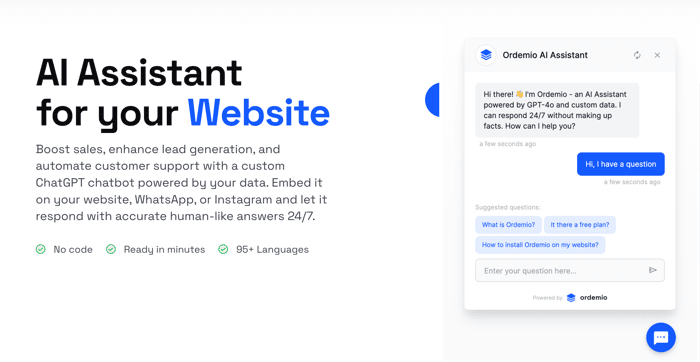
On August 1st, after a month of development, I launched a product in a niche with more than 100 competitors. Here's the story of how I chose this niche, why I think it's a good idea, and how much money I spent on the launch.
To give you a better understanding of my ideas, here's a brief introduction about myself and my experience. I’m a tech founder with 15 years of experience building B2C and B2B products. Since 2008, I've built over 20 products and launched five companies. The last one was a B2B SaaS with $X million in ARR, which was acquired about a year ago.
The Journey to a New Product
After that exit, I was looking for an interesting and challenging problem worth solving in the AI field. My first attempt was an AI support agent for my friend’s SaaS product. That failed due to the specific nature of customer support queries, but it introduced me to Retrieval-Augmented Generation (RAG).
Understanding the complexities of RAG, I realized that a ready-to-use, out-of-the-box RAG solution could be a valuable tool. Many AI developers and assistant builders likely face the same problems. My second attempt involved creating such a tool, but we struggled to find customers. AI developers prefer open-source libraries, while small and medium businesses need ready-made solutions, not just tools.
During my research, I found that startups in this field had varying success. One reached $3,800 in MRR after four months, while another had only 10-20 customers with a huge product. The market demand didn't seem very high.
Finding the Right Niche
I decided to switch to end-user business solutions instead of tools. Over the next few weeks, I analyzed different niches, focusing on AI B2B SaaS for SMBs. To narrow down my research, I built a list of criteria:
- AI solution with RAG as a main component.
- B2B SaaS for SMBs.
- A new and growing niche (most competitors founded in 2023 or later).
- At least 10-15 profitable competitors with no market leader.
- The ability to build an MVP in one month.
After some research, I found the "ChatGPT assistant for a website" niche with more than 100 direct competitors and 100+ indirect ones. The top 10 leading solutions were founded in early 2023, showing sustainable growth (verified with SimilarWeb). This intrigued me.
I created a table of competitors with columns for their website, main message, secondary message, use cases, traffic (SimilarWeb), foundation date, and pricing. Google, Product Hunt, and SimilarWeb were immensely helpful.
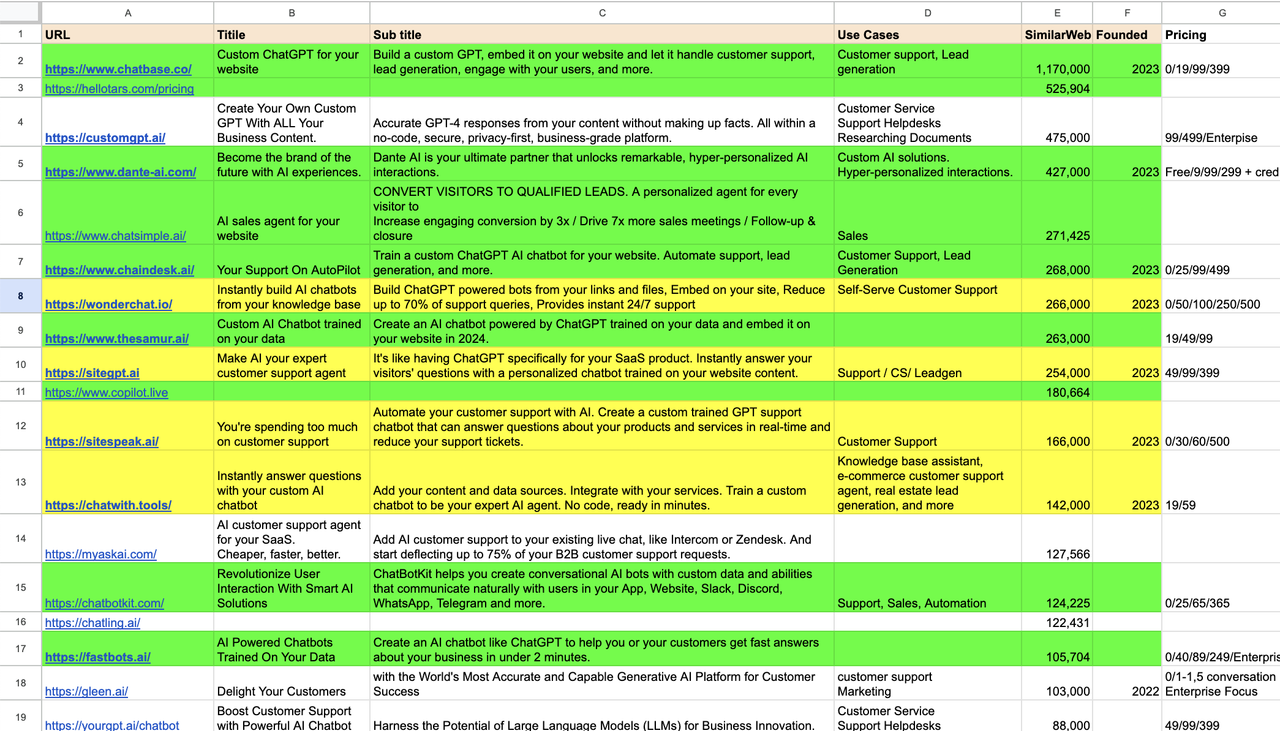
I identified about 50 products and thoroughly reviewed each website, analyzing their messages, features, pricing models, and traffic. I also read articles and blog posts about the founding and revenue of one of the first products in the niche.
Initially, I felt frustrated because the top products had already achieved $2-3 million in ARR. After 1-1.5 years of development and promotion, they seemed far ahead. The idea of entering a highly competitive niche started to seem crazy.
The Decision to Compete
However, my experience told me that if so many competitors are making money, it indicates high market demand and a growing niche. It also meant some top competitors had already found Product/Market fit, allowing me to bypass this challenging step.
In my previous company, it took me about three years to find Product/Market fit, a tough period in my life. I almost gave up but eventually found the right market, audience, and product. Since that, I'd rather compete with 100+ companies than struggle to find P/M fit again.
On the other hand, entering a highly competitive market isn't simple. You need to identify suboptimal areas, flaws, and limitations to improve. To find these, I tried the most popular solutions in the field to see if there was room for one more tool—mine.
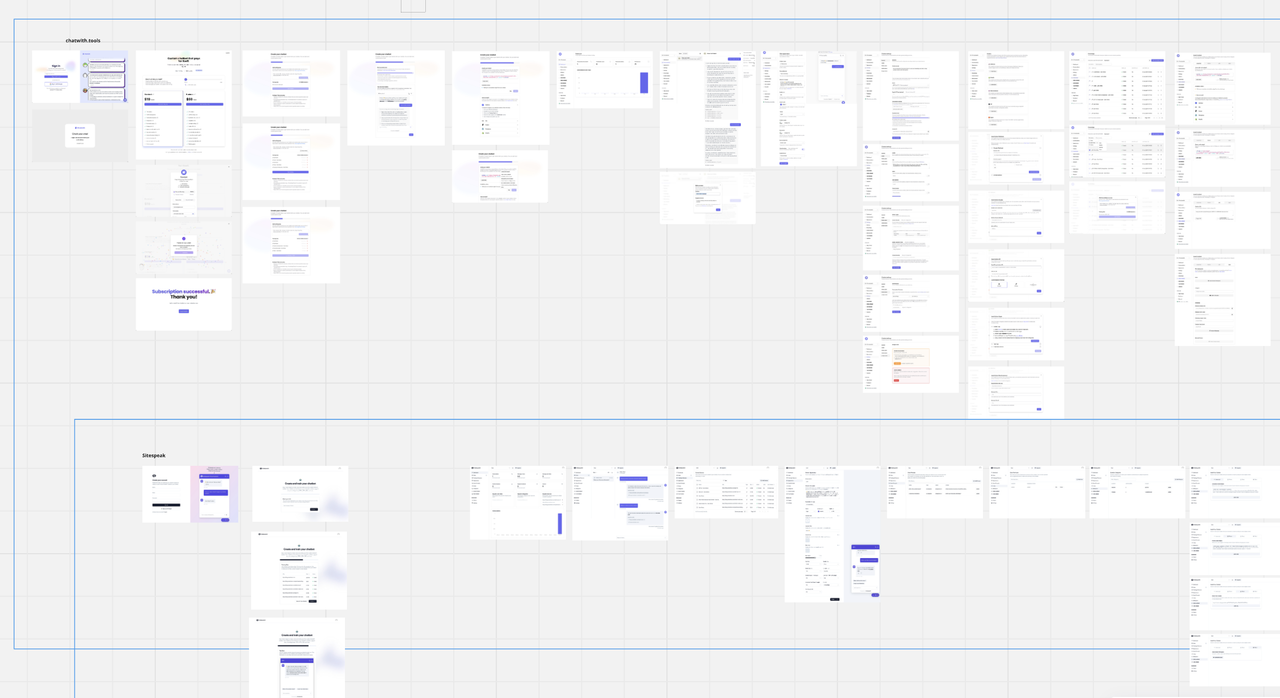
I spent several days mapping competitors' interfaces on a Miro board. This detailed analysis gave me a deep understanding of their features, pros, and cons. I also identified which ones were copies of others.
Launching the Product
The most important discovery was my belief that I could do better. I found many areas in marketing, onboarding, and product development that I could improve. I also envisioned how this product could become something big.
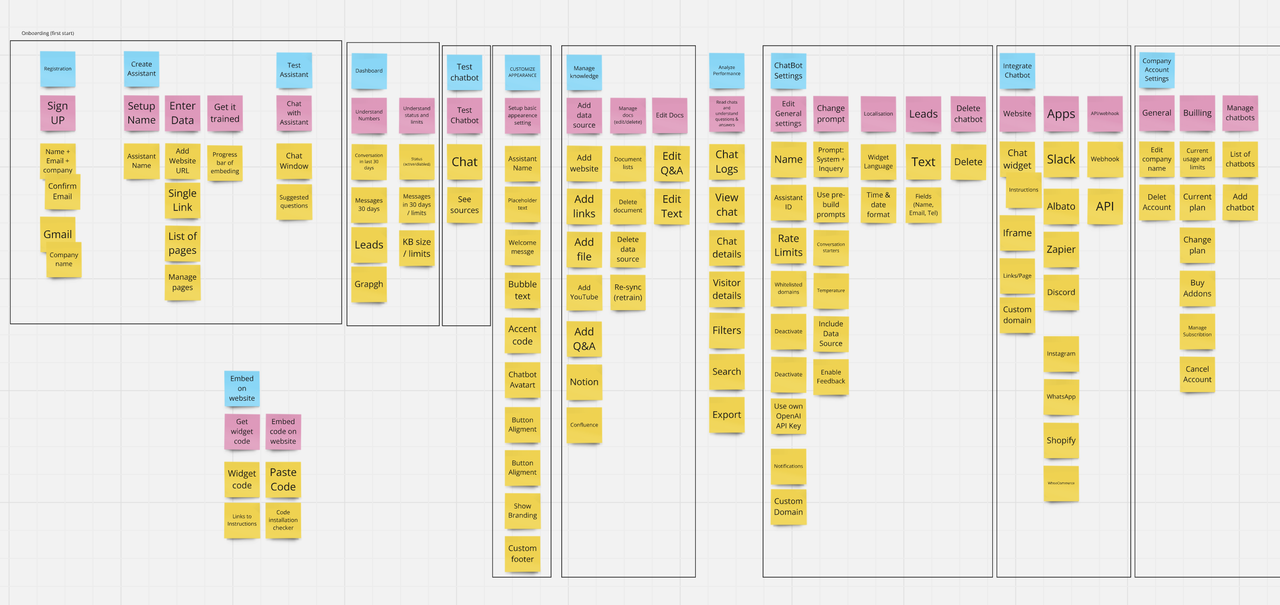
Following my criteria, we started the project on July 1st with a deadline of August 1st, 2024. Working about 10 hours a day without a day off, we managed to launch the product one day before the deadline—July 31st. I created a storymap and then put together a backlog from it for the first release of the product.
You can see what we've built in 30 days at ordemio.com. The next major update is in three days, so check out the initial MVP.
Website on Webflow built with a paid template:
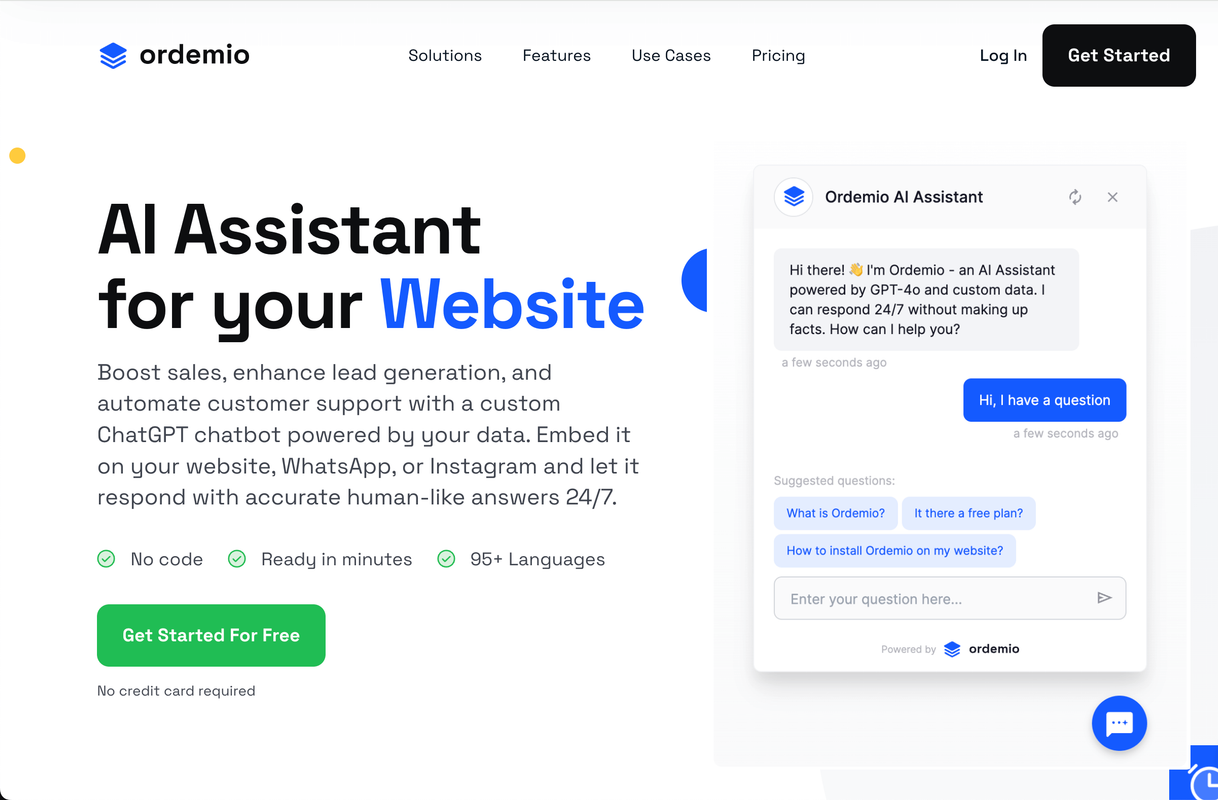
We created:
- A one-page marketing website.
- The first version of the product with a RAG engine.
- Pricing and payment options.
Both the marketing website and the product were built as if it were a proven idea with strong P/M fit. So, I can't call it an MVP in the traditional sense. We built a scalable, high-quality product worth paying for.
Appearance for website widget:
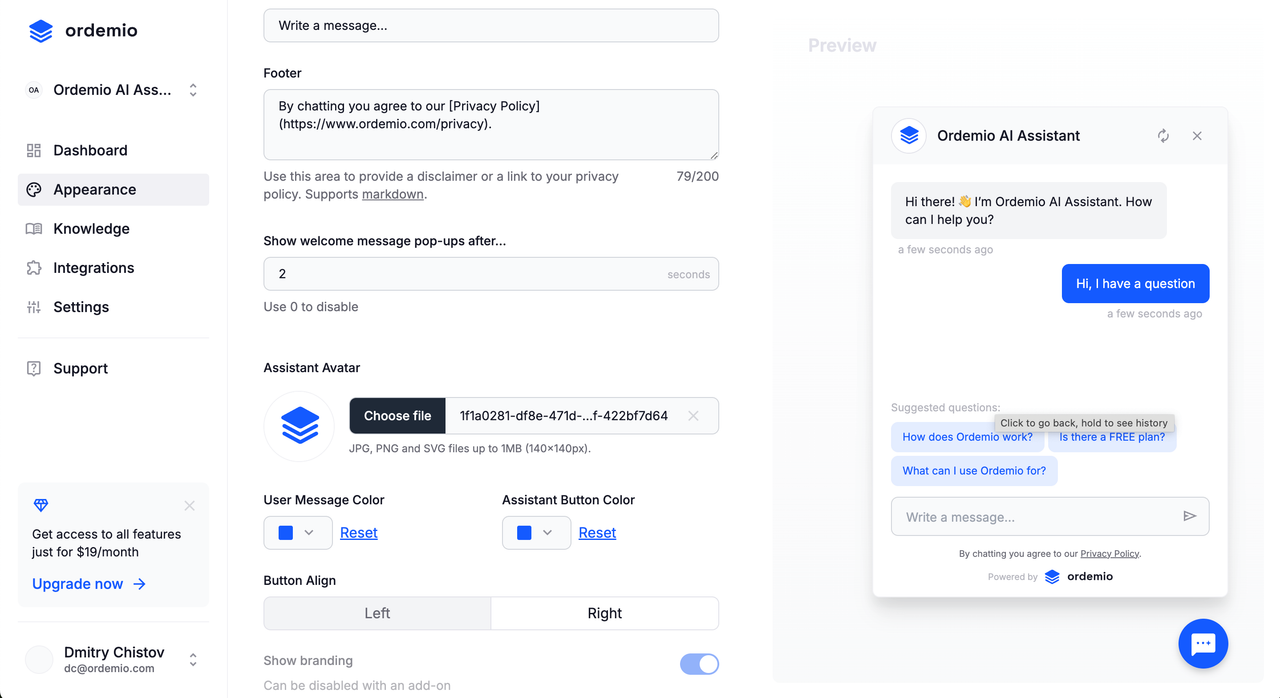
Development and Budget
If you check the product, you might be surprised at how many features we delivered in just a month. To be honest, it wasn't built from scratch. Here's how we did it:
- I used a domain name and website from a previous pet project and turned it into the “AI chatbot for your website” landing page.
- I have a great tech co-founder who is excellent at building simple, high-quality things.
- We had experience and a partially developed RAG engine for the AI assistant.
- I hired a part-time product designer and front-end engineer to speed up development.
- I am the CEO, product marketer, product manager, project manager, and investor, allowing quick decision-making and communication without delays.
Chatbot knowledge base:
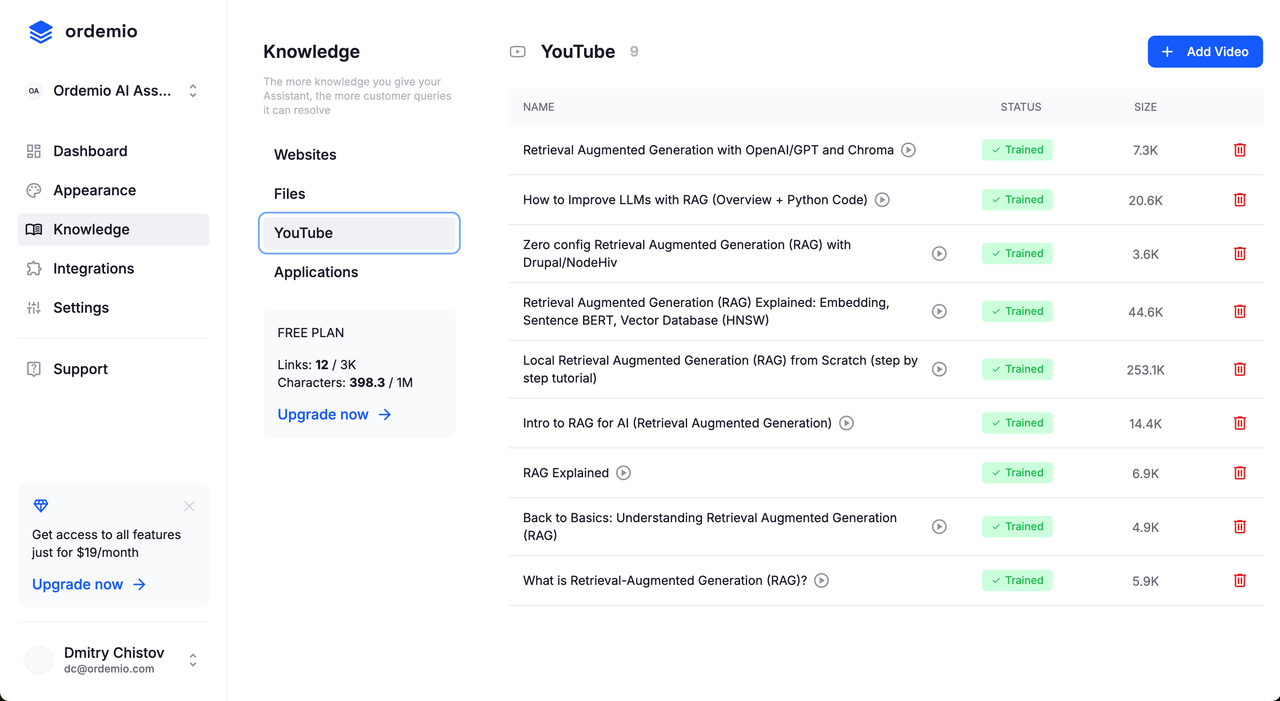
The total project budget so far is about $6,000, most of which went to development. I'll share a detailed report in my next post.
Looking Ahead
Do you think my decision to start a company in a "red ocean" with 100+ competitors was a good idea? For now, my main focus is on getting paid customers and interviewing them. The goal for August 2024 is to get the first 10 paid customers.
Check out Ordemio and leave your feedback here in the comments.. I will report our progress here and share more figures. Let’s see if this was a good idea or not.

It's indeed a bold move to compete with lots of startup in the same idea space. Finding the niche part is the way to go. Maybe focus on a specific use case after you interview customers, such as ecommerce shopping assistant, law firm customer assistant. Good luck!