Is planning and perfectionism getting in your way?
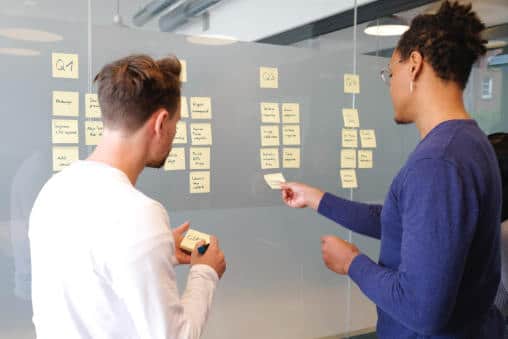
I remember years ago, I had this idea for a web app. I sat down, did some sketches for it. It felt great! Until I started breaking things down.
Thinking of the different components. Thinking of the data structures. Breaking down the different user stories, the user levels, the access rights.
It was all going well, until I had so much information that it all just felt too much. It was overwhelming. Have you been there?
The weight of the work felt colossal, I was lost. I knew that there were still so many different details that were missing.
I no longer wanted to do this. It was too scary!
Plan for the purpose of clarity
Planning has its place. But keep it to a minimum. Here is a framework that I like to use:
- What am I building?
- What are the top level milestones?
- What's my next step?
Get onto the next step as quickly as you can, before it all gets too overwhelming.
Figure out the next step and start executing before it all gets too much. Don't wait for all the data. The data emerges as part of your thinking process not as part of your research process.
Each step reveals the next step. Keep in mind of where you are heading though.
Perfectionism
This is a trap that we can often fall into. You see, when I started doing these interviews my mind told me -- do a few 20, 50 and then see the patterns. Then you can start writing.
Perfectionism at its glory! The problem is that I didn't see it. Until one of you challenged it. They could clearly see it. That is what I love about the coaching process. The ability to see the biases of others. The ones that we are unable to see. And then to challenge them.
The truth is the sooner I start writing the easier it will be. If I email you in a years time with ALL the data and my insights, it will probably not matter to you anymore.
What can you do about it?
Before you close this email and move to the next thing. Spend 2 minutes to reflect.
- Where in your business or in your life do you let perfectionism keep you back?
- Where do you over plan?
- If you could only do one thing, what would it be?
Get clear by eliminating and then act!
This post was inspired from the interviews I am conducting with fellow Indie Hackers. Have a look if you want to help me out.

This is something I'm working on with my team member. She falls into the perfectionism bucket. I've worked hard to try and break that habit, but we have as a team have fallen into the over-planning trap with our content. What's that saying about the best-laid plans?
In the same way that build in public is a movement to kind of counteract all this, we've been trying to do the same with some of that more inner work. If you are learning new ways of thinking, instead of building something, how can you stay transparent and accountable with it? That's kind of the angle we're taking right now for our startup and I feel like this post itself is a great example, too!
Without a doubt, having to deal with our tendency is already a feat to accomplish. Dealing with others can become even more challenging. My take on this would be for her to be aware of how perfectionism gets in her own way and the in the way of what you are trying to accomplish.
It needs to be from a non judgemental space for her to explore and understand. Perfectionism usually stems from underlying limiting beliefs, uncovering and reframing those can open the gate to more progress.
For the over planning, creating limitations will help you to move forward. Instead of bashing out ideas for content until the end of time - create constraints.
For example, we are only planning for week X and then we are done. Or we are planning X number of pieces. We are going to spend 15 minutes and then we start executing. Avoid drowning in a pool of ideas.
Planning has its place. Plan for the future but focus on the present to take the actions needed to create. The result you want is content not plans. Limit the time in planning and the amount into the future you go into. The further into the future the less detail you want - you can go high level.
That's an interesting take. It's a bit vague for me what you are referring to. Find where this new thinking can be applied. Without application there is no use, it's all cognitive. Find ways to measure the use of the new ways of thinking.
Building in public creates accountability. Accountability has two legs, others and ourselves. Building in public is about others. Ideally we want t get to self-accountability, it's a skill we can practice.
Set agreements amongst you in advanced. That way everyone knows where we are standing. There are no surprises. We know what we are accountable for. Someone needs to take the lead, to keep people aware and accountable.
One of my favourite part of my week is when I speak to my accountability buddy. There we get to lead and to be lead. We get to learn to keep ourselves accountable and others accountable. You can apply this with your team or someone external.