Is There Still Room for an Uber Clone in Egypt in 2026?
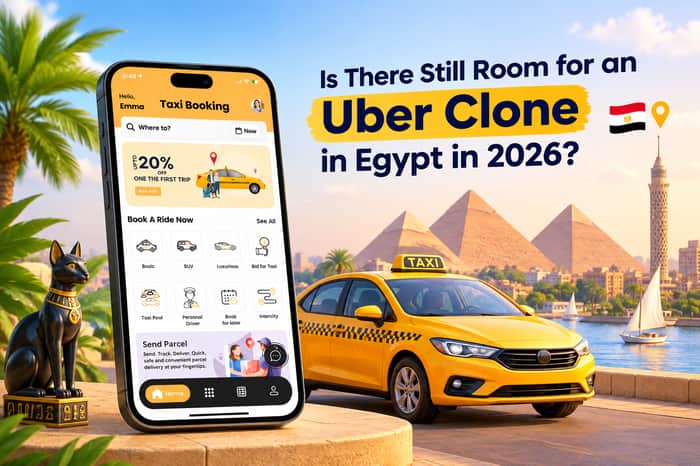
Ride-hailing has become an important part of modern urban transportation. People increasingly expect convenient ways to book rides, track drivers, estimate fares, and make payments from their phones.
That creates an interesting question for entrepreneurs in 2026:
Is there still room for an Uber Clone in Egypt?
The answer can be yes.
The opportunity is not necessarily about creating another copy of an existing ride-hailing app. It is about taking a proven business model and adapting it to the needs of a particular market, audience, or location.
Egypt offers an interesting environment for entrepreneurs who want to explore digital transportation services. A well-planned platform can combine familiar technology with local preferences, flexible services, and a business model designed for the market.
Why Ride-Hailing Continues to Attract Entrepreneurs
Convenience is one of the biggest reasons people use transportation applications.
Instead of searching for transportation manually, users can open an app, enter their destination, view available ride options, request a vehicle, track the driver, and complete the journey through a single platform.
For entrepreneurs, this creates several possibilities.
A modern Taxi Booking App can serve individual passengers while also supporting drivers, businesses, families, tourists, and other customer groups.
The technology behind these platforms is already familiar to consumers. The opportunity for a new business is to adapt the model rather than reinvent transportation from scratch.
Egypt Creates Room for Localized Ride-Hailing Ideas
One of the strongest opportunities for an Uber Clone in Egypt is localization.
A platform designed specifically with local users in mind can take into account factors such as language preferences, payment habits, vehicle categories, customer expectations, and local transportation patterns.
For example, a platform could offer Arabic and English interfaces, flexible payment options, different ride categories, scheduled bookings, and customer support tailored to local users.
These details may seem small individually, but together they can create a more familiar experience.
This is an important lesson for entrepreneurs:
A successful clone does not have to be an exact copy.
It can use a familiar concept while creating its own identity.
A Ready-Made Foundation Can Speed Up the Idea
Building a ride-hailing platform completely from scratch requires considerable development work.
Passenger applications, driver applications, admin dashboards, GPS tracking, booking systems, payment integration, notifications, ratings, and other components all need to work together.
This is where an Uber Clone Script can provide a practical starting point for entrepreneurs who want to move faster.
Rather than spending all of the development budget recreating standard ride-hailing functionality, a ready-made foundation can allow the business to focus more attention on customization, branding, marketing, operations, and customer acquisition.
The platform can be adapted with a company's own:
- Brand name
- Logo
- Colors
- Pricing model
- Vehicle categories
- Payment options
- Features
- Languages
- Business rules
The objective isn't simply to launch quickly. It is to use the existing technology as a foundation and build a business experience around it.
The Opportunity Is Bigger Than Traditional Taxi Booking
Another positive aspect of the ride-hailing model is that the platform does not have to remain limited to basic point-to-point rides.
Once the core transportation system is established, entrepreneurs can explore additional services.
These could include:
- Scheduled rides
- Airport transfers
- Corporate transportation
- Premium rides
- Intercity transportation
- Family transportation
- Multiple vehicle categories
- Business accounts
- Special transportation packages
The exact services depend on customer demand.
This creates room for experimentation.
A business could begin with a focused Ride Hailing App and gradually add services based on what customers actually request.
Instead of trying to become everything to everyone from the first day, a startup can identify one strong opportunity and expand from there.
Drivers Are an Important Part of the Opportunity
Drivers are not simply service providers. They are an essential part of the marketplace.
A successful platform needs to make participation attractive and convenient for drivers.
An Uber Clone in Egypt could explore features and policies designed around driver needs, such as:
- Simple registration
- Easy document management
- Transparent earnings
- Flexible working schedules
- Ride history
- Earnings tracking
- Driver incentives
- Referral programs
- Driver support
When drivers have a positive experience, the platform can build a stronger supply of available vehicles.
That, in turn, improves the experience for passengers.
It creates a cycle where better driver availability can lead to better customer experiences and more bookings.
Passenger Experience Can Become a Competitive Advantage
The same principle applies to passengers.
People generally want transportation that is convenient, predictable, and easy to understand.
A modern Ride Hailing App can improve the customer experience through features such as real-time tracking, accurate fare estimates, multiple payment choices, scheduled rides, driver information, ratings, notifications, and in-app communication.
But there is another opportunity here.
A startup can use customer feedback to continuously improve the service.
For example, if users frequently request scheduled transportation, that feature could receive greater attention. If customers prefer particular vehicle categories, the platform can expand those options.
This creates a product that evolves based on actual demand.
Differentiation Does Not Have to Be Complicated
When people hear about competition in ride-hailing, they sometimes assume a new platform needs a revolutionary feature.
That is not necessarily true.
Differentiation can be surprisingly simple.
A company might focus on:
Better local experience.
A specific customer segment.
A particular city or region.
A specialized ride category.
More flexible booking options.
Better driver support.
Business transportation.
The important thing is having a clear reason for customers to choose the platform.
A startup does not have to beat every competitor at everything.
It needs to be particularly useful to a specific group of people.
Multiple Revenue Opportunities
A ride-hailing business can also explore different revenue streams as it grows.
The most familiar approach is earning a commission from completed rides.
However, entrepreneurs can consider additional models, including:
- Commission From Bookings
- Drivers Subscription
- Surge Pricing
- In-App Advertising
- Priority Driver Listings
- Airport Ride Surcharges
- Corporate accounts
- Cancellation Fees
- Vehicle Rental Services
This flexibility can help a platform develop its business model over time.
The key is to start with a simple revenue model and expand when there is evidence that customers are willing to pay for additional services.
Start Focused and Grow Gradually
One of the most interesting aspects of building a ride-hailing startup in 2026 is that founders do not necessarily need to think about nationwide expansion immediately.
A focused launch can be a smart way to learn.
A business could begin by targeting a specific location, customer segment, or service category.
The team can then monitor:
- Number of bookings
- Repeat customers
- Driver activity
- Average ride value
- Cancellation rates
- Customer feedback
- Most popular routes
- Peak booking times
These insights can guide the next stage of growth.
Once the model starts generating consistent demand, expansion becomes easier to plan.
Technology Can Support Future Growth
Modern ride-hailing platforms can also benefit from technologies that were less accessible to smaller businesses in the past.
Real-time analytics can help businesses understand demand.
Automated notifications can improve communication.
Smart dispatching can help match passengers and drivers more efficiently.
AI-powered tools can potentially support customer service, demand forecasting, fraud monitoring, driver insights, and operational decision-making.
The important point is that technology should support the business rather than become the business itself.
A startup should first establish a useful transportation service and then use technology to make it more efficient.
Why 2026 Can Be an Interesting Time
The idea of launching another ride-hailing platform may sound familiar, but familiarity can actually be an advantage.
Customers already understand the concept.
Drivers understand how app-based transportation works.
Businesses understand the value of digital booking and tracking.
Entrepreneurs therefore do not have to spend all their energy explaining what ride-hailing is.
Instead, they can focus on creating a better experience for a particular market.
That makes the opportunity less about introducing the concept and more about execution, localization, and differentiation.
So, Is There Still Room?
There can certainly be room for an Uber Clone in Egypt in 2026.
But the strongest opportunity is not to create a generic copy.
It is to build a platform around a clear customer need.
An entrepreneur could use an Uber Clone Script as a technology foundation, customize it for the Egyptian market, introduce a strong local brand, attract drivers, acquire initial passengers, collect feedback, and gradually expand.
That is a much more practical way to approach the opportunity.
The goal is not necessarily to become “the next Uber.”
The goal could simply be to build a useful, trusted, and sustainable ride-hailing business for a specific group of customers.
Final Thoughts
The ride-hailing market has evolved, but that does not mean the opportunity has disappeared.
In fact, an established business model can give entrepreneurs a useful starting point.
The key is to look beyond the word “clone.”
A clone solution can provide the technology and familiar functionality, but the entrepreneur provides the business idea, local positioning, customer experience, marketing strategy, and vision.
For someone considering an Uber Clone in Egypt in 2026, the more useful question may not be:
“Can I compete with existing ride-hailing apps?”
It may be:
“What kind of ride-hailing experience can I create that people in my target market will genuinely value?”
That shift in thinking can turn a familiar app concept into a new business opportunity.
FAQs
1. Is an Uber Clone in Egypt a good business opportunity in 2026?
Yes, it can be a promising opportunity when approached with a clear target market, localized services, strong driver acquisition, and a sustainable revenue model.
2. What can make an Uber Clone different from existing ride-hailing apps?
Localization is one option. A platform can focus on particular cities, customer groups, vehicle categories, payment preferences, transportation services, or customer experiences.
3. Can an Uber Clone Script be customized for Egypt?
Yes. An Uber Clone Script can serve as a technology foundation that can be adapted with branding, pricing, features, languages, payment options, vehicle categories, and other business requirements.
4. Should a Taxi Booking App launch throughout Egypt immediately?
Not necessarily. A focused launch can allow the business to understand customer demand, build a driver network, test pricing, and improve operations before expanding.
5. What are the most important features of an Uber Clone?
Core features generally include ride booking, GPS tracking, driver matching, fare calculation, payments, ratings, notifications, trip history, and driver management.
6. What is the biggest opportunity for a new ride-hailing platform?
The biggest opportunity may be finding a specific market need and serving it exceptionally well rather than trying to replicate every part of an established ride-hailing company.
