Is your SaaS business considered high risk?
The popularity of Software as a Service (SaaS) platforms is skyrocketing. Expanding at a compound annual growth rate of 25.89%, the global SaaS market is expected to reach $720.44 billion by 2028.
But this high level of growth comes with increased security issues and risks for SaaS businesses, with customers expecting SaaS platforms to step up in mitigating those risks. In a recent SaaS security survey by Adaptive Shield, 52% of respondents put the responsibility for checking and maintaining SaaS security into the hands of the SaaS vendor.
If these threats to your company can destabilize your business and affect your profitability, are you wondering whether your enterprise is considered high-risk? This blog article unpacks the most common risks and explains how to mitigate them to protect your SaaS business.
How Being Seen As High Risk Can Affect Your Business
Nowadays, most customers know the risks associated with cloud-based businesses. Cybersecurity, compliance, data breaches, and access management are just a few of the ubiquitous buzzwords around, and given that customers have almost unlimited access to online information, they are typically well-informed. So, it’s essential to be proactive about lowering the security risk customers perceive as a threat and take their concerns seriously, as they come from a well-educated perspective regarding potential problems.
Top Risks for SaaS Businesses
To help you to identify the risks threatening your business, we’ve compiled a few common factors facing SaaS businesses today.
Regulatory Noncompliance
Being non-compliant can cost you much more than just maintaining or meeting industry standard requirements. While SaaS compliance is very complex, especially if you have international customers dealing with sensitive data, it should be at the top of your priority list.
The first consideration is ensuring you are familiar with your region's compliance requirements and how to implement them successfully. Cloud applications must comply with regulatory, privacy, and data protection requirements, such as GDPR and PIPL. Have you got the relevant security certification, such as ISO or ITIL? Are you fully prepared for external security audits?
Many organizations conduct vendor due diligence on your SaaS business before sharing sensitive information. These assessments determine the accuracy of your claims regarding security and regulatory vendor compliance and could potentially lead to problems if there is a gap. They also identify vendors’ security risks, so you want to avoid a situation where you could lose prospects over perceived high risks in your business.
Data Storage and Retention Issues
SaaS users usually want to know where their data is stored and how long it will be retained. It’s important they feel they have some control over the location of the data, whether the data is stored with a secure cloud-service provider or in a private data center. Do you use data encryption at all stages of the data-handling process?
Users want to know that when you no longer need their sensitive information, you won’t retain it. You cannot run your business without having a clear cloud-data retention policy aligned with your region's compliance. Your data protection is only as strong as its weakest link, so you must identify and eliminate that weak link.
Cybersecurity Threats and Breaches
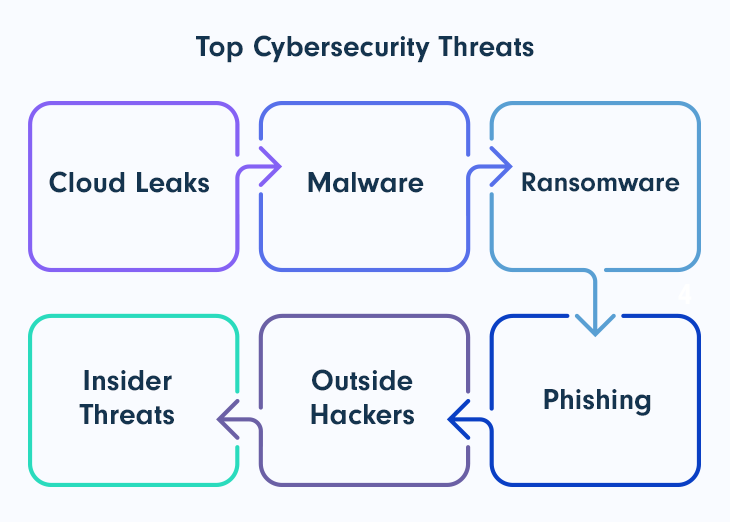
Cloud Leaks
The 2021 Thales Data Threat report found that 66% of respondents said that as much as 60% of their sensitive data is stored in the cloud. The same report found that 45% of US companies had suffered a cloud-based data breach in 2020.
A cloud leak is when sensitive business data, which is stored in a private cloud, is accidentally released online. A cloud leak differs from other cybersecurity breaches because it’s not the result of deliberate action by an adversary, rather, it’s caused by poor data security.
Malware
Malware (short for “malicious software”) refers to any program or file that is harmful to a user. Examples of malware include spyware, worms, adware, and ransomware. Every day, 560,000 new pieces of malware are detected.
Ransomware
Ransomware is malware created to deny users access to a computer system or data until a ransom is paid. Ransomware spreads in several ways: through phishing emails, malvertising, and visiting infected websites.
Phishing
In 2021, 83% of organizations reported phishing attacks. By the end of 2022, an estimated additional six billion attacks will occur. Phishing is a cyber attack that gathers sensitive information by posing as a legitimate website or email. It is usually aimed at acquiring login credentials, credit card numbers, bank account numbers, or other financial information with the intent to harm, causing consumers a huge headache and loss.
Outside Hackers
A “hacker” uses their abilities and skills to gain unauthorized access to systems or networks to commit crimes. Hacking often involves installing malware, stealing or destroying data, as well as disrupting service.
Insider Threats
An insider threat comes from negligent or malicious people within your organization. These could include former employees, contractors, third-party vendors, or business partners.
Lack of Access Management
Access management refers to processes and technologies used to control and monitor network access. Some of the features related to access controls are authentication, authorization, trust, and security auditing. Good access management allows for multi-factor authentication, eradicating weak passwords, tracking malicious activity, and improving data security.
Learn how to mitigate risks in your SaaS business on PayPro Global's Blog.

Vulnerabilities In Cloud Infrastructure Leading To Ransomware are below!
Ransomware has been a big challenge across the globe. Gartner predicts that 75% of CEOs will be personally liable for cyber-physical security incidents by 2024.
The best we can do is as we find bugs we fix them. But these security vulnerabilities can be exploited.
This comment was deleted 4 years ago
This comment was deleted 4 years ago