JavaScript Loose Equality vs Strict Equality check
Hello Everyone!
In this post, we will explore the difference between JS loose equality (==) and strict equality (===) check.
Here is the simplest definition
- Loose equality (==) checks for value only.
- Strict equality (===) checks for value as well as DataType.
But wait, there is something more to it. Let's understand the workings of both of them one by one.
Strict Equality (===)
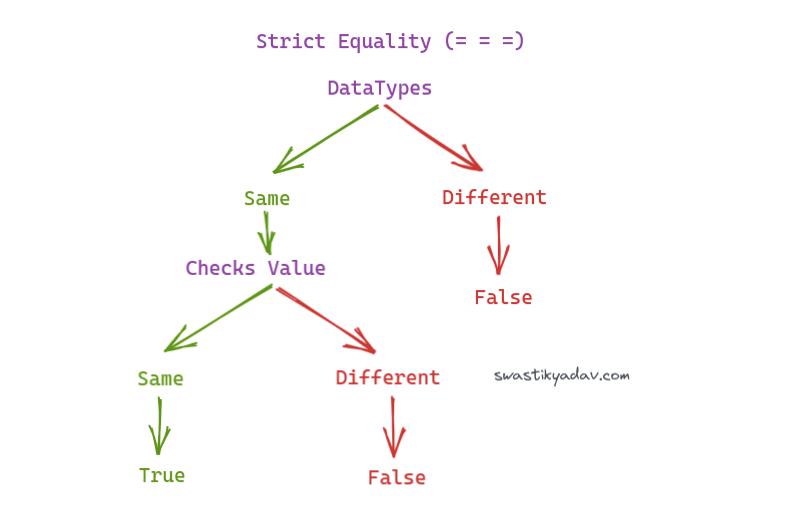
Strict equality first checks for DataType, If the datatype is the same then it checks for value, else it returns false.
Ex:
console.log("55" === 55);
// false - Because datatype is different even though value is same.
Loose Equality (==)
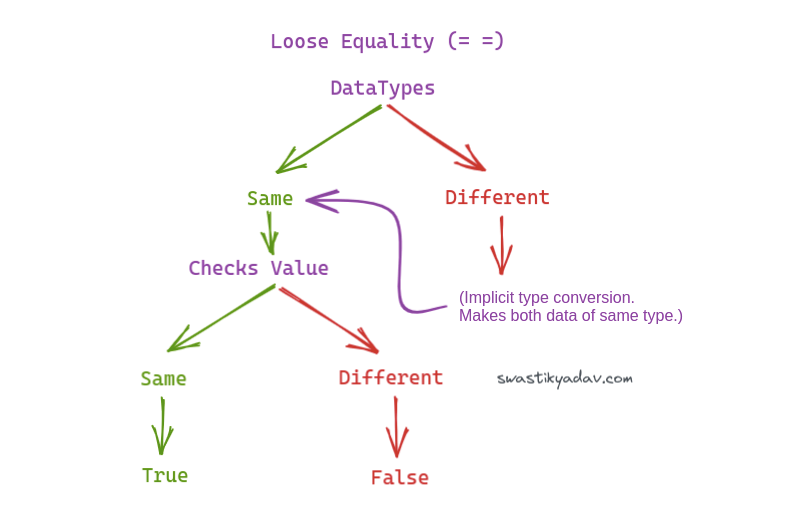
Loose equality works similarly to strict equality. The only difference is that in loose equality if datatype is different, it performs an Implicit type conversion and then compares the value.
Ex:
console.log("55" == 55);
// true - Because implicit conversion will change string "55" to number 55 then compare value.
If you enjoyed or found this post helpful, please consider joining my weekly newsletter below.
Thank You for reading.
I am starting a NewsLetter where I will share epic content on building your skillset. So, if this sounds interesting to you, subscribe here: https://www.getrevue.co/profile/8020lessons
