Just released Planndu v3.0.0
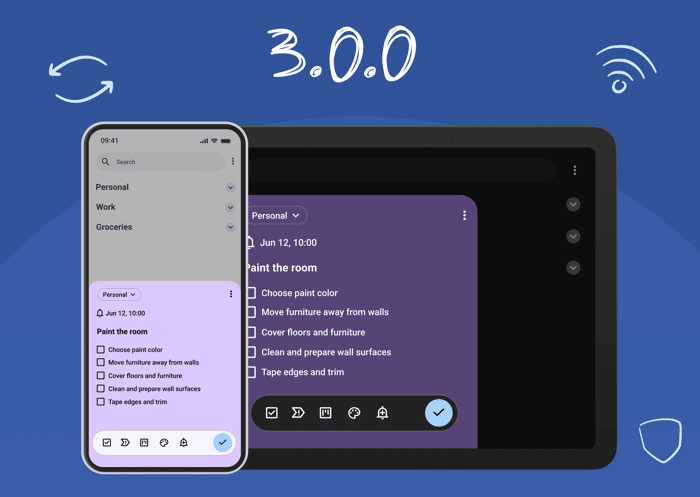
Some updates are about adding new features. Others are about fixing decisions you made two years ago. For me, Planndu 3.0.0 is definitely the second kind.
When I started building Planndu, the goal was simple: create a task manager that's easy to use, secure, and has everything you need to organize your day.
I quickly realized that combining security with syncing isn't easy. Sending data over the internet always introduces trade-offs, especially when you're storing personal information on remote servers.
So instead of relying on the cloud, I've built something different.
With Planndu 3.0.0, you can now securely transfer tasks directly between devices on the same Wi-Fi network. No sign-up required. It works completely offline.
Another feature I've added is drag & drop between task groups. It's been one of the most requested features since the early days of Planndu.
Now you can simply pick up a task and drop it into another group. It feels exactly how it should have from day one.
Sometimes the best feature is removing complexity. That's why I decided to remove the built-in Focus Timer. It made the app much simpler. Many users suggested this years ago, it just took me some time to realize they were right.
And a quick announcement about what's next: a desktop app!
I've been quietly using a desktop version of Planndu for quite some time. I could probably release it today. But I've learned that shipping something because it works is very different from shipping something you're proud of.
So, if everything goes according to plan, I'll release the desktop version in the next few months.
Planndu 3.0.0 is available now on the App Store and Google Play!
If you have questions, feedback, or you're curious about how any of these features, I'd love to hear from you. Leave a comment or send me a message.
And thank you to everyone who's been using Planndu, reporting bugs, requesting features, and helping shape what comes next.

The part I liked most wasn't the new features—it was removing one.
A lot of products become harder to differentiate because they keep accumulating capabilities. Choosing to simplify after listening to users is often a stronger product decision than shipping something new.