Just spent the last week obsessing over how AI crawlers interact with content sites. Holy complexity, Batman.
Here's the thing nobody talks about: LLMs are scraping everything. Your carefully crafted content? Being digested by GPT, Claude, Gemini, you name it. And you have zero control unless you explicitly set boundaries.
I run a small SaaS tool, and we noticed our blog posts showing up in weird AI summaries without attribution. That's when I realized most people don't even know about llms.txt files - basically robots.txt for AI crawlers.
The concept is simple: specify which AI systems can access your content, set rate limits, define allowed paths. But implementing it? Total nightmare if you're not technical. XML formatting, syntax errors, testing endpoints...
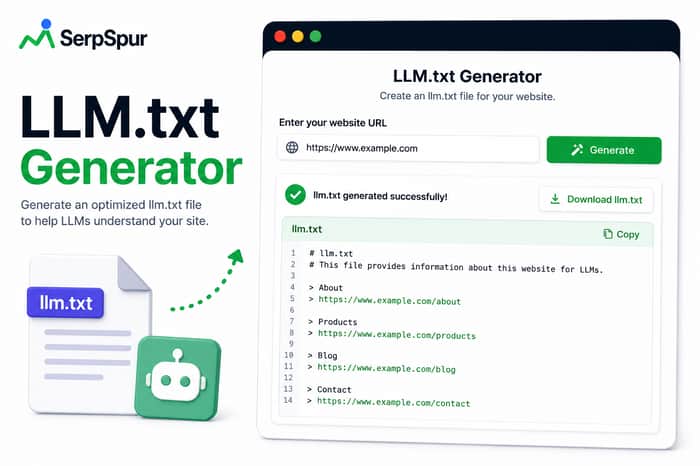
So I built a generator that just handles it. 3 fields: your domain, which crawlers to allow (or block), and any path restrictions. Outputs a clean llms.txt file ready to deploy.
Early metrics: 47 websites using it in the first week. Most common use case? Preventing AI training on premium content while allowing search indexing.
The wild part? Half the users don't even monetize their content - they just want visibility into who's reading their work. Fair enough.
If you're sitting on a content site and haven't set up AI crawl controls yet, you're essentially giving away your IP. Not fearmongering - just data.
Built this at serpspur.com/tool/llms-txt-generator-tool if you want to skip the XML headache. Or just google "llms.txt spec" and DIY. Either way, get it done.

Interesting approach—I've been noticing similar bandwidth spikes from AI crawlers. Have you seen any difference in search rankings since blocking most of them? I'm curious if it impacts indexing at all.
Nice work on the generator. Validating syntax is a smart touch; I've accidentally broken my robots.txt before and it was a headache to debug. Does your tool also let you whitelist specific user-agents by referral source?
Nice approach to a real pain point. Curious, which AI crawler actually sends you referrals? I've been thinking about whitelisting a few but haven't found one that's worth the bandwidth yet.
Interesting approach, but have you noticed any impact on your organic search rankings after blocking most AI crawlers? I'd be curious if there's a trade-off between bandwidth savings and visibility in AI-generated summaries.