Key Things to Know: Enterprise Chat Architecture
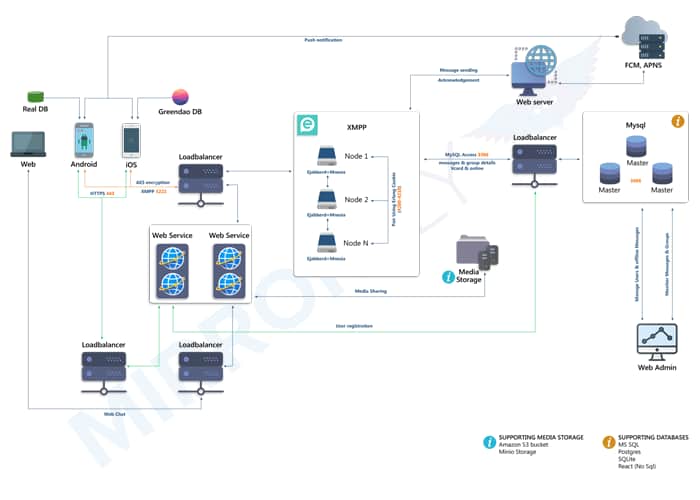
Every architecture is designed to serve the purpose of the chat application, whether it’s between a doctor and patient or a customer and support agent, the result of transmitting the messages is the same, but the range of communication for different sectors differs. The chat infrastructure should possess the potential to serve communication for any industry, and that’s where the enterprise chat architecture comes into play.
Let’s get into how an enterprise chat architecture is engineered to withstand millions of concurrent users and messages.
Standard Version of a Chat Architecture
Basically, the standard chat architecture consists of two major parts; Chat Server Engine and Client Chat Part.
Client Chat Part — It’s chat application on the desktop, mobile device
Chat Server Engine — It’s the combination of several servers responsible for relaying messages operations
The server engine handles the entire operation of transmitting messages right from the message sent on a server to the delivery of messages on a client device with the help of tokens.
The Chat server engine consists of several components such as:
Chat WebSocket Server
WebSocket Client Library
Chat REST API
Chat Media Storage Server
The Standard version is pretty enough for handling a certain limit of users and messages, but when it comes to handling an enterprise project of connecting millions of users based on different communication channels (Text, Video, and Voice calls) and customizing the application, the infrastructure has to be upgraded.
That’s what MirrorFly Chat API architecture has done to meet today’s communication platform demand with Erlang, XMPP protocol, ejabberd server, and Mnesia database.
The Architecture of an Enterprise Chat Application
Ejabberd can inherently be broken up into three layers:
Interface Layer: This is the layer we have just talked about. It handles all the incoming data and outgoing data to the client.
Logic Layer: This layer is the most complicated of all. It handles all the XMPP logic, as well as many other features, e.g. HTTP bindings, access controls, extensible modules and hooks, etc.
Data Layer: This layer handles how data get stored in databases and ensures the integrity and constraints of data.
originally shared this https://dzone.com/articles/key-things-to-know-enterprise-chat-architecture-th
